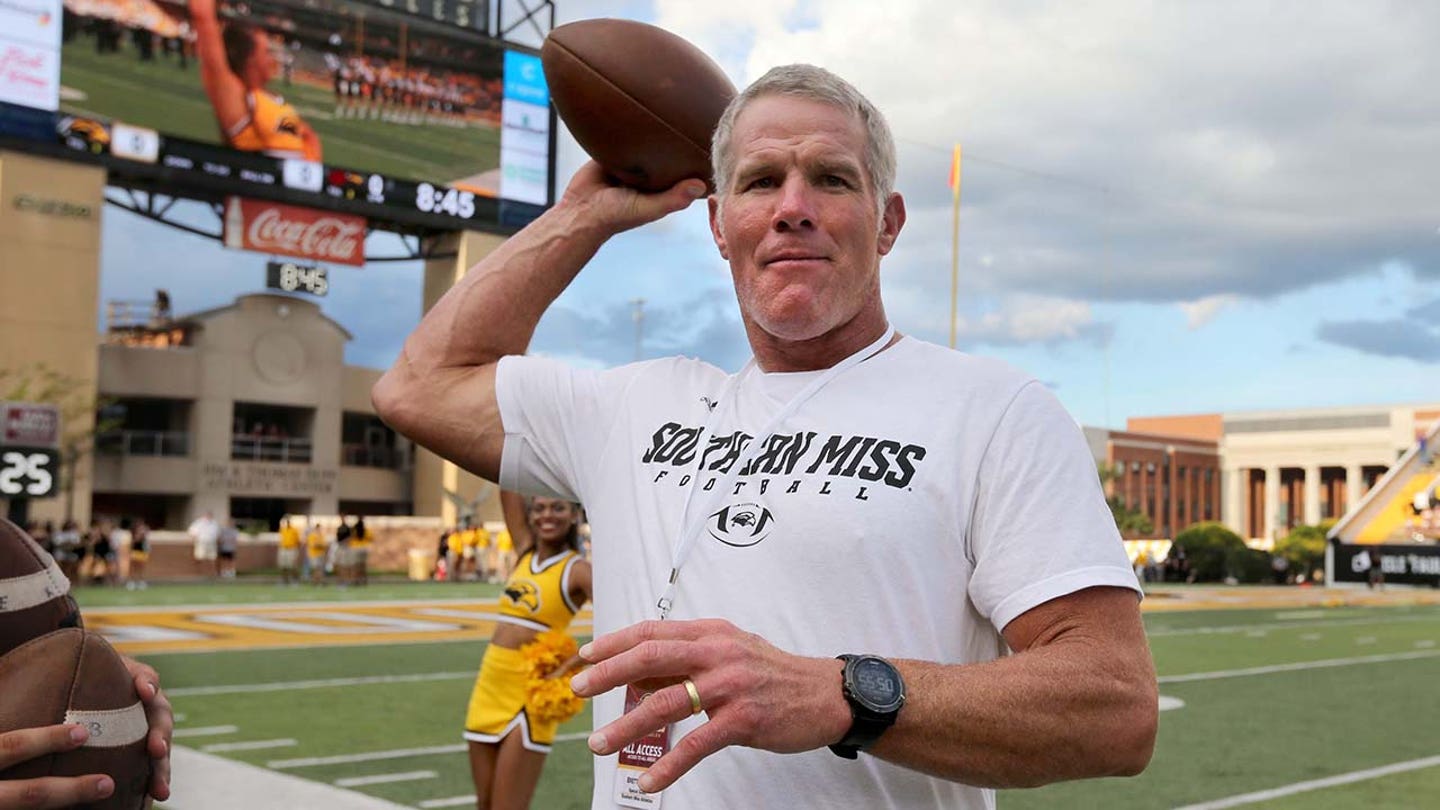
NFL legend Brett Favre would pick 'someone who loves this country' to perform Super Bowl halftime show
Entities mentioned:
- Brett Favre: Patriotism, Righteousness, Pride
- Bad Bunny: Influence, Recognition, Self-respect
- NFL: Unity, Recognition, Influence
- Roger Goodell: Control, Unity, Professional pride
Article Assessment:
Credibility Score: 70/100
Bias Rating: 65/100 (Lean Right)
Sentiment Score: 45/100
Authoritarianism Risk: 35/100 (Generally Democratic)
Bias Analysis:
The article leans right by emphasizing Favre's patriotic stance and the backlash against Bad Bunny. It gives more space to conservative viewpoints while briefly mentioning NFL's defense of their choice.
Key metric: National Unity and Cultural Representation
Let me tell you something, folks - we've got a HEATED MATCHUP brewing over the Super Bowl halftime show! Brett Favre, the legendary quarterback, is throwing a Hail Mary pass to change the game plan. He's calling an audible, trying to sub in a more patriotic player for the big show. But Commissioner Goodell is playing defense, stiff-arming the criticism and standing firm on his playbook. This is a classic clash of titans, with Bad Bunny caught in the cultural crossfire! It's fourth and long for those pushing for a lineup change, and Goodell's not budging an inch. We're seeing a real battle of wills here, folks - it's like two undefeated teams going head-to-head in the championship! Who's gonna come out on top in this clash of musical titans? I'm telling you right now, this controversy is going into OVERTIME!

Brian Kelly sues LSU over $54M buyout after school allegedly changes termination story: report
Entities mentioned:
- Brian Kelly: Justice, Self-preservation, Professional pride
- LSU: Greed, Control, Self-preservation
- Scott Woodward: Power, Influence, Legacy
- Jeff Landry: Control, Power, Influence
Article Assessment:
Credibility Score: 70/100
Bias Rating: 55/100 (Center)
Sentiment Score: 30/100
Authoritarianism Risk: 45/100 (Mixed/Neutral)
Bias Analysis:
The article presents both sides of the dispute, quoting from the lawsuit and LSU's previous statements. It maintains a relatively neutral stance, providing context without heavily favoring either party.
Key metric: NCAA Football Coaching Stability
Let me tell you something - this lawsuit is a GAME-CHANGER in the college football world! Brian Kelly is stepping up to the plate against LSU in what could be the legal equivalent of a Hail Mary pass. The Tigers are playing hardball, trying to avoid a $54 million hit to their salary cap, but Kelly's not backing down. This is a fourth-quarter power play that could rewrite the playbook on coaching contracts. I'm telling you right now, the entire NCAA coaching landscape is watching this matchup like it's the Super Bowl of contract disputes. LSU's attempt to change the narrative is like a last-second audible at the line of scrimmage - a risky move that could backfire spectacularly. This legal battle is shaping up to be an epic showdown, with millions of dollars and the integrity of coaching agreements on the line. Buckle up, sports fans - we're in for a wild ride!