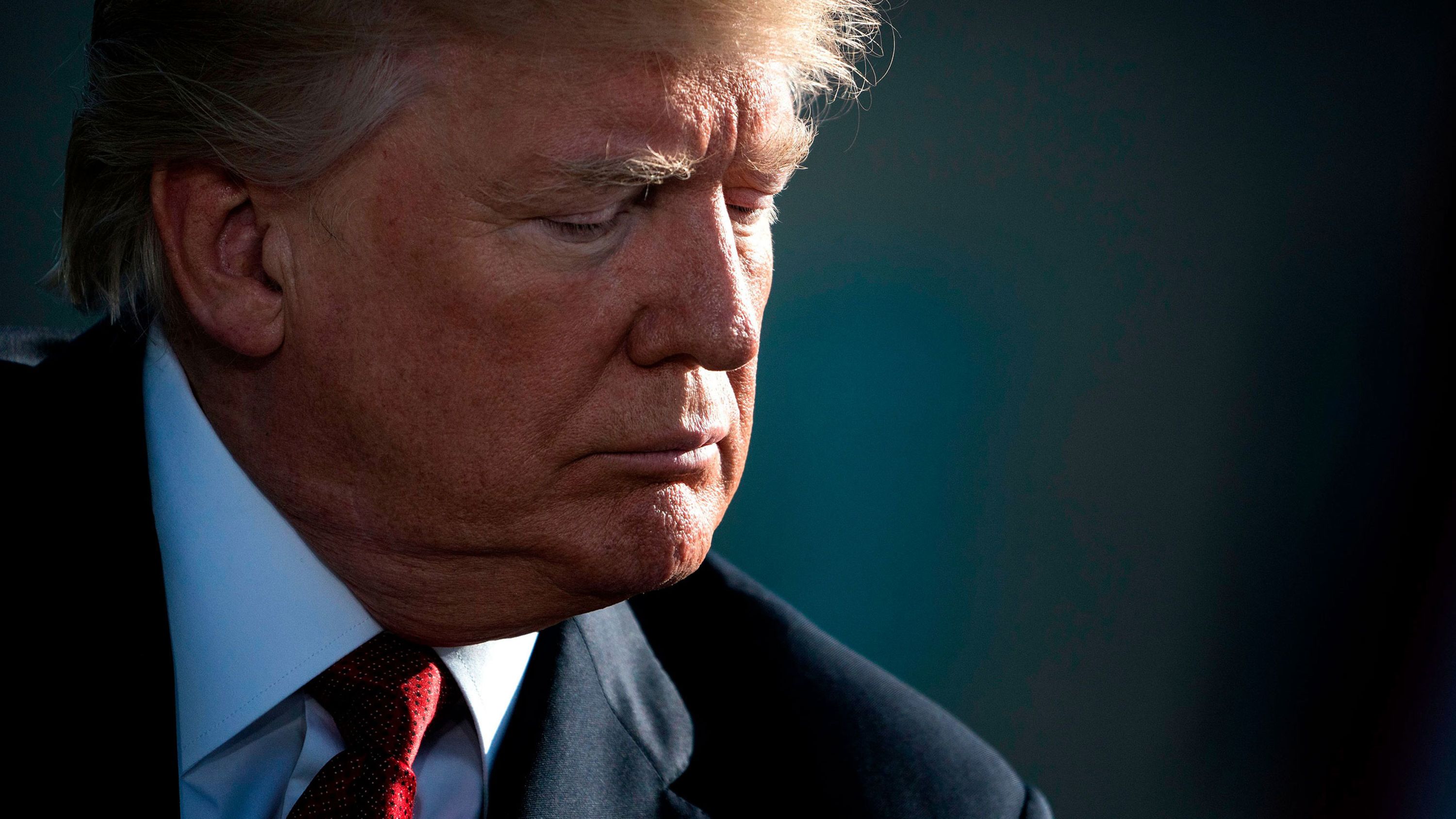
In pictures: President Donald Trump
Entities mentioned:
- Donald Trump: Power, Revenge, Legacy
- Kamala Harris: Ambition, Duty, Influence
- Joe Biden: Legacy, Duty, Power
- Hillary Clinton: Ambition, Power, Legacy
- Michael Cohen: Loyalty, Self-preservation, Justice
- Stormy Daniels: Recognition, Justice, Self-preservation
- Jack Smith: Duty, Justice, Professional pride
- Fani Willis: Justice, Duty, Professional pride
Article Assessment:
Credibility Score: 70/100
Bias Rating: 55/100 (Center)
Sentiment Score: 30/100
Authoritarianism Risk: 65/100 (Authoritarian Tendencies)
Bias Analysis:
The article presents a mix of factual information and controversial events without overtly favoring either side. While it includes Trump's legal troubles, it also mentions his political comeback, maintaining a relatively balanced perspective.
Key metric: Political Stability Index
As a social scientist, I analyze that this article highlights significant challenges to the US political system and its stability. Trump's return to power after legal controversies, including a felony conviction, represents a major shift in political norms. The dropping of federal cases and the disqualification of a district attorney in a state case suggest potential erosion of judicial independence and the rule of law. The assassination attempt on a presidential candidate further underscores the heightened political tensions and potential for violence. These events collectively indicate a weakening of democratic institutions and a trend towards increased polarization, potentially lowering the US Political Stability Index.
- Read more about In pictures: President Donald Trump
- Log in to post comments
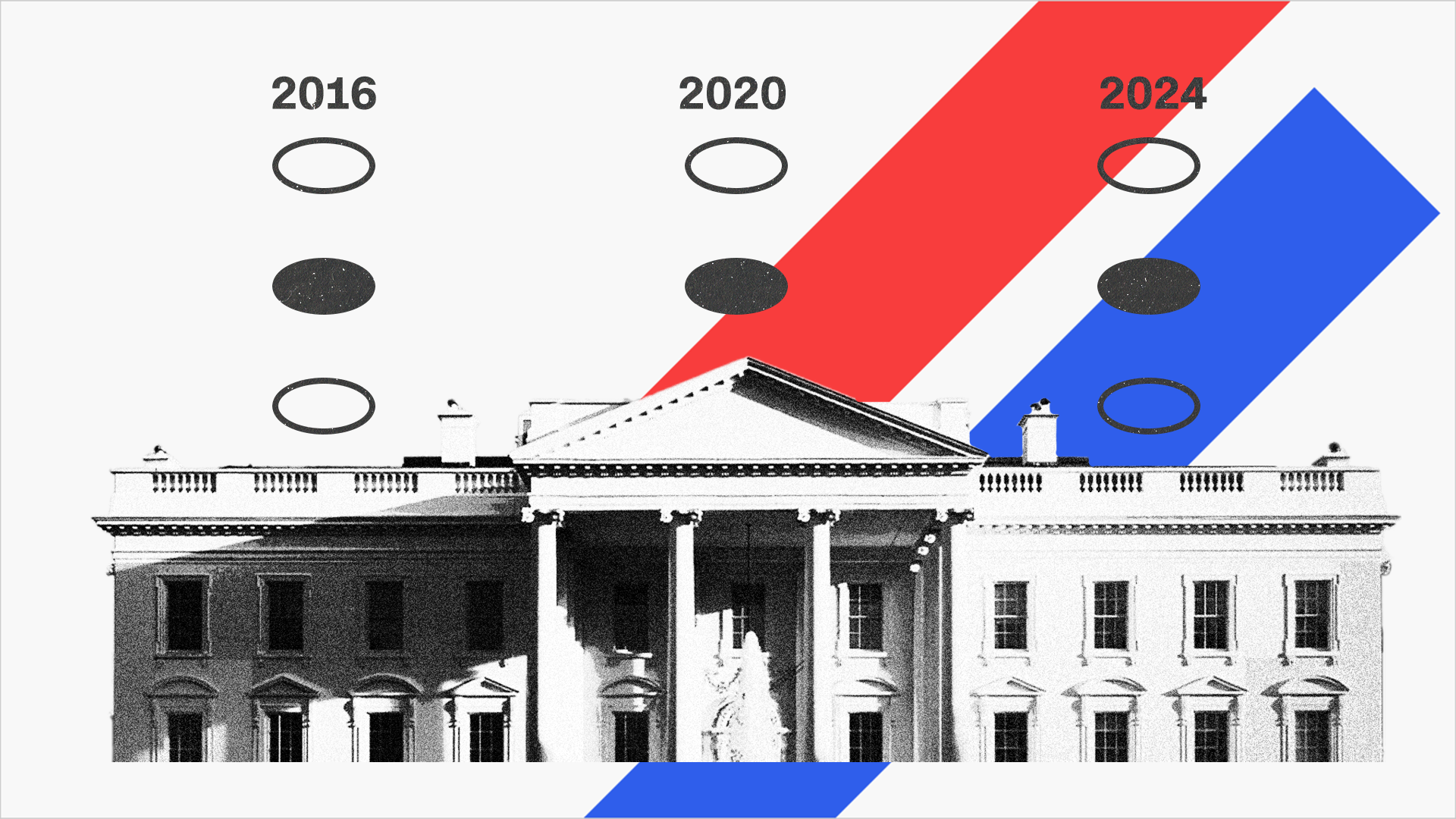
Anatomy of three Trump elections: How Americans shifted in 2024 vs. 2020 and 2016
Entities mentioned:
- Donald Trump: Power, Ambition, Competitive spirit
- Kamala Harris: Ambition, Legacy, Duty
- Joe Biden: Legacy, Duty, Influence
- Hillary Clinton: Ambition, Legacy, Influence
- CNN: Professional pride, Influence, Recognition
- Edison Research: Professional pride, Accuracy, Recognition
- National Election Pool: Accuracy, Influence, Professional pride
Article Assessment:
Credibility Score: 75/100
Bias Rating: 45/100 (Center)
Sentiment Score: 50/100
Authoritarianism Risk: 20/100 (Strongly Democratic)
Bias Analysis:
The article presents data from multiple elections and diverse demographic groups, showing effort for balanced reporting. While it includes both positive and negative aspects for each candidate, there's a slight lean towards emphasizing Trump's gains.
Key metric: Voter Demographics and Preferences
As a social scientist, I analyze that this article presents a comprehensive overview of shifting voter demographics and preferences across three presidential elections involving Donald Trump. The data reveals significant changes in various voter groups, including women, Latinos, and educational demographics. The economy emerges as a crucial factor, with a majority of voters perceiving it negatively in 2024, benefiting Trump. The article also highlights the evolving abortion debate and its impact on voting patterns. The shift in first-time voter support from Democrats to Republicans is notable, as is the increased polarization among liberals and conservatives. These trends suggest a complex political landscape with multiple factors influencing voter behavior, including economic conditions, social issues, and candidate appeal.
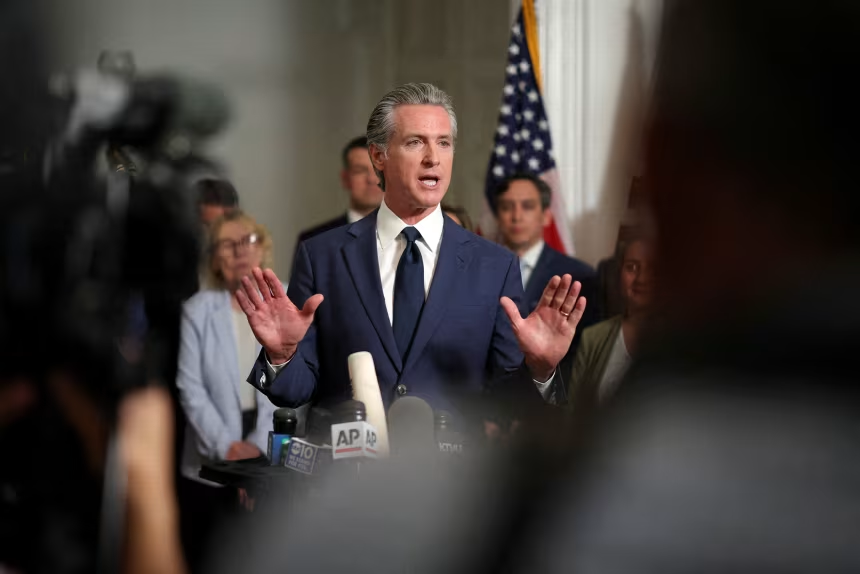
Gavin Newsom and Democrats are placing a risky bet on gerrymandering
Entities mentioned:
- Gavin Newsom: Ambition, Power, Influence
- Democrats: Power, Control, Justice
- Republicans: Power, Control, Competitive spirit
- Texas Democrats: Justice, Self-preservation, Duty
- Texas Republicans: Power, Control, Competitive spirit
- California voters: Justice, Security, Wariness
Article Assessment:
Credibility Score: 75/100
Bias Rating: 55/100 (Center)
Sentiment Score: 35/100
Authoritarianism Risk: 55/100 (Mixed/Neutral)
Bias Analysis:
The article presents multiple perspectives and potential outcomes, showing a relatively balanced approach. However, there's a slight lean towards skepticism of the Democrats' strategy, which could be interpreted as a mild center-right bias.
Key metric: Electoral Fairness and Representation
As a social scientist, I analyze that this article highlights a significant shift in the dynamics of redistricting and gerrymandering in the United States. The proposed actions by Gavin Newsom and California Democrats to counter Texas Republicans' gerrymandering efforts represent a potential escalation in the politicization of redistricting processes. This move could have far-reaching consequences for electoral fairness and representation across the country. The article suggests that while this strategy aims to balance power, it risks undermining the principle of independent redistricting that many voters support. The potential voter backlash and the historical precedent of Californians rejecting similar measures indicate that this is a high-risk strategy for Democrats and Newsom personally. The outcome of this situation could significantly impact the balance of power in Congress and set new precedents for how redistricting is approached nationwide, potentially leading to a more polarized and less representative electoral system.
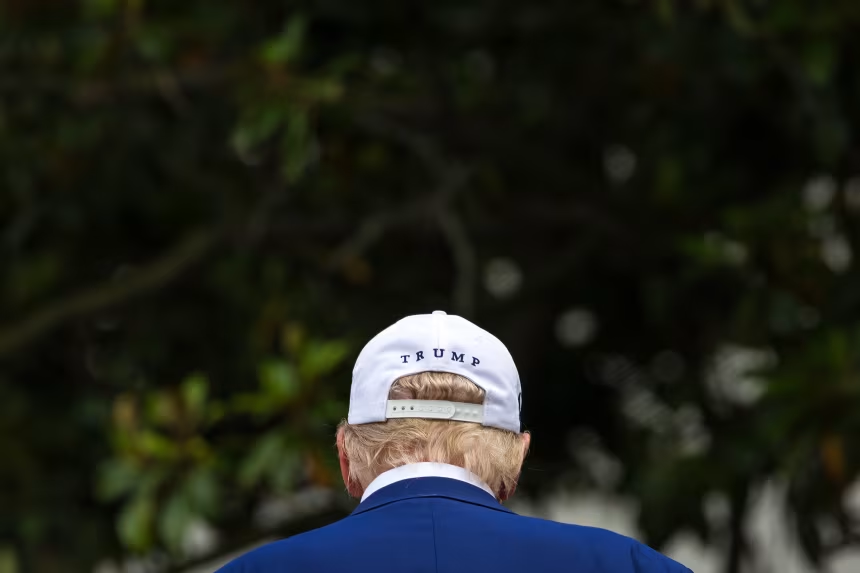
Trump’s 7 most authoritarian moves so far
Entities mentioned:
- Donald Trump: Power, Control, Ambition
- US Military: Duty, Security, Wariness
- Congress: Obligation, Self-preservation, Wariness
- Bureau of Labor Statistics: Professional pride, Duty, Anxiety
- Federal Reserve: Independence, Professional pride, Wariness
- TikTok: Self-preservation, Influence, Security
Article Assessment:
Credibility Score: 70/100
Bias Rating: 35/100 (Lean Left)
Sentiment Score: 25/100
Authoritarianism Risk: 75/100 (Authoritarian Tendencies)
Bias Analysis:
The article leans left in its framing, presenting Trump's actions in a predominantly negative light. While it provides specific examples, the tone and language used suggest a critical stance towards the administration's policies.
Key metric: Democratic Institutions Strength Index
As a social scientist, I analyze that this article presents a concerning trend of power consolidation and erosion of democratic norms under Trump's second term. The president's actions, including militarizing civilian spaces, politicizing government data, investigating political opponents, and disregarding legislative decisions, all point to a significant shift towards authoritarianism. This trend weakens checks and balances, potentially compromising the strength of US democratic institutions. The apparent acquiescence of some institutions and Congress further exacerbates this risk, setting precedents that could have long-lasting impacts on the balance of power in American governance.
- Read more about Trump’s 7 most authoritarian moves so far
- Log in to post comments

How Sly Stallone and Gloria Gaynor explain Trump and his presidency
Entities mentioned:
- Donald Trump: Power, Control, Recognition
- Kennedy Center: Legacy, Influence, Professional pride
- Sylvester Stallone: Recognition, Legacy, Pride
- Gloria Gaynor: Recognition, Legacy, Pride
- Susie Wiles: Loyalty, Influence, Duty
- Hillary Clinton: Ambition, Power, Influence
Article Assessment:
Credibility Score: 65/100
Bias Rating: 35/100 (Lean Left)
Sentiment Score: 30/100
Authoritarianism Risk: 70/100 (Authoritarian Tendencies)
Bias Analysis:
The article leans left, evidenced by its framing of Trump's actions as threatening and authoritarian. While it presents some factual information, the language and tone consistently portray Trump's decisions negatively.
Key metric: Cultural Division Index
As a social scientist, I analyze that this article highlights the growing cultural divide in the United States, as exemplified by Trump's approach to the Kennedy Center Honors. Trump's populist selection of honorees and his direct involvement in the process represent a deliberate challenge to established cultural norms and institutions. This move is likely to further polarize public opinion, with Trump supporters viewing it as a reclamation of cultural spaces from liberal elites, while critics see it as an authoritarian overreach. The article suggests that Trump's actions extend beyond mere cultural preferences, potentially impacting broader societal structures including education, media, and even law enforcement. This cultural battleground serves as a microcosm for larger political and social tensions in the country, potentially exacerbating existing divides and influencing future political discourse and policy-making.
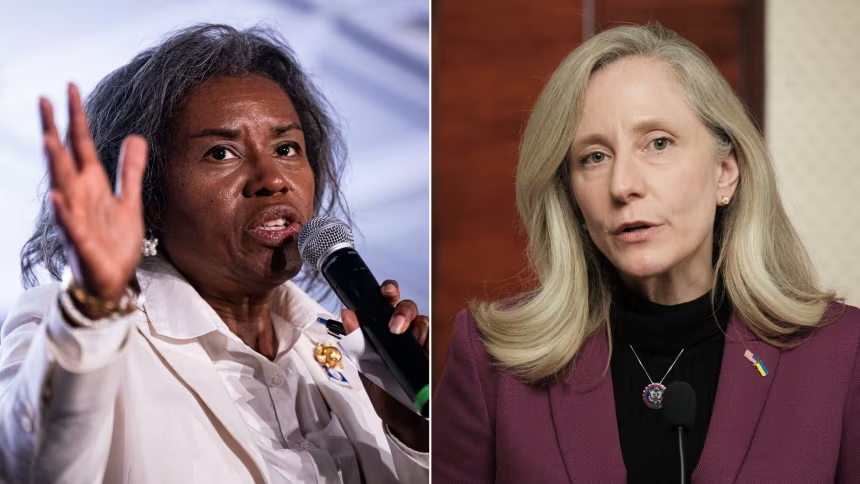
Earle-Sears accepts CNN invitation to Virginia governor’s debate
Entities mentioned:
- Winsome Earle-Sears: Ambition, Competitive spirit, Recognition
- Abigail Spanberger: Ambition, Control, Self-preservation
- CNN: Recognition, Influence, Professional pride
- Virginia Police Benevolent Association: Influence, Security, Professional pride
- Peyton Vogel: Loyalty, Professional pride, Duty
- Samson Signori: Loyalty, Professional pride, Control
Article Assessment:
Credibility Score: 75/100
Bias Rating: 55/100 (Center)
Sentiment Score: 50/100
Authoritarianism Risk: 20/100 (Strongly Democratic)
Bias Analysis:
The article presents both candidates' perspectives and includes statements from both campaigns. While it mentions Earle-Sears as an 'underdog,' it balances this by noting Spanberger's endorsement, maintaining a relatively neutral stance.
Key metric: Voter Engagement and Participation
As a social scientist, I analyze that this article highlights the importance of political debates in shaping voter engagement and participation. The acceptance and declination of debate invitations by the candidates reveal strategic decisions that could impact voter perceptions and turnout. Earle-Sears' willingness to participate in a national debate may be seen as an attempt to gain broader recognition and challenge her underdog status. Conversely, Spanberger's focus on local debates suggests a strategy to maintain control over the narrative and appeal to Virginia-specific concerns. The involvement of law enforcement endorsements and the emphasis on Virginia-based media indicate the significance of local issues and stakeholders in this gubernatorial race. This situation demonstrates how candidate choices regarding debate participation can influence voter engagement and, consequently, election outcomes.
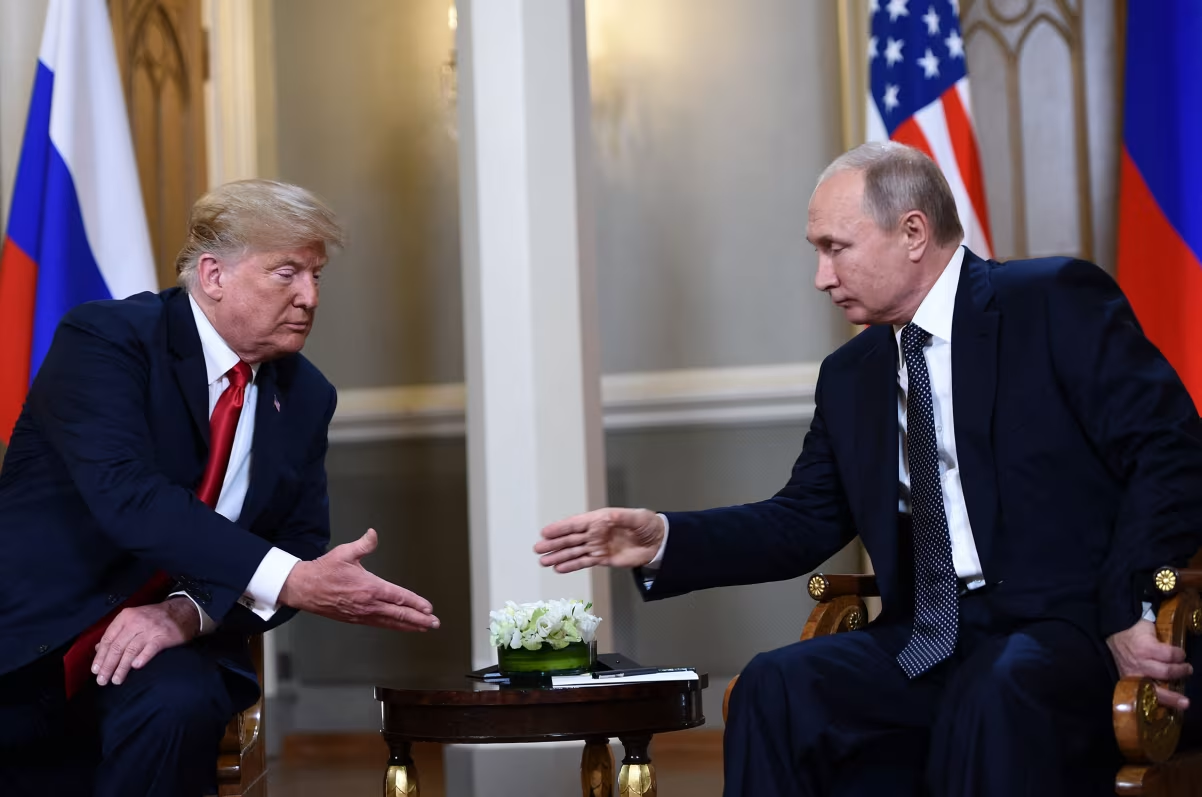
Ahead of summit, Trump questions what’s changed about Putin
Entities mentioned:
- Donald Trump: Ambition, Determination, Legacy
- Vladimir Putin: Power, Control, Ambition
- Volodymyr Zelensky: Self-preservation, Unity, Determination
- Steve Witkoff: Duty, Frustration, Determination
- Kyrylo Budanov: Professional pride, Wariness, Duty
- Angela Stent: Professional pride, Duty, Wariness
- Michael McFaul: Professional pride, Wariness, Duty
Article Assessment:
Credibility Score: 75/100
Bias Rating: 45/100 (Center)
Sentiment Score: 35/100
Authoritarianism Risk: 25/100 (Generally Democratic)
Bias Analysis:
The article presents multiple perspectives, including those of Trump, Putin, European allies, and intelligence officials. It balances Trump's optimism with skepticism from other sources, maintaining a relatively neutral stance.
Key metric: International Diplomatic Relations
As a social scientist, I analyze that this article highlights the complex dynamics surrounding the upcoming summit between Trump and Putin, focusing on Trump's evolving perspective on Putin and the challenges in negotiating an end to the Ukraine conflict. The article emphasizes the skepticism among intelligence communities and European allies regarding Putin's true intentions, suggesting that Putin may use any ceasefire to regroup and potentially escalate the conflict later. Trump's shift from a more naive approach to a more cautious stance towards Putin is noted, indicating a potential change in US-Russia relations. The article also underscores the difficulty in deciphering Putin's motivations and decision-making process, which complicates diplomatic efforts. This situation significantly impacts international diplomatic relations, as it involves multiple stakeholders with varying interests and concerns about the potential outcomes of the summit.

FBI agents are again pulled from their day jobs to address a Trump priority
Entities mentioned:
- FBI: Duty, Professional pride, Wariness
- Donald Trump: Control, Power, Influence
- Kash Patel: Loyalty, Ambition, Control
- Andrew McCabe: Professional pride, Wariness, Duty
- Metropolitan Police Department: Duty, Security, Professional pride
- Dan Bongino: Loyalty, Ambition, Influence
Article Assessment:
Credibility Score: 75/100
Bias Rating: 35/100 (Lean Left)
Sentiment Score: 25/100
Authoritarianism Risk: 65/100 (Authoritarian Tendencies)
Bias Analysis:
The article leans slightly left, evidenced by its critical tone towards Trump administration policies and sympathetic portrayal of FBI agents' concerns. However, it includes multiple sources and perspectives, maintaining a degree of balance.
Key metric: Law Enforcement Effectiveness
As a social scientist, I analyze that this article highlights a significant shift in FBI operations under the Trump administration, potentially compromising national security and law enforcement effectiveness. The reassignment of FBI agents to tasks outside their expertise, such as street patrols and immigration enforcement, appears to be politically motivated rather than based on security needs. This reallocation of resources may lead to reduced capacity in handling complex investigations, including counterintelligence and terrorism. The article suggests a growing tension between professional law enforcement practices and political directives, potentially leading to a decline in morale and expertise within the FBI. The forced involvement in tasks like reviewing Epstein files and supporting immigration enforcement raises concerns about the politicization of law enforcement and the potential neglect of critical national security matters. The recent firings of senior FBI officials further indicates a pattern of political interference in law enforcement operations, which could have long-term negative impacts on the bureau's effectiveness and independence.
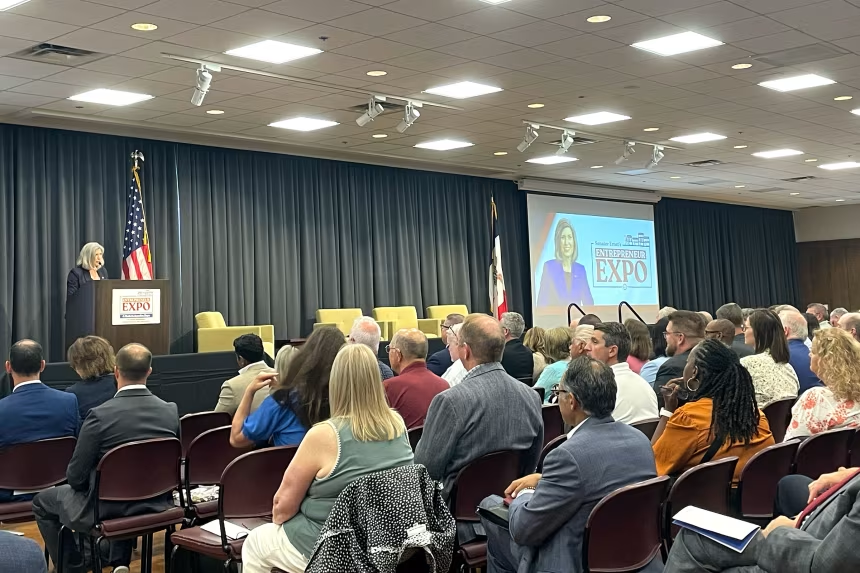
Republicans pitch Trump’s domestic policy agenda in Iowa, but some entrepreneurs aren’t yet sold
Entities mentioned:
- Kelly Loeffler: Ambition, Professional pride, Loyalty
- Laura Pager: Self-preservation, Indignation, Anxiety
- Joni Ernst: Ambition, Loyalty, Duty
- Lee Zeldin: Loyalty, Professional pride, Control
- Donald Trump: Power, Legacy, Control
- Republican Party: Power, Control, Competitive spirit
- Small Business Administration: Duty, Professional pride, Influence
- Environmental Protection Agency: Control, Influence, Professional pride
Article Assessment:
Credibility Score: 75/100
Bias Rating: 55/100 (Center)
Sentiment Score: 45/100
Authoritarianism Risk: 35/100 (Generally Democratic)
Bias Analysis:
The article presents multiple perspectives, including administration officials and business owners with varying views. While it leans slightly critical of the administration's policies, it attempts to balance this with official statements and supportive voices.
Key metric: Small Business Growth and Federal Contracting
As a social scientist, I analyze that this article highlights the complex interplay between the Trump administration's policies and their impact on small businesses, particularly in relation to federal contracting. The administration's efforts to downsize the federal government and reduce regulations are creating a challenging environment for some small business owners, especially those reliant on government contracts. This tension is evident in the conflicting narratives presented by administration officials and the experiences of business owners like Laura Pager. The article suggests that while the administration is promoting a pro-business agenda, the reality on the ground is more complicated, with some entrepreneurs feeling lost in the new landscape. This disconnect could potentially impact small business growth and participation in federal contracting, which are crucial economic indicators.
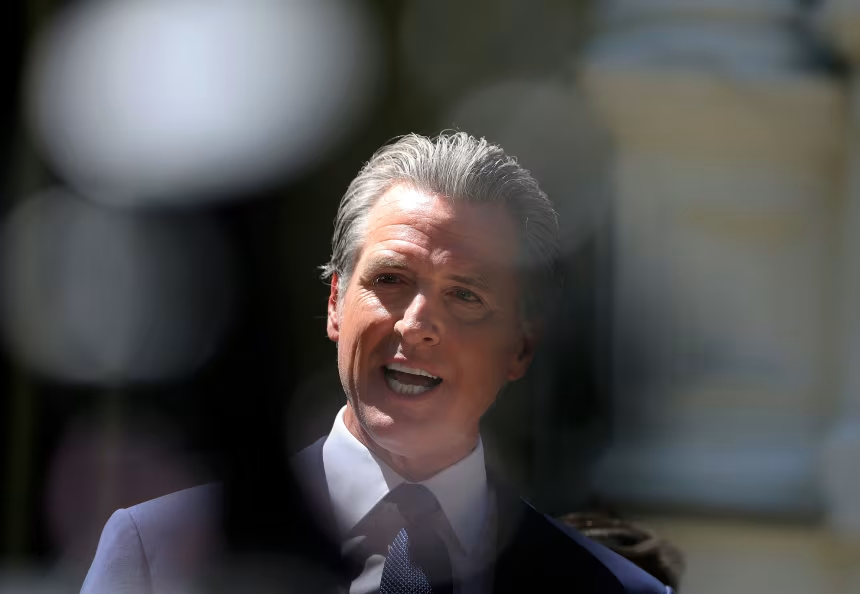
Newsom’s California redistricting push sets up a standoff with Republican-led opposition
Entities mentioned:
- Gavin Newsom: Power, Justice, Determination
- Donald Trump: Power, Control, Competitive spirit
- Greg Abbott: Power, Competitive spirit, Loyalty
- Arnold Schwarzenegger: Justice, Legacy, Righteousness
- Charles Munger Jr.: Justice, Influence, Determination
- Common Cause: Justice, Influence, Wariness
- League of Women Voters: Justice, Unity, Moral outrage
- Steve Hilton: Ambition, Justice, Competitive spirit
- Kevin Kiley: Justice, Self-preservation, Duty
Article Assessment:
Credibility Score: 75/100
Bias Rating: 55/100 (Center)
Sentiment Score: 35/100
Authoritarianism Risk: 45/100 (Mixed/Neutral)
Bias Analysis:
The article presents multiple viewpoints and includes quotes from various stakeholders, indicating an attempt at balance. However, there's slightly more space given to Democratic perspectives and framing of the issue as a response to Republican actions.
Key metric: Electoral Fairness and Representation
As a social scientist, I analyze that this article highlights a significant political conflict over redistricting in California, with potential national implications. Governor Newsom's push to redraw congressional maps is presented as a response to Republican-led efforts in other states, particularly Texas. This creates a tension between maintaining California's independent redistricting commission and strategically countering perceived gerrymandering elsewhere. The involvement of various political figures, advocacy groups, and potential legal challenges underscores the complexity of the issue. The debate touches on core democratic principles such as fair representation and the balance of power between state and federal governments. The potential impact on future elections and party control in Congress makes this a critical issue for electoral fairness and representation across the United States.