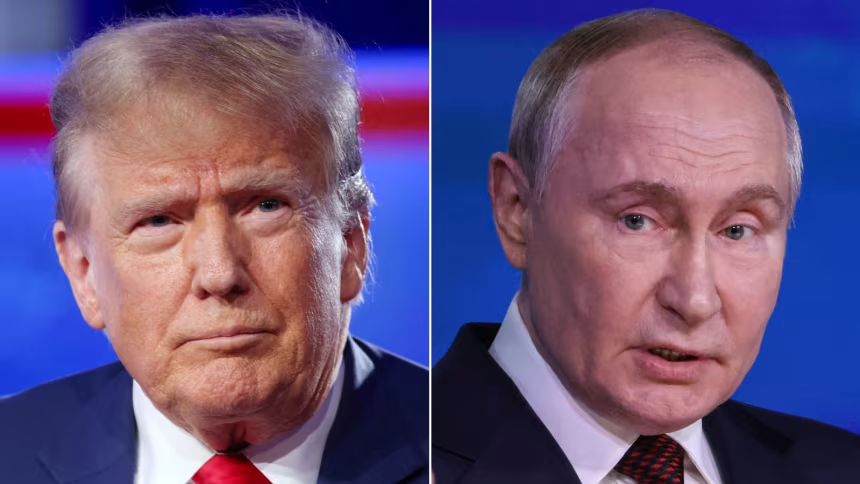
As Trump’s deadline for Russia comes due, White House preps for possible summit with Putin
Entities mentioned:
- Donald Trump: Power, Control, Legacy
- Vladimir Putin: Power, Control, Self-preservation
- Volodymyr Zelensky: Self-preservation, Loyalty, Justice
- Steve Witkoff: Duty, Influence
- Xi Jinping: Power, Influence, Control
Article Assessment:
Credibility Score: 75/100
Bias Rating: 45/100 (Center)
Sentiment Score: 35/100
Authoritarianism Risk: 40/100 (Generally Democratic)
Bias Analysis:
The article presents multiple perspectives and quotes various sources, maintaining a relatively neutral stance. It balances reporting on Trump's actions with reactions from other involved parties, avoiding overtly partisan language.
Key metric: US Foreign Policy Effectiveness
As a social scientist, I analyze that this article highlights the complex interplay between diplomatic efforts and economic sanctions in US foreign policy towards Russia and the Ukraine conflict. Trump's approach oscillates between threatening sanctions and pursuing diplomatic engagement, reflecting a tension between punitive measures and dialogue. The potential summit with Putin, without preconditions involving Ukraine, suggests a prioritization of bilateral US-Russia relations over a multilateral approach to conflict resolution. This strategy risks alienating European allies and Ukraine, potentially undermining the united front against Russian aggression. The article also underscores the interconnectedness of global politics and economics, with India and China's energy imports from Russia complicating the sanctions strategy. The effectiveness of US foreign policy in this context depends on balancing multiple competing interests and maintaining credibility in both diplomatic and economic spheres.

Exclusive: Federal law enforcement to begin interviewing unaccompanied migrant children in government custody
Entities mentioned:
- Trump administration: Control, Security, Justice
- Department of Homeland Security: Duty, Security, Control
- Health and Human Services: Duty, Obligation, Security
- Immigration and Customs Enforcement: Control, Security, Duty
- Office of Refugee Resettlement: Duty, Obligation, Security
- Immigrant advocates: Justice, Moral outrage, Protection
Article Assessment:
Credibility Score: 75/100
Bias Rating: 55/100 (Center)
Sentiment Score: 35/100
Authoritarianism Risk: 65/100 (Authoritarian Tendencies)
Bias Analysis:
The article presents multiple viewpoints, including those of the administration and immigrant advocates. While it leans slightly towards the concerns of advocates, it also includes the administration's justifications for the policy change.
Key metric: Immigration Enforcement Effectiveness
As a social scientist, I analyze that this article highlights a significant shift in the Trump administration's approach to handling unaccompanied migrant children. The decision to conduct in-person interviews with these children in government shelters represents an intensification of immigration enforcement efforts. This policy change could have substantial impacts on the well-being of migrant children, the effectiveness of the sponsorship program, and overall immigration dynamics. The administration's stated goal of identifying and addressing potential criminal activities conflicts with advocates' concerns about child welfare and the potential chilling effect on immigrant families. This tension reflects broader debates in U.S. immigration policy regarding the balance between enforcement and humanitarian considerations.