
Federal judge rejects Trump DOJ’s bid to unseal grand jury materials in Ghislaine Maxwell case
Entities mentioned:
- Judge Paul Engelmayer: Justice, Duty, Professional pride
- Trump administration: Control, Influence, Self-preservation
- Department of Justice: Transparency, Duty, Influence
- Ghislaine Maxwell: Self-preservation, Control, Greed
- Jeffrey Epstein: Power, Control, Greed
- Victims: Justice, Self-respect, Security
- Attorney General Pam Bondi: Duty, Loyalty, Influence
- Judge Richard Berman: Justice, Duty, Professional pride
Article Assessment:
Credibility Score: 75/100
Bias Rating: 45/100 (Center)
Sentiment Score: 35/100
Authoritarianism Risk: 25/100 (Generally Democratic)
Bias Analysis:
The article presents a balanced view of the situation, quoting extensively from the judge's ruling. While it mentions the Trump administration's involvement, it doesn't appear to take a partisan stance.
Key metric: Public Trust in Government Institutions
As a social scientist, I analyze that this article highlights a significant tension between the judiciary and the executive branch, specifically the Department of Justice under the Trump administration. The judge's scathing rejection of the DOJ's request to unseal grand jury materials in the Maxwell case reveals a deep skepticism of the government's motives. This conflict could potentially erode public trust in government institutions, particularly the DOJ. The judge's emphasis on the lack of new information in the requested materials and the suggestion that the government's motion might be aimed at 'diversion' rather than transparency raises questions about the administration's true intentions. Furthermore, the mention of victims being used for 'political warfare' underscores the complex interplay between justice, politics, and media attention in high-profile cases. This incident may contribute to a growing perception of government institutions being used for political purposes rather than serving justice, potentially leading to decreased public confidence in the justice system and federal agencies.
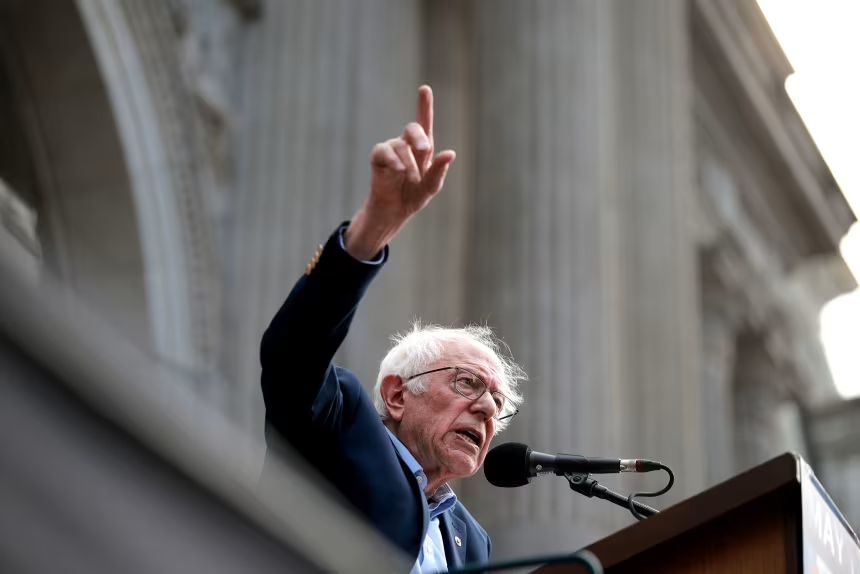
Bernie Sanders thinks Democrats have turned on their base. Now it’s time to fight back
Entities mentioned:
- Bernie Sanders: Justice, Moral outrage, Influence
- Democratic Party: Power, Control, Self-preservation
- Republican Party: Power, Control, Competitive spirit
- Donald Trump: Power, Control, Ambition
- Kamala Harris: Ambition, Power, Influence
- Israel: Self-preservation, Security, Control
- Vladimir Putin: Power, Control, Greed
Article Assessment:
Credibility Score: 75/100
Bias Rating: 40/100 (Lean Left)
Sentiment Score: 35/100
Authoritarianism Risk: 45/100 (Mixed/Neutral)
Bias Analysis:
The article leans slightly left, giving more prominence to Sanders' progressive views and critiques of both parties. While it includes some opposing viewpoints, the framing tends to emphasize Sanders' perspective on various issues.
Key metric: Political Polarization Index
As a social scientist, I analyze that this article highlights the increasing political polarization in the United States, particularly in relation to redistricting efforts and party strategies. Bernie Sanders' criticism of both Republican tactics and Democratic responses indicates a deepening divide between parties and within the Democratic Party itself. The discussion of gerrymandering and retaliatory redistricting suggests a deterioration of democratic norms, which could further erode public trust in the electoral system. Sanders' comments on the Democratic Party's perceived abandonment of its working-class base reflect growing tensions within the party and could impact voter alignment. The article also touches on international issues, including the Israel-Gaza conflict and US-Russia relations, which may influence domestic political discourse and foreign policy positions. Overall, the content suggests an intensification of ideological rifts and a potential shift in political alliances, which could significantly affect the Political Polarization Index in the coming years.