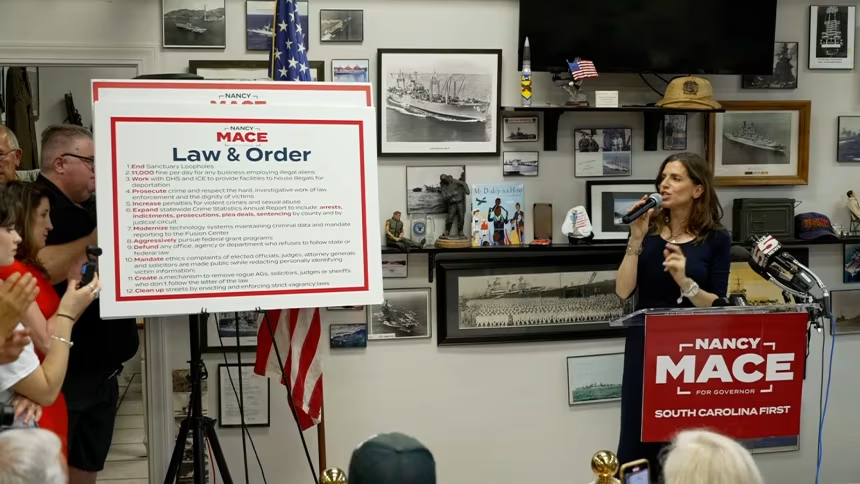
Mace touts ties to Trump, jockeys for endorsement in South Carolina governor’s race in campaign-style town hall
Entities mentioned:
- Nancy Mace: Ambition, Power, Recognition
- Donald Trump: Influence, Power, Legacy
- Ralph Norman: Ambition, Competitive spirit
- Alan Wilson: Ambition, Power
- Joe Biden: Legacy, Influence
- Greg Abbott: Power, Control
- Jim Clyburn: Self-preservation, Influence
Article Assessment:
Credibility Score: 75/100
Bias Rating: 55/100 (Center)
Sentiment Score: 45/100
Authoritarianism Risk: 55/100 (Mixed/Neutral)
Bias Analysis:
The article presents a fairly balanced view of Mace's town hall, including both her pro-Trump statements and contradictions in her claims. While it leans slightly towards critiquing Mace's positions, it also provides context and direct quotes, maintaining a relatively neutral stance.
Key metric: Political Polarization Index
As a social scientist, I analyze that this article highlights the increasing political polarization in the United States, particularly within the Republican Party. Nancy Mace's attempt to align herself closely with Donald Trump while simultaneously taking credit for Biden administration achievements demonstrates the complex dynamics at play in GOP politics. The emphasis on Trump's endorsement and the jockeying for position in the gubernatorial race underscores the continued influence of Trump within the party. Mace's stance on transgender issues and redistricting efforts also points to ongoing culture war topics that contribute to polarization. The article reveals how politicians navigate conflicting interests, balancing party loyalty with local needs, which can further entrench political divisions and impact governance effectiveness.
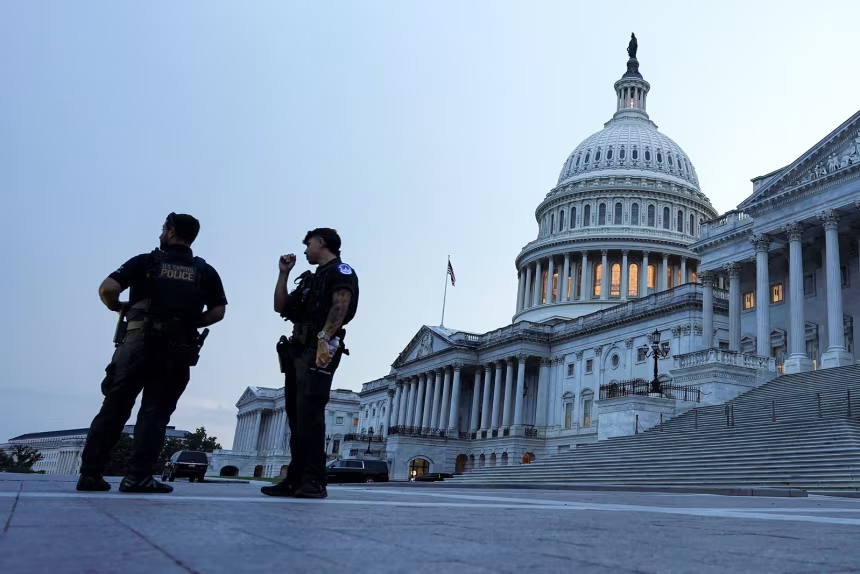
White House plans increase in federal law enforcement in DC over crime as Trump threatens to bring in National Guard
Entities mentioned:
- Trump administration: Control, Power, Security
- Donald Trump: Power, Control, Recognition
- ICE: Duty, Control, Security
- FBI: Duty, Security, Justice
- National Guard: Duty, Security, Control
- Department of Homeland Security: Security, Control, Duty
- Karoline Leavitt: Duty, Loyalty, Professional pride
- Muriel Bowser: Duty, Security, Self-preservation
- DC Police Department: Duty, Security, Professional pride
- Gavin Newsom: Moral outrage, Self-preservation, Control
Article Assessment:
Credibility Score: 70/100
Bias Rating: 55/100 (Center)
Sentiment Score: 30/100
Authoritarianism Risk: 65/100 (Authoritarian Tendencies)
Bias Analysis:
The article presents multiple viewpoints and cites official sources, but there's a slight lean towards questioning Trump's claims. It includes contradictory crime statistics and criticism of Trump's actions, balancing official statements with factual context.
Key metric: Crime Rate in Washington, DC
As a social scientist, I analyze that this article highlights a complex interplay between federal and local governance, public safety concerns, and political motivations. The Trump administration's plan to increase federal law enforcement presence in Washington, DC, ostensibly to address crime issues, raises questions about the balance of power between federal and local authorities. The discrepancy between Trump's claims of increased crime and the actual crime statistics reported by DC Police suggests potential political motivations behind the move. The threat to deploy the National Guard and take over the DC Police Department indicates a significant escalation in federal intervention in local affairs, which could have implications for democratic governance and federalism. This situation reflects broader tensions in American politics regarding law and order, federal vs. local control, and the use of security forces for political purposes.