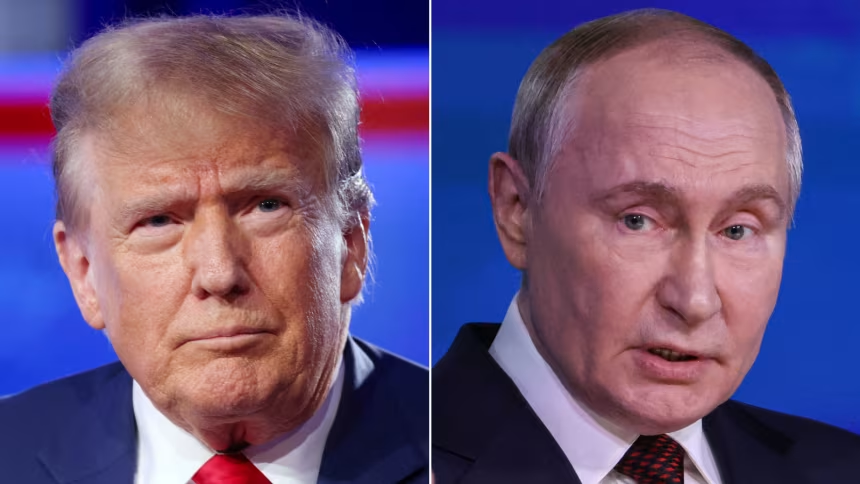
As Trump’s deadline for Russia comes due, White House preps for possible summit with Putin
Entities mentioned:
- Donald Trump: Power, Control, Legacy
- Vladimir Putin: Power, Control, Self-preservation
- Volodymyr Zelensky: Self-preservation, Loyalty, Justice
- Steve Witkoff: Duty, Influence
- Xi Jinping: Power, Influence, Control
Article Assessment:
Credibility Score: 75/100
Bias Rating: 45/100 (Center)
Sentiment Score: 35/100
Authoritarianism Risk: 40/100 (Generally Democratic)
Bias Analysis:
The article presents multiple perspectives and quotes various sources, maintaining a relatively neutral stance. It balances reporting on Trump's actions with reactions from other involved parties, avoiding overtly partisan language.
Key metric: US Foreign Policy Effectiveness
As a social scientist, I analyze that this article highlights the complex interplay between diplomatic efforts and economic sanctions in US foreign policy towards Russia and the Ukraine conflict. Trump's approach oscillates between threatening sanctions and pursuing diplomatic engagement, reflecting a tension between punitive measures and dialogue. The potential summit with Putin, without preconditions involving Ukraine, suggests a prioritization of bilateral US-Russia relations over a multilateral approach to conflict resolution. This strategy risks alienating European allies and Ukraine, potentially undermining the united front against Russian aggression. The article also underscores the interconnectedness of global politics and economics, with India and China's energy imports from Russia complicating the sanctions strategy. The effectiveness of US foreign policy in this context depends on balancing multiple competing interests and maintaining credibility in both diplomatic and economic spheres.

New Pentagon policy could divert weapons built for Ukraine back into US stockpiles
Entities mentioned:
- Pentagon: Self-preservation, Security, Control
- Ukraine: Self-preservation, Security, Freedom
- President Donald Trump: Power, Influence, Control
- Russian President Vladimir Putin: Power, Control, Influence
- Pete Hegseth: Duty, Control, Security
- Elbridge Colby: Wariness, Security, Professional pride
- NATO: Security, Unity, Influence
- US Congress: Control, Duty, Security
Article Assessment:
Credibility Score: 75/100
Bias Rating: 55/100 (Center)
Sentiment Score: 35/100
Authoritarianism Risk: 45/100 (Mixed/Neutral)
Bias Analysis:
The article presents multiple perspectives and cites various sources, including officials and documents. While it leans slightly towards emphasizing concerns about the policy shift, it also includes countervailing viewpoints and actions, maintaining a relatively balanced approach.
Key metric: US Military Readiness
As a social scientist, I analyze that this policy shift potentially prioritizes US military readiness over immediate support for Ukraine. The diversion of weapons back to US stockpiles could significantly impact Ukraine's defense capabilities against Russian aggression. This change reflects a complex interplay between domestic security concerns, international commitments, and geopolitical strategy. The creation of a NATO mechanism for weapon purchases indicates a move towards burden-sharing among allies, potentially reducing US direct involvement. However, this shift may also signal a reevaluation of US foreign policy priorities, possibly weakening the perceived US commitment to Ukraine's sovereignty. The tension between Congressional intent and executive policy implementation highlights the ongoing debate over the balance of powers in US foreign policy decision-making.