
Victims object to ‘public legitimization’ of Ghislaine Maxwell as judge weighs fate of Epstein grand jury transcripts
Entities mentioned:
- Jeffrey Epstein: Power, Control, Greed
- Ghislaine Maxwell: Self-preservation, Power, Control
- Victims of Epstein and Maxwell: Justice, Self-respect, Security
- Brad Edwards and Paul Cassell (Lawyers): Justice, Duty, Moral outrage
- Justice Department: Control, Obligation, Wariness
- Trump administration: Power, Control, Self-preservation
- Todd Blanche (Deputy Attorney General): Duty, Professional pride, Influence
- David Oscar Markus (Maxwell's attorney): Duty, Professional pride, Self-preservation
Article Assessment:
Credibility Score: 75/100
Bias Rating: 45/100 (Center)
Sentiment Score: 35/100
Authoritarianism Risk: 25/100 (Generally Democratic)
Bias Analysis:
The article presents multiple perspectives, including those of victims, lawyers, and Maxwell's defense. While it leans slightly towards emphasizing victim concerns, it also includes Maxwell's arguments, maintaining a relatively balanced approach.
Key metric: Public Trust in Government Institutions
As a social scientist, I analyze that this article highlights a significant tension between the pursuit of justice, victim protection, and institutional transparency. The potential unsealing of grand jury transcripts in the Epstein case presents a complex challenge to the justice system. On one hand, there's a push for transparency and accountability, particularly given the high-profile nature of the case and its connection to powerful figures. On the other hand, there are serious concerns about victim privacy, re-traumatization, and the potential impact on ongoing legal proceedings. The article suggests a growing distrust among victims towards government institutions, particularly in light of Maxwell's recent treatment. This situation likely negatively impacts public trust in government institutions, as it raises questions about the priorities and motivations of the justice system when dealing with high-profile cases involving influential individuals.

Top Trump officials will discuss Epstein strategy at Wednesday dinner hosted by Vance
Entities mentioned:
- Trump administration: Control, Self-preservation, Unity
- Todd Blanche: Duty, Professional pride, Justice
- Ghislaine Maxwell: Self-preservation, Fear, Loyalty
- Jeffrey Epstein: Power, Greed, Control
- Donald Trump: Self-preservation, Power, Control
- House Oversight Committee: Justice, Duty, Moral outrage
Article Assessment:
Credibility Score: 75/100
Bias Rating: 45/100 (Center)
Sentiment Score: 35/100
Authoritarianism Risk: 40/100 (Generally Democratic)
Bias Analysis:
The article presents a balanced view, including perspectives from various sides and citing multiple sources. While it focuses on Trump administration actions, it also includes opposition viewpoints and contextual information, maintaining a generally neutral stance.
Key metric: Government Transparency Index
As a social scientist, I analyze that this article highlights the complex interplay between government transparency, political strategy, and public perception in the handling of high-profile criminal cases. The Trump administration's deliberation over releasing sensitive information related to the Epstein case demonstrates a tension between transparency demands and potential political ramifications. This situation could significantly impact the Government Transparency Index, as the decision to release or withhold information will be seen as a benchmark for the administration's commitment to openness. The involvement of high-ranking officials in strategizing the response underscores the political sensitivity of the issue. The House Oversight Committee's subpoenas further emphasize the broader governmental push for transparency, potentially forcing the administration's hand. This case serves as a litmus test for how the government balances public interest, legal considerations, and political strategy in high-stakes situations.

House Oversight Committee subpoenas Justice Department for Epstein files, high-profile former officials for depositions
Entities mentioned:
- House Oversight Committee: Justice, Duty, Influence
- Justice Department: Duty, Control, Self-preservation
- Jeffrey Epstein: Power, Control, Greed
- Republican Party: Influence, Righteousness, Power
- Democratic Party: Self-preservation, Influence, Justice
- Mike Johnson: Control, Self-preservation, Loyalty
- James Comer: Justice, Influence, Duty
- Ghislaine Maxwell: Self-preservation, Control, Fear
- Donald Trump: Power, Influence, Self-preservation
Article Assessment:
Credibility Score: 75/100
Bias Rating: 55/100 (Center)
Sentiment Score: 35/100
Authoritarianism Risk: 25/100 (Generally Democratic)
Bias Analysis:
The article presents a relatively balanced view, including perspectives from both Republican and Democratic sides. While it focuses more on Republican-led actions, it also mentions Democratic initiatives, maintaining a fairly neutral stance.
Key metric: Government Transparency and Accountability
As a social scientist, I analyze that this article highlights a significant push for transparency and accountability in a high-profile case involving Jeffrey Epstein. The House Oversight Committee's issuance of subpoenas to various former high-ranking officials and the Justice Department indicates a strong desire to uncover potentially hidden information. This action could significantly impact government transparency, as it challenges the boundaries between congressional oversight and executive branch authority. The bipartisan nature of the subpoenas, targeting both Republican and Democratic figures, suggests a broader concern for justice beyond party lines. However, the resistance from some quarters, including House Speaker Mike Johnson, demonstrates the complex political dynamics at play. This situation could potentially lead to increased public trust in government institutions if handled transparently, or conversely, could further erode trust if perceived as politically motivated or obstructed. The involvement of former presidents and high-ranking officials also underscores the gravity of the investigation and its potential implications for public perception of political elites.

Trump’s cynical bait-and-switch on IVF
Entities mentioned:
- Donald Trump: Power, Influence, Recognition
- Trump Administration: Control, Influence, Self-preservation
- Republican Party: Power, Control, Self-preservation
- JD Vance: Loyalty, Ambition, Influence
- Rand Paul: Righteousness, Skepticism, Professional pride
- Pharmaceutical Companies: Greed, Self-preservation, Power
- Insurance Companies: Greed, Self-preservation, Control
Article Assessment:
Credibility Score: 75/100
Bias Rating: 35/100 (Lean Left)
Sentiment Score: 30/100
Bias Analysis:
The article leans left, evidenced by its critical tone towards Trump and skepticism of his promises. However, it includes factual information and quotes from various sources, maintaining some balance despite an overall negative framing of Trump's actions.
Key metric: Healthcare Affordability
As a social scientist, I analyze that this article exposes a significant disconnect between Trump's campaign promises and actual policy implementation regarding IVF coverage. The lack of concrete action on making IVF more affordable or accessible, despite explicit promises, suggests a cynical political strategy rather than genuine policy intent. This discrepancy could potentially impact public trust in political promises and healthcare reform efforts. The article also highlights the complex intersection of healthcare policy, reproductive rights, and conservative values, demonstrating the challenges in implementing sweeping healthcare changes in a politically polarized environment.
- Read more about Trump’s cynical bait-and-switch on IVF
- Log in to post comments
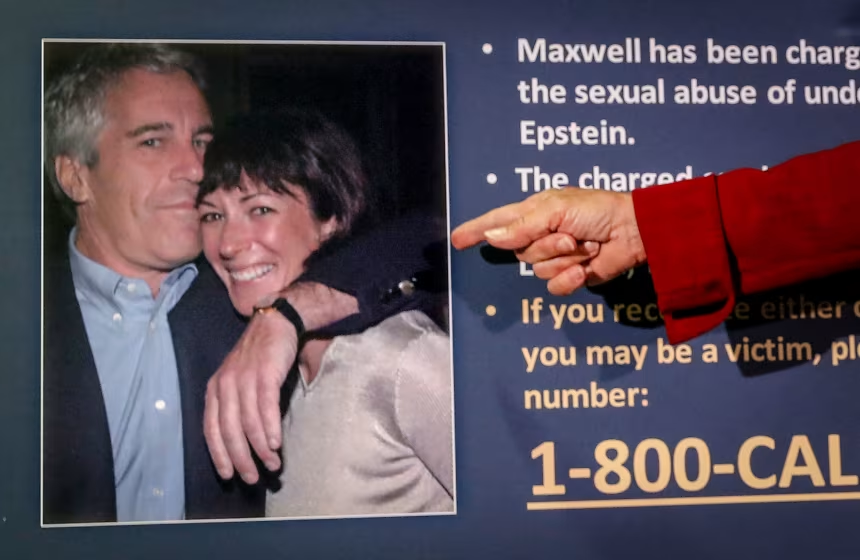
Ghislaine Maxwell’s prison transfer adds to Trump’s Epstein morass
Entities mentioned:
- Ghislaine Maxwell: Self-preservation, Security, Freedom
- Donald Trump: Self-preservation, Power, Control
- Jeffrey Epstein: Power, Control, Greed
- Todd Blanche: Loyalty, Professional pride, Influence
- Bureau of Prisons: Duty, Control, Security
- Justice Department: Justice, Control, Duty
- Virginia Giuffre: Justice, Recognition, Self-respect
Article Assessment:
Credibility Score: 75/100
Bias Rating: 35/100 (Lean Left)
Sentiment Score: 25/100
Bias Analysis:
The article leans left in its framing, focusing critically on Trump administration actions and emphasizing potential improprieties. While it presents factual information, the tone and selection of details suggest a skeptical view of the administration's handling of the Epstein-Maxwell case.
Key metric: Government Transparency and Accountability
As a social scientist, I analyze that this article highlights significant concerns about the Trump administration's handling of the Epstein-Maxwell case, potentially impacting government transparency and accountability. The unusual prison transfer of Ghislaine Maxwell, coupled with the administration's lack of transparency regarding meetings and document disclosures, raises questions about potential favoritism or interference in the justice process. This situation could erode public trust in governmental institutions and the rule of law. The article suggests a pattern of behavior that may be perceived as attempts to control information or influence potential witnesses, which could have far-reaching implications for the integrity of the justice system and the public's perception of governmental fairness and accountability.