
Voters share the economic impacts of Trump’s megabill in battleground Arizona
Entities mentioned:
- Ray Flores: Ambition, Wariness, Self-preservation
- Donald Trump: Power, Influence, Legacy
- Republican Congress: Control, Competitive spirit, Influence
- Juan Ciscomani: Ambition, Power, Self-preservation
- Claudio Rodriguez: Duty, Justice, Moral outrage
Article Assessment:
Credibility Score: 75/100
Bias Rating: 55/100 (Center)
Sentiment Score: 45/100
Authoritarianism Risk: 35/100 (Generally Democratic)
Bias Analysis:
The article presents multiple perspectives, including business owners, non-profit workers, and political figures. While it leans slightly left in its framing of social safety net concerns, it balances this with positive economic impacts of Republican policies.
Key metric: Economic Impact of Policy Changes
As a social scientist, I analyze that this article highlights the complex interplay between economic policy changes and voter sentiment in a battleground state. The GOP's new policy bill, championed by Trump, has immediate effects on hiring practices and business operations, as seen in Ray Flores' restaurant. However, the delayed implementation of social safety net changes creates uncertainty for organizations like the Community Food Bank. The article suggests a potential disconnect between short-term economic benefits and long-term social consequences, which may influence voter behavior in the upcoming midterms. The Latino vote is presented as a crucial factor, with Republicans hoping to build on recent gains. The staggered implementation of policy changes complicates political messaging and voter response, potentially benefiting incumbents in the short term but creating challenges for long-term policy evaluation.
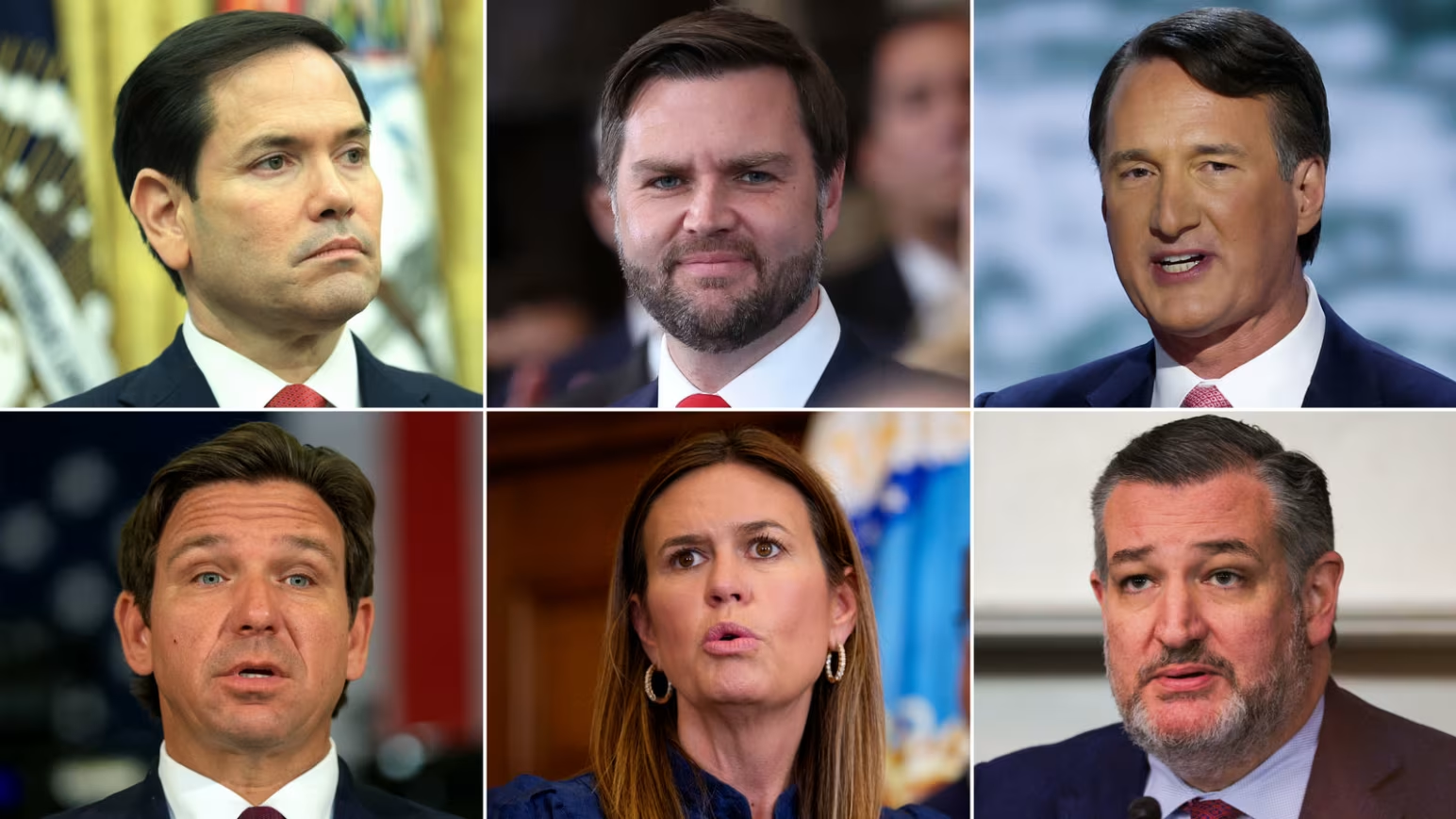
Republicans are (quietly) making 2028 moves
Entities mentioned:
- Donald Trump: Power, Influence, Legacy
- JD Vance: Ambition, Loyalty, Recognition
- Marco Rubio: Ambition, Professional pride, Recognition
- Glenn Youngkin: Ambition, Competitive spirit, Recognition
- Sarah Huckabee Sanders: Loyalty, Ambition, Recognition
- Ted Cruz: Ambition, Competitive spirit, Recognition
- Josh Hawley: Ambition, Influence, Recognition
- Republican Party: Power, Control, Unity
Article Assessment:
Credibility Score: 75/100
Bias Rating: 55/100 (Center)
Sentiment Score: 50/100
Authoritarianism Risk: 35/100 (Generally Democratic)
Bias Analysis:
The article presents a balanced view of the Republican Party's internal dynamics, offering insights from various perspectives. While it focuses more on Republican strategies, it does not overtly favor or criticize any particular faction or candidate.
Key metric: Political Party Cohesion
As a social scientist, I analyze that this article highlights the complex dynamics within the Republican Party as it looks towards the 2028 presidential election. The party appears to be grappling with maintaining unity and loyalty to Trump's legacy while also allowing room for new leadership to emerge. This balancing act is likely to significantly impact party cohesion, as potential candidates must carefully navigate their ambitions without alienating Trump's base. The article suggests that the party's future direction and ideology may be shaped by how successfully candidates can align themselves with Trump's populist instincts while also distinguishing themselves as viable leaders. This delicate balance could either strengthen the party's unity around a shared vision or lead to internal fractures if competing factions emerge.
- Read more about Republicans are (quietly) making 2028 moves
- Log in to post comments
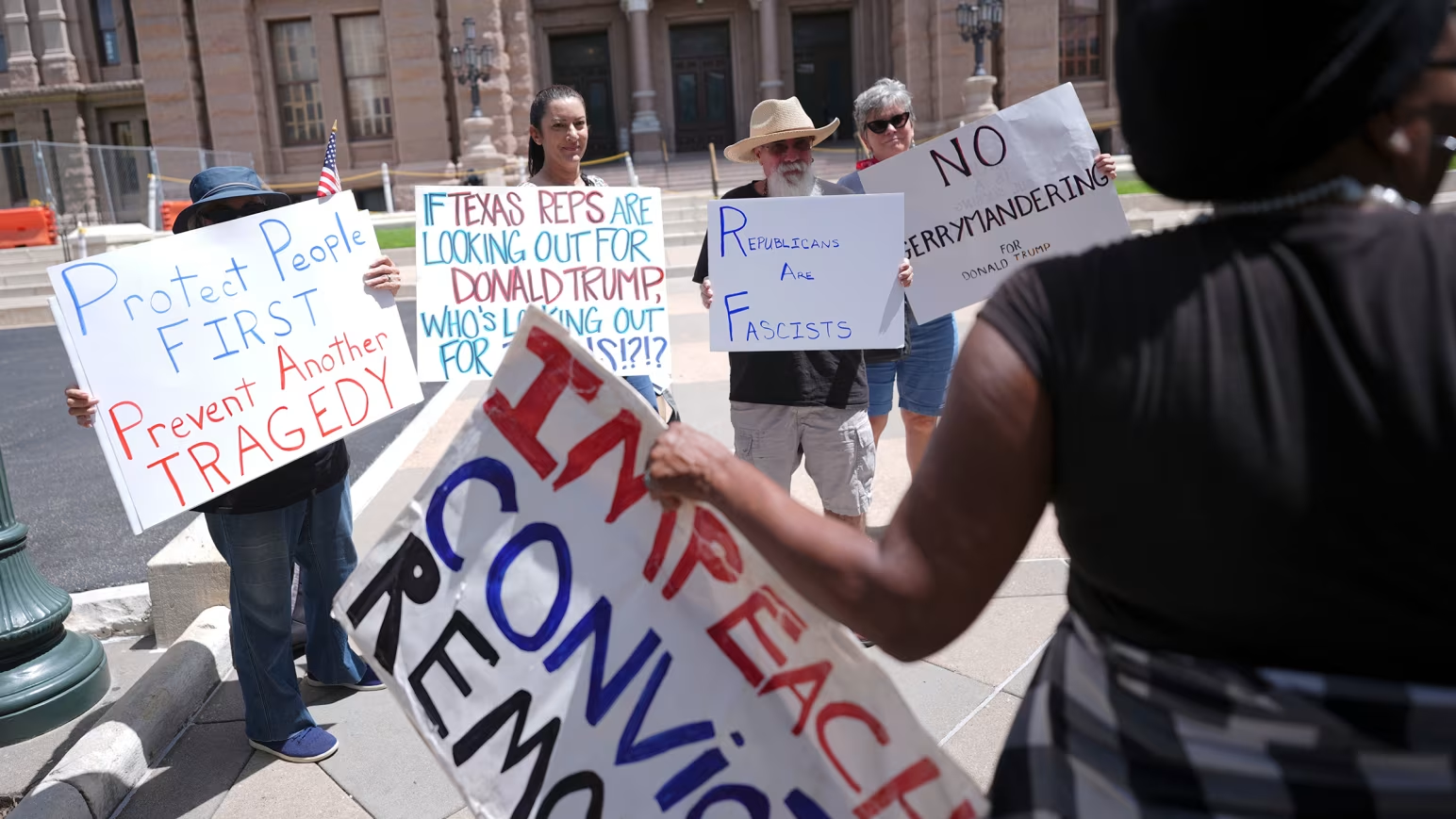
Republicans want to game the next election. Could Democrats get ‘ruthless’ to respond?
Entities mentioned:
- Republicans: Power, Control, Competitive spirit
- Democrats: Power, Justice, Competitive spirit
- Donald Trump: Power, Control, Ambition
- Ron DeSantis: Ambition, Power, Competitive spirit
- Mike Johnson: Power, Control, Loyalty
- Beto O'Rourke: Ambition, Power, Determination
- Gavin Newsom: Power, Competitive spirit, Ambition
- Hakeem Jeffries: Power, Competitive spirit, Justice
Article Assessment:
Credibility Score: 75/100
Bias Rating: 45/100 (Center)
Sentiment Score: 35/100
Authoritarianism Risk: 65/100 (Authoritarian Tendencies)
Bias Analysis:
The article presents views from both Republican and Democratic perspectives, providing a relatively balanced account. However, there's a slight lean towards criticizing Republican actions more heavily, while presenting Democratic responses as reactive.
Key metric: Electoral Integrity
As a social scientist, I analyze that this article highlights a significant threat to electoral integrity in the United States. The attempts by Republicans to redraw congressional districts mid-decade, and the potential Democratic response, could severely undermine the fairness and representativeness of the electoral system. This practice of partisan gerrymandering, if implemented, would likely lead to increased political polarization, reduced competitiveness in elections, and a disconnect between the popular vote and seat allocation. The potential abandonment of nonpartisan redistricting commissions in Democratic-controlled states like California could further erode public trust in the electoral process. This situation reflects a dangerous escalation in partisan tactics that prioritize short-term political gain over long-term democratic stability. The article also underscores the importance of nationwide standards for redistricting to ensure fair representation and maintain the integrity of the electoral system.
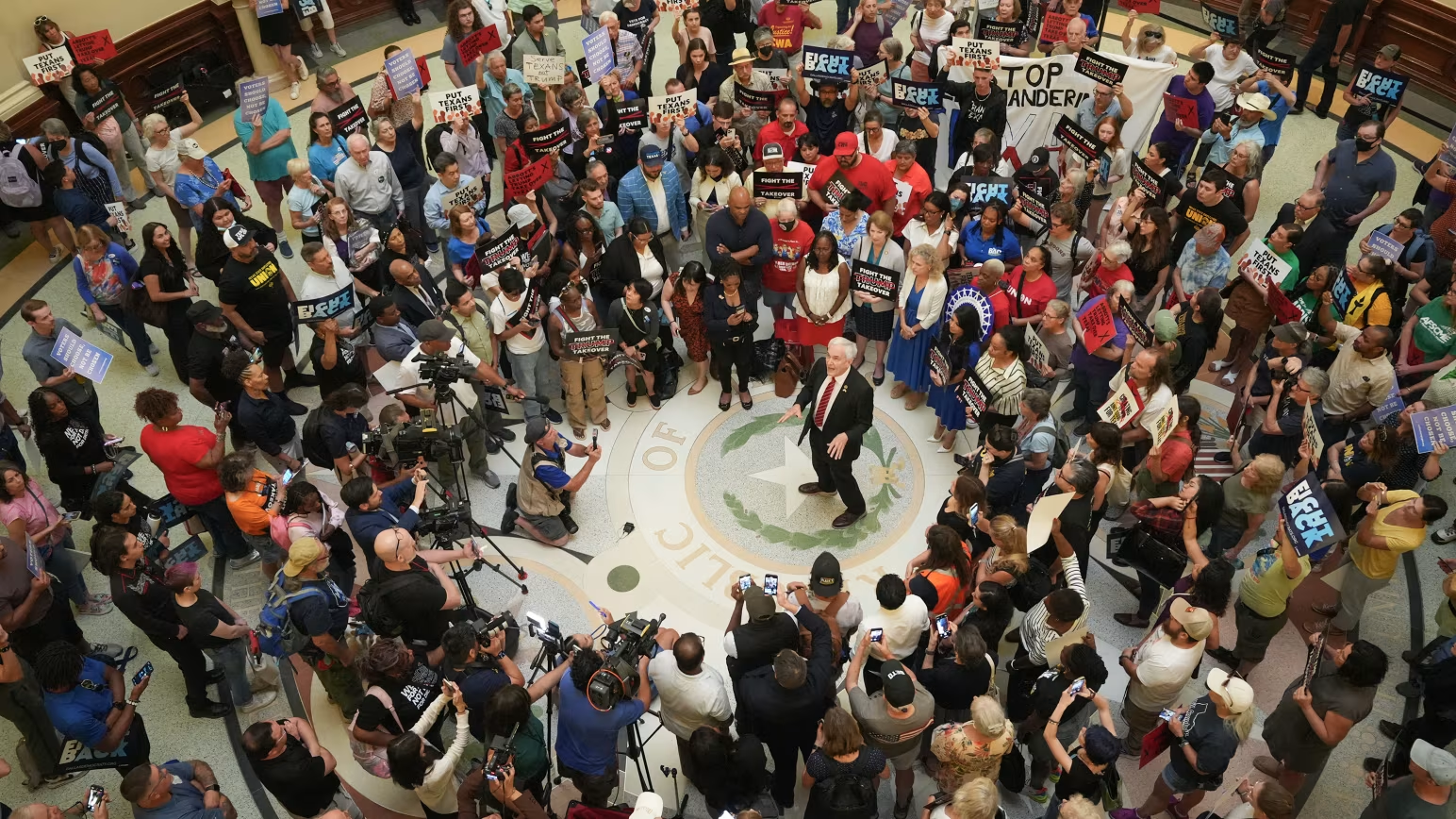
Why Trump’s Texas battle over the House could end up affecting every American
Entities mentioned:
- Donald Trump: Power, Control, Ambition
- Democratic Party: Competitive spirit, Self-preservation, Justice
- Republican Party: Power, Control, Competitive spirit
- Texas State Lawmakers (Democratic): Righteousness, Determination, Resistance
- Kathy Hochul: Competitive spirit, Determination, Power
- Gavin Newsom: Ambition, Competitive spirit, Justice
- Greg Abbott: Loyalty, Power, Control
- Mike Johnson: Power, Loyalty, Control
Article Assessment:
Credibility Score: 65/100
Bias Rating: 35/100 (Lean Left)
Sentiment Score: 30/100
Authoritarianism Risk: 55/100 (Mixed/Neutral)
Bias Analysis:
The article leans slightly left, focusing more on Democratic perspectives and strategies. While it mentions Republican actions, it frames them more negatively and gives more space to Democratic justifications.
Key metric: Electoral Integrity
As a social scientist, I analyze that this article highlights a significant escalation in the ongoing battle over redistricting and its impact on electoral integrity in the United States. The Democrats' shift towards more aggressive tactics in response to Republican gerrymandering efforts in Texas represents a potential turning point in how both parties approach electoral map-drawing. This development could have far-reaching consequences for the balance of power in the House of Representatives and the overall health of American democracy. The article suggests that Democrats are abandoning previous commitments to nonpartisan redistricting commissions in favor of a more combative approach, mirroring Republican tactics. This shift indicates a growing concern among Democrats about losing ground in the electoral landscape and a willingness to engage in similar practices they have previously criticized. The potential for a 'race to the bottom' in gerrymandering could further erode public trust in the electoral system and exacerbate political polarization. The focus on Texas as a battleground for this issue underscores the state's importance in national politics and its role as a bellwether for broader trends in electoral strategy.
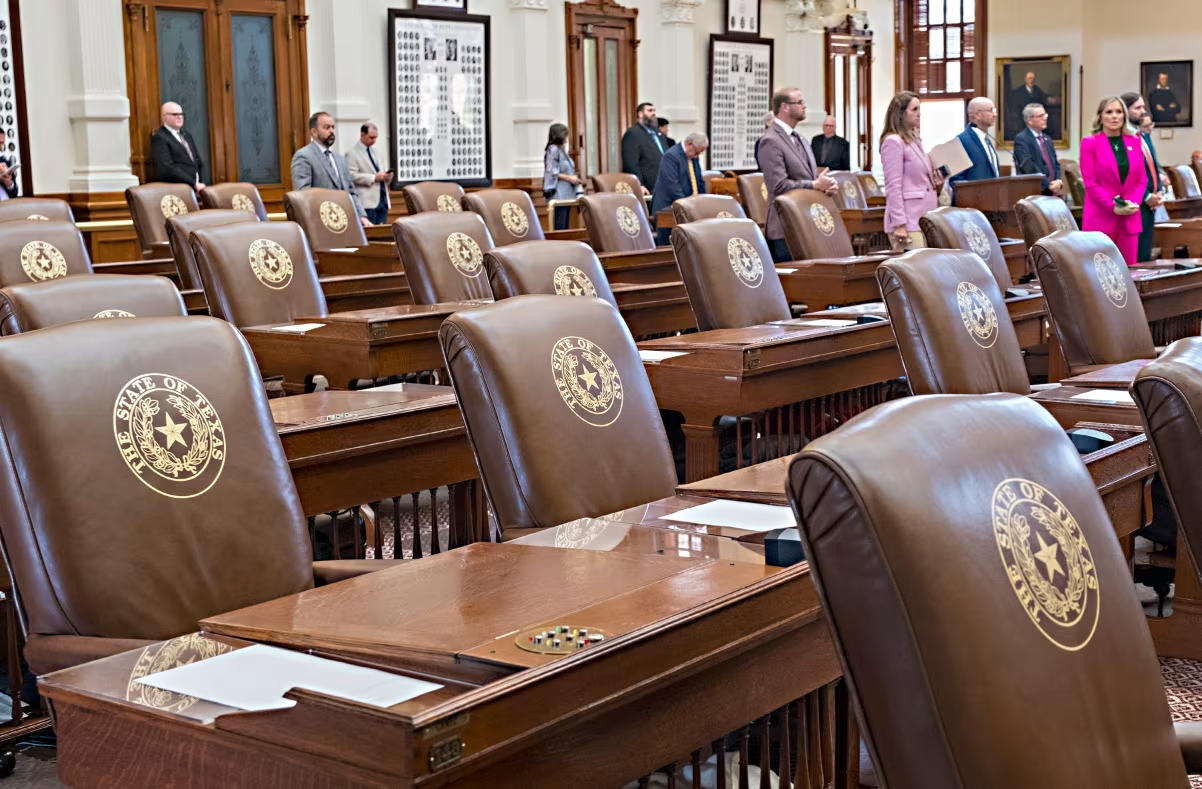
What is gerrymandering? Why is it legal?
Entities mentioned:
- Republicans: Power, Control, Self-preservation
- Democrats: Power, Justice, Competitive spirit
- Supreme Court: Influence, Legacy, Control
- Texas Legislature: Power, Control, Loyalty
- President Trump: Power, Control, Self-preservation
- Gov. Greg Abbott: Loyalty, Power, Control
Article Assessment:
Credibility Score: 75/100
Bias Rating: 45/100 (Center)
Sentiment Score: 35/100
Authoritarianism Risk: 65/100 (Authoritarian Tendencies)
Bias Analysis:
The article presents a balanced view of the redistricting issue, discussing actions and motivations of both Republicans and Democrats. While it critiques Republican efforts more heavily, it also acknowledges Democratic gerrymandering and provides context for the historical and legal aspects of the issue.
Key metric: Electoral Competitiveness
As a social scientist, I analyze that this article highlights the ongoing battle over redistricting and its impact on electoral competitiveness in the United States. The practice of gerrymandering, while historically used by both major parties, is currently being leveraged more aggressively by Republicans, particularly in Texas. This mid-decade redistricting effort, prompted by the Trump administration, could significantly alter the balance of power in the House of Representatives. The article underscores how recent Supreme Court decisions have emboldened partisan gerrymandering efforts, potentially leading to a redistricting war across multiple states. This situation poses a substantial threat to fair representation and the principle of voters choosing their representatives rather than the reverse. The analysis also points out the limitations faced by Democrats in counteracting these efforts due to their own commitments to nonpartisan redistricting processes in some states they control. Overall, this development could lead to a decrease in electoral competitiveness, with more safe seats for the party controlling the redistricting process, potentially undermining the responsiveness of the electoral system to shifts in public opinion.
- Read more about What is gerrymandering? Why is it legal?
- Log in to post comments

Trump’s threats of using military on US soil are getting more real
Entities mentioned:
- Donald Trump: Power, Control, Security
- US Military: Duty, Security, Obligation
- Gavin Newsom: Competitive spirit, Righteousness
- Karen Bass: Duty, Security
- Mark Esper: Duty, Professional pride
- Stephen Miller: Control, Security
Article Assessment:
Credibility Score: 75/100
Bias Rating: 35/100 (Lean Left)
Sentiment Score: 25/100
Authoritarianism Risk: 70/100 (Authoritarian Tendencies)
Bias Analysis:
The article leans left in its framing, emphasizing concerns about Trump's actions and their potential authoritarian implications. While it presents factual information, the tone and selection of quotes suggest a critical stance towards the administration's policies.
Key metric: Civilian Control of Military
As a social scientist, I analyze that this article highlights a concerning trend towards the potential erosion of civilian control over the military in the United States. President Trump's repeated suggestions and actions aimed at deploying military forces for domestic law enforcement purposes represent a significant departure from historical norms and potentially challenge the foundational principle of civilian control. This shift could have far-reaching implications for the balance of power within the US government and the role of the military in domestic affairs. The article suggests a gradual escalation in both rhetoric and action, which may be testing public and institutional tolerance for such measures. This trend, if continued, could lead to a redefinition of the military's domestic role and potentially alter the relationship between civilian leadership and military forces in ways that may be difficult to reverse.
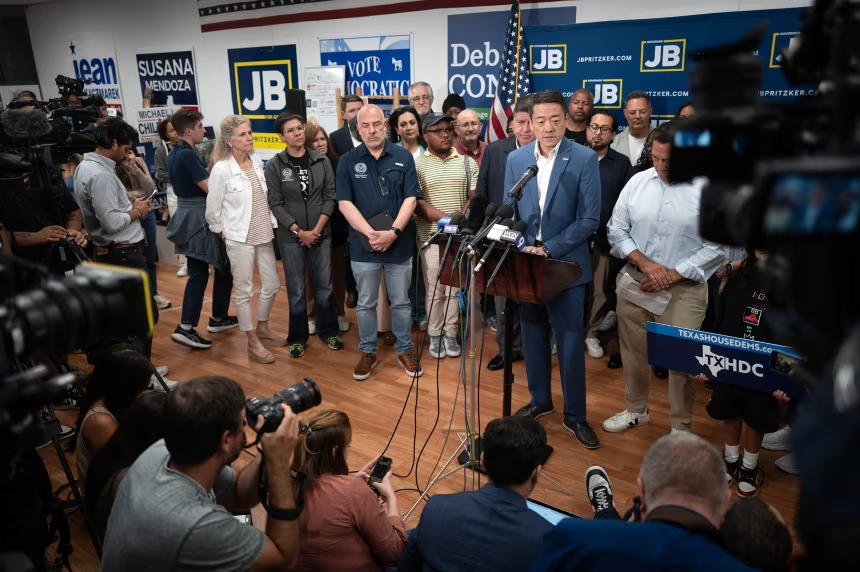
The FBI has been asked to help locate Texas House Democrats. One state lawmaker says officials would be breaking the law
Entities mentioned:
- Gene Wu: Determination, Righteousness, Self-preservation
- Texas House Democrats: Justice, Loyalty, Self-preservation
- Dustin Burrows: Control, Power, Duty
- John Cornyn: Ambition, Power, Competitive spirit
- Greg Abbott: Control, Power, Determination
- Ken Paxton: Ambition, Power, Competitive spirit
- JB Pritzker: Righteousness, Loyalty, Unity
- FBI: Duty, Control, Obligation
Article Assessment:
Credibility Score: 75/100
Bias Rating: 55/100 (Center)
Sentiment Score: 30/100
Authoritarianism Risk: 65/100 (Authoritarian Tendencies)
Bias Analysis:
The article presents multiple viewpoints and quotes from both Republican and Democratic figures. While it gives slightly more space to Democratic perspectives, it also includes detailed explanations of Republican actions and motivations.
Key metric: Political Polarization Index
As a social scientist, I analyze that this article highlights the intensifying political polarization in Texas and by extension, the United States. The use of extreme measures such as civil arrest warrants and attempts to involve federal law enforcement in a state legislative matter indicate a breakdown in normal democratic processes. This escalation of tactics could further erode trust in democratic institutions and increase partisan animosity. The involvement of multiple states and the potential use of federal resources in what is essentially an internal state issue also points to the nationalization of local politics, a trend that often exacerbates polarization. The contrasting approaches of different administrations (Bush vs. current) to similar situations also underscores how partisan politics is increasingly influencing the application of federal power.

What to expect next in Texas’ redistricting standoff and whether Democrats can be expelled
Entities mentioned:
- Texas Republicans: Power, Control, Loyalty
- Texas Democrats: Justice, Righteousness, Determination
- Gov. Greg Abbott: Power, Control, Ambition
- President Donald Trump: Power, Influence, Competitive spirit
- Vice President JD Vance: Ambition, Loyalty, Influence
- Dustin Burrows: Duty, Control, Loyalty
- Ken Paxton: Loyalty, Power, Ambition
- Gene Wu: Righteousness, Duty, Justice
- Brian Harrison: Ambition, Competitive spirit, Loyalty
- Ramón Romero: Justice, Righteousness, Determination
- Lulu Flores: Determination, Justice, Duty
- Richard Peña Raymond: Unity, Duty, Pragmatism
- Chad Dunn: Justice, Professional pride, Righteousness
- Quinn Yeargain: Professional pride, Curiosity, Justice
Article Assessment:
Credibility Score: 75/100
Bias Rating: 45/100 (Center)
Sentiment Score: 35/100
Authoritarianism Risk: 60/100 (Mixed/Neutral)
Bias Analysis:
The article presents both Republican and Democratic perspectives, quoting multiple sources from each side. While it leans slightly towards the Democratic viewpoint by giving more space to their justifications, it still maintains a relatively balanced approach.
Key metric: Electoral Integrity
As a social scientist, I analyze that this redistricting standoff in Texas highlights the intense political polarization and the struggle for power between Republicans and Democrats. The GOP's efforts to redraw districts in their favor and the Democrats' attempts to block this process by leaving the state demonstrate the high stakes of redistricting in shaping future electoral outcomes. This conflict raises significant concerns about the fairness of the electoral process and the potential for gerrymandering to undermine democratic representation. The legal threats and potential removal of elected officials further escalate the situation, potentially setting dangerous precedents for political retaliation. This redistricting battle in Texas could have far-reaching implications for electoral integrity across the United States, as other states watch and potentially follow suit in their own redistricting processes.
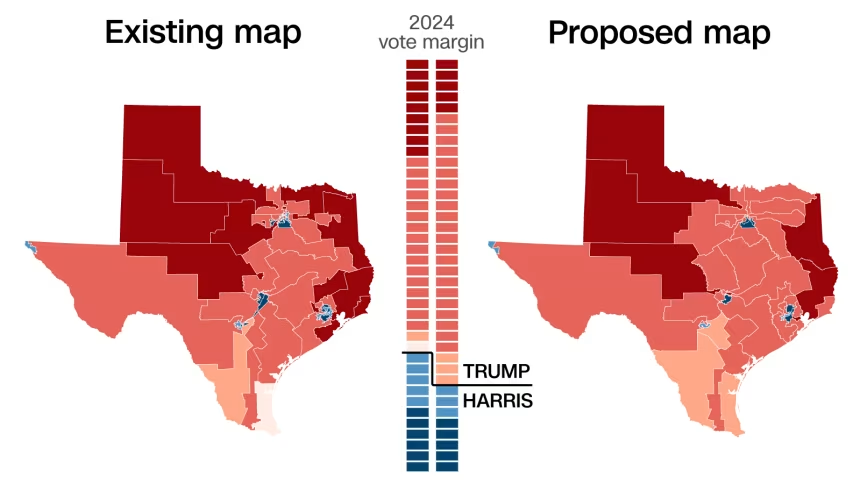
How Texas Republicans want to dismantle Democratic districts
Entities mentioned:
- Texas Republicans: Power, Control, Competitive spirit
- Texas Democrats: Self-preservation, Justice, Influence
- Donald Trump: Power, Influence, Legacy
- Rep. Al Green: Self-preservation, Duty, Influence
- Rep. Julie Johnson: Self-preservation, Duty, Influence
- Rep. Marc Veasey: Self-preservation, Duty, Influence
- Rep. Greg Casar: Self-preservation, Duty, Influence
- Rep. Lloyd Doggett: Self-preservation, Duty, Influence
- Rep. Henry Cuellar: Self-preservation, Duty, Influence
- Rep. Vicente Gonzalez: Self-preservation, Duty, Influence
- Greg Abbott: Power, Control, Influence
Article Assessment:
Credibility Score: 75/100
Bias Rating: 55/100 (Center)
Sentiment Score: 40/100
Authoritarianism Risk: 65/100 (Authoritarian Tendencies)
Bias Analysis:
The article presents a detailed, factual account of the redistricting plan, including specific district changes. While it focuses more on the Republican strategy, it does provide context on Democratic incumbents and potential impacts, maintaining a relatively balanced perspective.
Key metric: Electoral Competitiveness
As a social scientist, I analyze that the proposed redistricting plan in Texas significantly impacts electoral competitiveness. The Republicans' strategy of efficiently distributing GOP voters and targeting Democratic-held districts aims to solidify their control over the state's congressional representation. This approach could lead to a less competitive electoral landscape, potentially reducing the responsiveness of elected officials to constituents and increasing political polarization. The plan's focus on creating safe Republican districts, even in areas that were previously competitive, may result in a mismatch between overall state voting patterns and congressional representation. This redistricting effort demonstrates the ongoing tension between partisan interests and democratic principles of fair representation, highlighting the critical role of redistricting in shaping political outcomes and the balance of power.
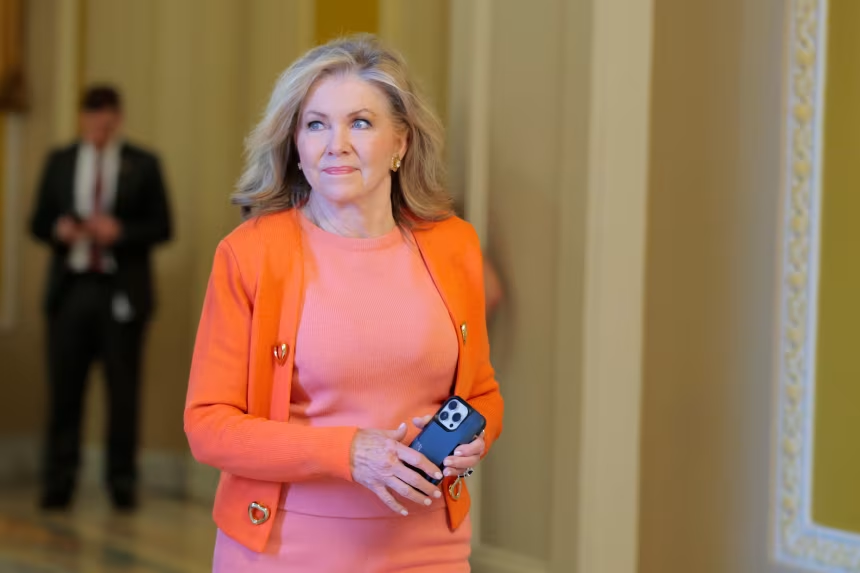
Republican US Sen. Marsha Blackburn joins Tennessee race for governor
Entities mentioned:
- Marsha Blackburn: Ambition, Power, Influence
- John Rose: Competitive spirit, Ambition, Power
- Bill Lee: Legacy, Duty
- Donald Trump: Influence, Power, Legacy
- Republican Party: Control, Power, Influence
- Democratic Party: Competitive spirit, Influence, Power
Article Assessment:
Credibility Score: 75/100
Bias Rating: 55/100 (Center)
Sentiment Score: 50/100
Authoritarianism Risk: 35/100 (Generally Democratic)
Bias Analysis:
The article presents a balanced view of the political situation, giving space to both Republican and Democratic candidates. While it provides more detail on Republican figures, this reflects the current political reality in Tennessee.
Key metric: Political Party Power Distribution
As a social scientist, I analyze that this article highlights the ongoing power dynamics within the Republican Party in Tennessee. The entry of Senator Marsha Blackburn into the 2026 gubernatorial race signifies a continuation of the rightward shift in Tennessee politics. Her alignment with former President Trump and focus on conservative issues suggests a strategy to appeal to the state's predominantly conservative voter base. The primary challenge from Rep. John Rose, another Trump supporter, indicates potential internal party competition that could influence the GOP's direction in Tennessee. The overwhelming Republican victories mentioned in recent elections underscore the party's dominance in the state, which could have implications for policy-making and governance. The Democrats' multiple candidates suggest an attempt to rebuild their presence, though the article implies their chances may be slim given recent electoral history. This political landscape reflects broader national trends of party polarization and the ongoing influence of Trump-style politics within the Republican Party.