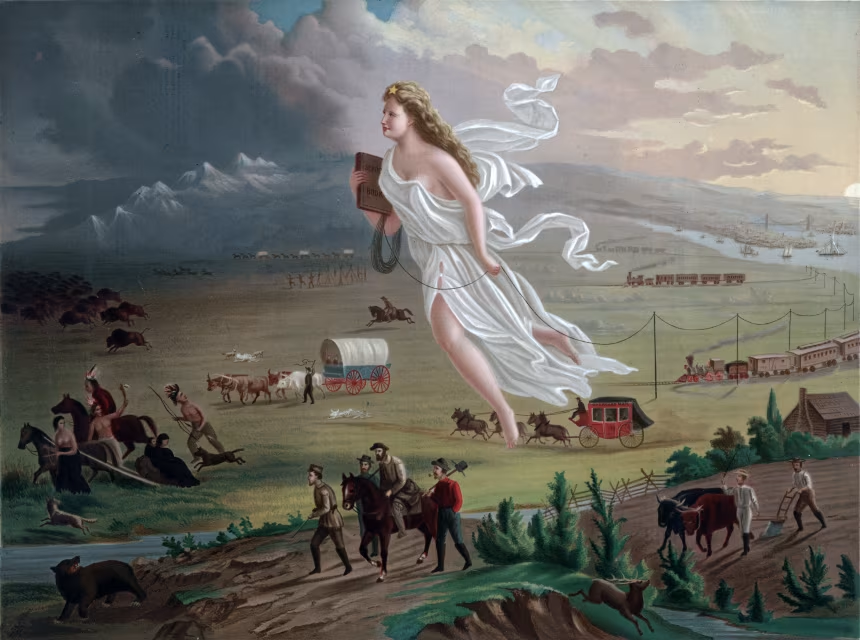
On social media, the Department of Homeland Security appeals to nostalgia — with motifs of White identity
Entities mentioned:
- Department of Homeland Security: Security, Control, Influence
- Immigration and Customs Enforcement: Control, Duty, Security
- President Donald Trump: Power, Control, Influence
- Nicholas J. Cull: Professional pride, Curiosity, Duty
- Tricia McLaughlin: Loyalty, Duty, Self-preservation
- Anat Shenker-Osorio: Righteousness, Professional pride, Moral outrage
- Ian Haney López: Professional pride, Moral outrage, Justice
- Patrick Fontes: Professional pride, Moral outrage, Duty
- Kristy Dalton: Professional pride, Curiosity, Duty
- Morgan Weistling: Self-preservation, Indignation, Justice
- Thomas Kinkade Foundation: Legacy, Justice, Moral outrage
- Black Rebel Motorcycle Club: Self-preservation, Indignation, Justice
Article Assessment:
Credibility Score: 75/100
Bias Rating: 35/100 (Lean Left)
Sentiment Score: 25/100
Authoritarianism Risk: 65/100 (Authoritarian Tendencies)
Bias Analysis:
The article leans left, presenting a critical view of DHS's social media strategy with quotes primarily from experts who express concern. While it includes DHS statements, the overall framing emphasizes potential negative implications of the agency's approach.
Key metric: Social Cohesion
As a social scientist, I analyze that this article highlights a concerning shift in government communication strategy that could significantly impact social cohesion in the United States. The Department of Homeland Security's use of nostalgic, nationalist, and potentially xenophobic imagery in its social media recruitment efforts appears to be tapping into divisive cultural narratives. This approach, while potentially effective for recruitment, risks further polarizing an already divided populace. The use of historical imagery and religious symbolism, coupled with language that echoes white nationalist rhetoric, could exacerbate existing tensions around immigration and national identity. This strategy may attract certain demographics to DHS roles but could alienate others and undermine trust in government institutions among minority communities. The controversy surrounding the unauthorized use of artworks also raises questions about the agency's respect for intellectual property and its overall ethical standards in public communication.
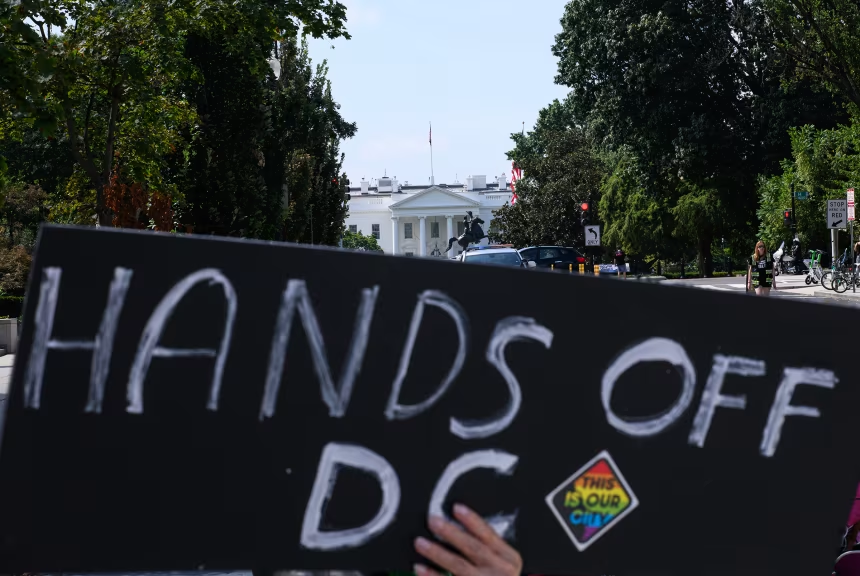
Trump’s DC police takeover was fueled by attack on former DOGE staffer and his own observations of homelessness, allies say
Entities mentioned:
- Donald Trump: Control, Power, Legacy
- Muriel Bowser: Self-preservation, Duty, Unity
- Metropolitan Police Department: Duty, Professional pride, Security
- National Guard: Duty, Security, Obligation
- Pam Bondi: Loyalty, Control, Professional pride
- Brian Schwalb: Justice, Indignation, Duty
- Pamela Smith: Professional pride, Duty, Security
- Jeanine Pirro: Loyalty, Control, Justice
- Chuck Schumer: Political opposition, Moral outrage, Justice
- Gavin Newsom: Political opposition, Moral outrage, Freedom
Article Assessment:
Credibility Score: 65/100
Bias Rating: 55/100 (Center)
Sentiment Score: 30/100
Authoritarianism Risk: 75/100 (Authoritarian Tendencies)
Bias Analysis:
The article presents multiple viewpoints, including those of the Trump administration and local DC officials. While it leans slightly towards skepticism of the federal takeover, it provides context and attempts to balance the narrative.
Key metric: Rule of Law Index
As a social scientist, I analyze that this unprecedented federal takeover of a local police force significantly impacts the Rule of Law Index for the United States. The action raises serious questions about the separation of powers, local autonomy, and the appropriate use of federal authority. While the stated goal is to address crime and homelessness, the unilateral nature of the decision and the apparent lack of a clear emergency situation suggest potential overreach. This move could lead to a deterioration in the perception of checks and balances within the US government system, potentially lowering the country's score on measures of government powers and fundamental rights within the Rule of Law Index. The conflicting narratives between federal and local officials regarding crime statistics and the necessity of the intervention further complicate the situation, potentially eroding public trust in both levels of government.
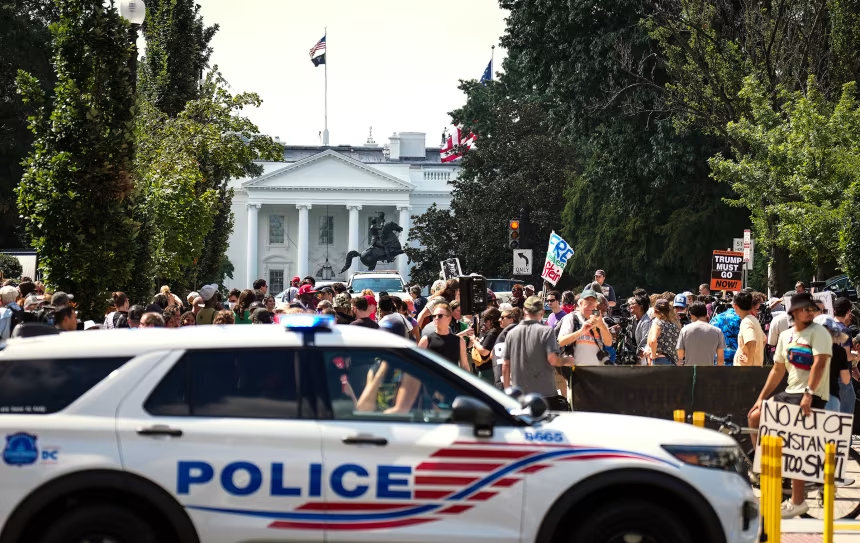
Police and federal agencies scramble to figure out strategy after Trump’s move to declare DC emergency
Entities mentioned:
- Donald Trump: Power, Control, Legacy
- Metropolitan Police Department: Duty, Security, Professional pride
- Muriel Bowser: Autonomy, Duty, Indignation
- Pamela Smith: Professional pride, Duty, Wariness
- Pam Bondi: Duty, Power, Loyalty
- FBI: Duty, Security, Wariness
- DC National Guard: Duty, Security, Obligation
Article Assessment:
Credibility Score: 75/100
Bias Rating: 45/100 (Center)
Sentiment Score: 35/100
Authoritarianism Risk: 65/100 (Authoritarian Tendencies)
Bias Analysis:
The article presents multiple viewpoints, including those of Trump, Bowser, and law enforcement experts. It balances Trump's claims with contradictory data and expert opinions, maintaining a relatively neutral stance.
Key metric: Law Enforcement Effectiveness
As a social scientist, I analyze that this unprecedented federalization of DC's police force raises significant concerns about the balance of power between local and federal authorities. The abrupt nature of the decision, lack of communication, and confusion over roles could potentially decrease law enforcement effectiveness in the short term. The deployment of federal agents unfamiliar with community policing alongside local officers may lead to operational challenges and potentially strained community relations. This move also highlights the unique status of Washington, DC, and its lack of statehood, which allows for such federal intervention. The contrasting crime rate narratives between Trump and Bowser further complicate the situation, making it difficult to assess the true need for this intervention. The 30-day limit on this action suggests it may have limited long-term impact on addressing root causes of crime, as noted by expert Dr. Heidi Bonner.
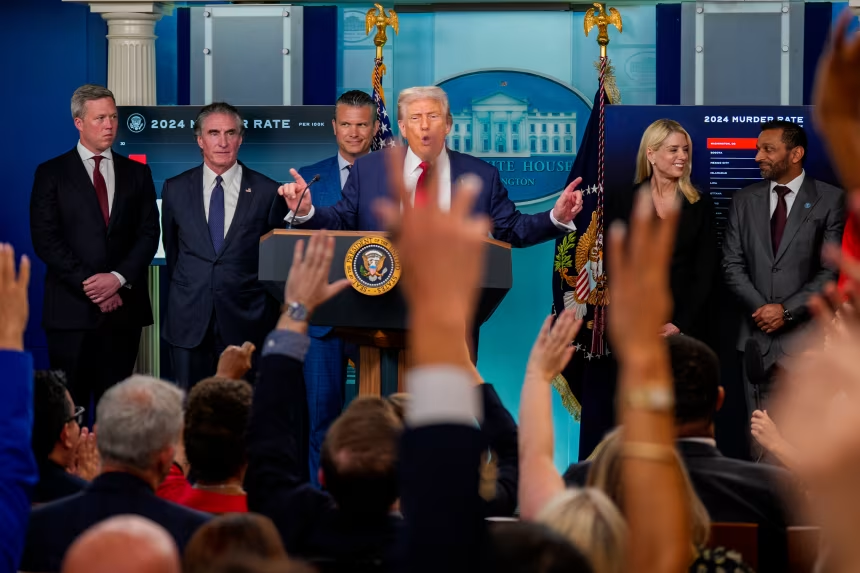
Trump declared federal control of DC police and is deploying the National Guard. Here’s how he is able to do it
Entities mentioned:
- Donald Trump: Power, Control, Influence
- DC National Guard: Duty, Security, Obligation
- Washington DC Police Department: Security, Duty, Professional pride
- US Congress: Control, Obligation, Oversight
- Muriel Bowser: Self-preservation, Wariness, Indignation
- Greggory Pemberton: Security, Professional pride, Duty
- Federal Bureau of Investigation (FBI): Security, Duty, Control
Article Assessment:
Credibility Score: 75/100
Bias Rating: 55/100 (Center)
Sentiment Score: 35/100
Authoritarianism Risk: 70/100 (Authoritarian Tendencies)
Bias Analysis:
The article presents multiple viewpoints and includes factual crime statistics that contradict the president's claims. However, it gives more space to concerns about the president's actions than to supporters, slightly leaning towards a skeptical stance.
Key metric: Federal-Local Government Relations
As a social scientist, I analyze that this unprecedented move by President Trump to assume direct federal control over Washington DC's police department significantly impacts federal-local government relations. This action tests the limits of presidential power and challenges the autonomy of local governance in the nation's capital. The use of emergency powers granted by the Home Rule Act raises questions about the balance between federal oversight and local self-governance. This move could set a precedent for increased federal intervention in local affairs, potentially altering the dynamics of federalism in the United States. The deployment of the National Guard and involvement of federal agencies in local law enforcement further blurs the lines between federal and local authority, which may have long-term implications for governance structures and civil liberties.
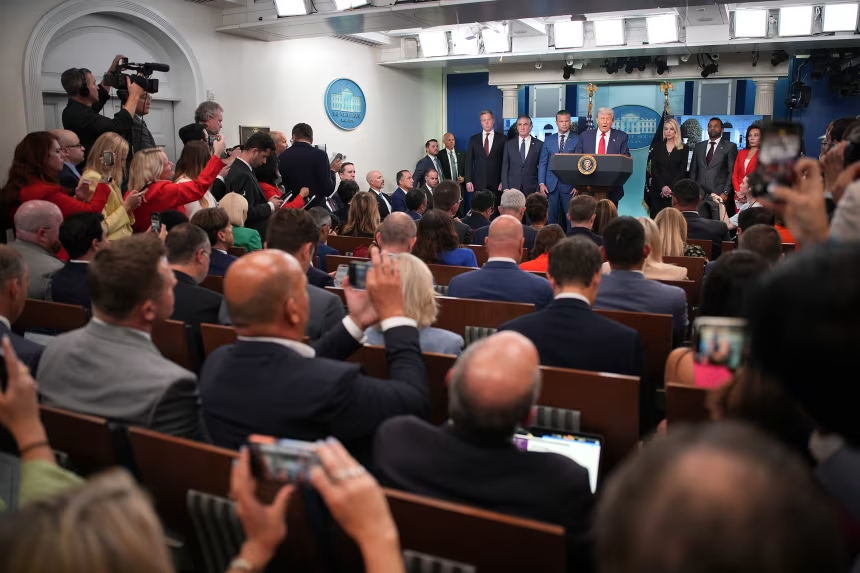
2 reasons Trump calling in troops in DC is so extraordinary
Entities mentioned:
- Donald Trump: Power, Control, Legacy
- Washington, DC Metropolitan Police Department: Duty, Security, Professional pride
- National Guard: Duty, Security, Obligation
- Former Trump administration officials: Wariness, Duty, Self-preservation
- American public: Security, Freedom, Wariness
Article Assessment:
Credibility Score: 75/100
Bias Rating: 40/100 (Lean Left)
Sentiment Score: 30/100
Authoritarianism Risk: 65/100 (Authoritarian Tendencies)
Bias Analysis:
The article leans slightly left, presenting a critical view of Trump's actions. While it includes factual information and some balanced reporting, the framing and language choices suggest a skeptical stance towards the administration's decisions.
Key metric: Civil Liberties and Rule of Law Index
As a social scientist, I analyze that this article highlights a significant shift in the use of military forces for domestic purposes under President Trump's administration. The deployment of the National Guard and the federalization of DC's police force for crime control, rather than in response to large-scale civil unrest, represents an unprecedented expansion of federal power in local law enforcement. This action could potentially impact the Civil Liberties and Rule of Law Index by blurring the lines between military and civilian law enforcement, potentially undermining local autonomy and raising concerns about the militarization of domestic policing. The article suggests that this move is not supported by crime statistics or public opinion, which could lead to increased tension between federal and local authorities, as well as between the government and citizens. This development may be seen as a test of institutional checks and balances and could have long-term implications for the balance of power between federal and local governments in the United States.
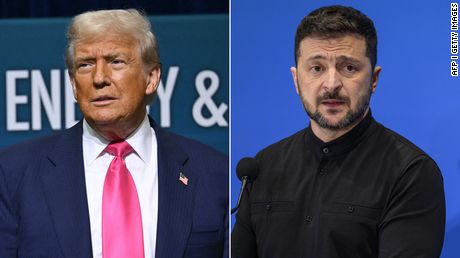
White House hasn’t ruled out Zelensky being in Alaska during Trump-Putin meeting on Friday
Entities mentioned:
- Donald Trump: Power, Legacy, Recognition
- Vladimir Putin: Power, Control, Influence
- JD Vance: Duty, Loyalty, Influence
- Volodymyr Zelensky: Self-preservation, Determination, Unity
- European leaders: Security, Influence, Unity
- Steve Witkoff: Duty, Influence, Professional pride
- Friedrich Merz: Unity, Influence, Security
- Marco Rubio: Duty, Influence, Professional pride
Article Assessment:
Credibility Score: 75/100
Bias Rating: 45/100 (Center)
Sentiment Score: 35/100
Authoritarianism Risk: 40/100 (Generally Democratic)
Bias Analysis:
The article presents multiple perspectives, including those of US, European, and Ukrainian officials, providing a balanced view. While it highlights concerns about Trump's approach, it also includes the administration's stance, maintaining a relatively neutral tone.
Key metric: International Diplomacy Effectiveness
As a social scientist, I analyze that this article highlights a significant shift in diplomatic dynamics surrounding the Russia-Ukraine conflict. The sudden announcement of a Trump-Putin meeting without clear inclusion of Ukraine or European allies raises concerns about the US's approach to resolving the conflict. This development could potentially impact the effectiveness of international diplomacy by sidelining key stakeholders and altering established negotiation frameworks. The rushed nature of the summit and the lack of transparency about its contents have prompted a flurry of diplomatic activity from European leaders, indicating a potential weakening of transatlantic cooperation. The exclusion of Zelensky from initial plans could undermine Ukraine's position and sovereignty in peace negotiations. This situation tests the cohesion of Western allies and their ability to present a united front in dealing with Russia, which could have long-term implications for global geopolitical balance and conflict resolution strategies.
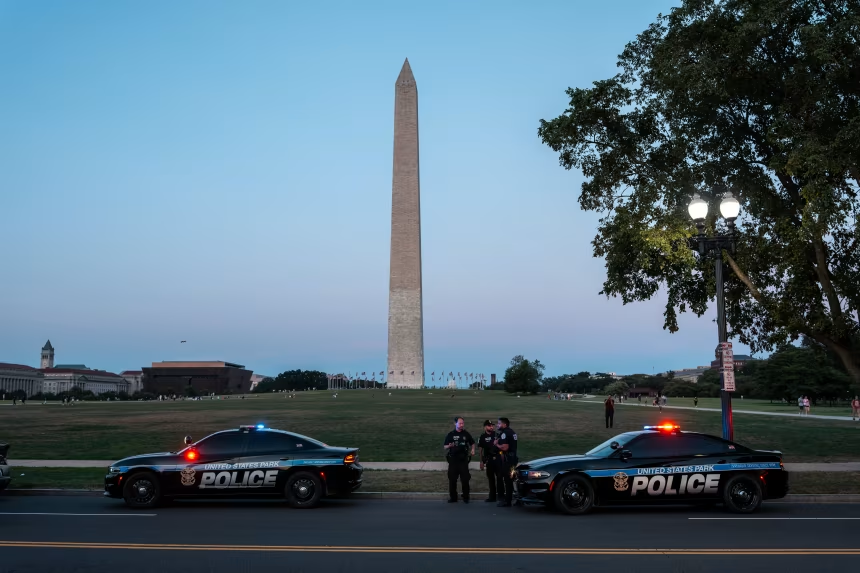
Trump zeroes in on federal takeover of DC as FBI patrols streets
Entities mentioned:
- Donald Trump: Control, Power, Influence
- Muriel Bowser: Self-preservation, Obligation, Unity
- FBI: Duty, Security, Professional pride
- DC National Guard: Duty, Security, Obligation
- DC Council: Self-preservation, Wariness, Obligation
- Jeanine Pirro: Loyalty, Recognition, Influence
Article Assessment:
Credibility Score: 75/100
Bias Rating: 45/100 (Center)
Sentiment Score: 35/100
Authoritarianism Risk: 65/100 (Authoritarian Tendencies)
Bias Analysis:
The article presents multiple perspectives and sources, including both Trump administration and local DC officials. While it highlights Trump's actions and statements prominently, it also provides context and counterpoints, maintaining a relatively balanced approach.
Key metric: Federal-Local Government Relations
As a social scientist, I analyze that this article highlights a significant shift in the power dynamics between federal and local government in Washington, DC. President Trump's threats to take over the city and deploy federal forces represent a potential erosion of local autonomy. Mayor Bowser's deferential approach, contrasting with her previous resistance, suggests a strategic adaptation to preserve some level of local control and cooperation. This situation could set a precedent for increased federal intervention in local affairs, particularly in politically sensitive areas. The lack of strong opposition from local officials may indicate a fear of retaliation or a calculated decision to maintain access to federal resources. This evolving relationship between federal and local authorities in DC could have broader implications for federalism and local governance across the United States.

Federal judge rejects Trump DOJ’s bid to unseal grand jury materials in Ghislaine Maxwell case
Entities mentioned:
- Judge Paul Engelmayer: Justice, Duty, Professional pride
- Trump administration: Control, Influence, Self-preservation
- Department of Justice: Transparency, Duty, Influence
- Ghislaine Maxwell: Self-preservation, Control, Greed
- Jeffrey Epstein: Power, Control, Greed
- Victims: Justice, Self-respect, Security
- Attorney General Pam Bondi: Duty, Loyalty, Influence
- Judge Richard Berman: Justice, Duty, Professional pride
Article Assessment:
Credibility Score: 75/100
Bias Rating: 45/100 (Center)
Sentiment Score: 35/100
Authoritarianism Risk: 25/100 (Generally Democratic)
Bias Analysis:
The article presents a balanced view of the situation, quoting extensively from the judge's ruling. While it mentions the Trump administration's involvement, it doesn't appear to take a partisan stance.
Key metric: Public Trust in Government Institutions
As a social scientist, I analyze that this article highlights a significant tension between the judiciary and the executive branch, specifically the Department of Justice under the Trump administration. The judge's scathing rejection of the DOJ's request to unseal grand jury materials in the Maxwell case reveals a deep skepticism of the government's motives. This conflict could potentially erode public trust in government institutions, particularly the DOJ. The judge's emphasis on the lack of new information in the requested materials and the suggestion that the government's motion might be aimed at 'diversion' rather than transparency raises questions about the administration's true intentions. Furthermore, the mention of victims being used for 'political warfare' underscores the complex interplay between justice, politics, and media attention in high-profile cases. This incident may contribute to a growing perception of government institutions being used for political purposes rather than serving justice, potentially leading to decreased public confidence in the justice system and federal agencies.
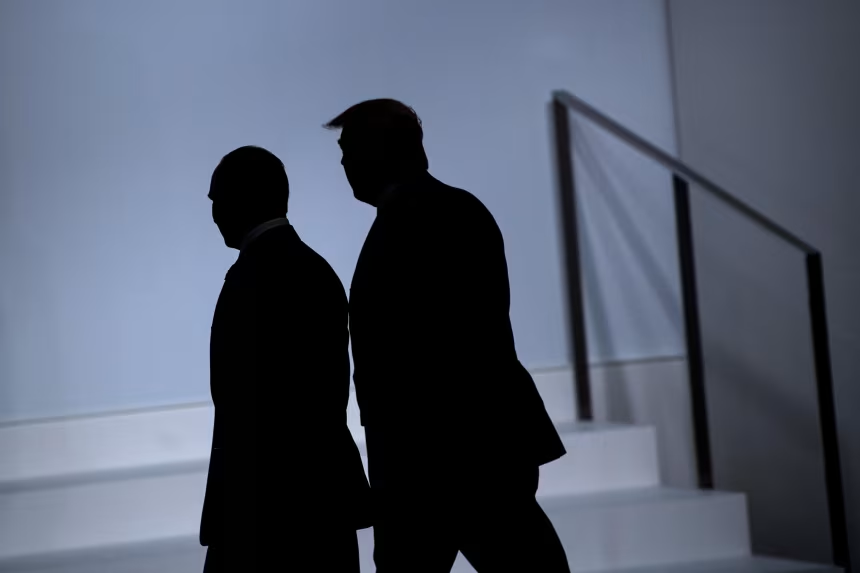
Trump says he’ll be feeling out Putin as US officials rush to finalize details of Alaska summit
Entities mentioned:
- Donald Trump: Ambition, Legacy, Power
- Vladimir Putin: Power, Control, Influence
- Volodymyr Zelensky: Self-preservation, Justice, Determination
- Mark Rutte: Unity, Duty, Security
- Oksana Markarova: Duty, Loyalty, Unity
- Steve Witkoff: Duty, Influence, Ambition
- JD Vance: Duty, Influence, Ambition
- Lindsey Graham: Influence, Loyalty, Duty
- Friedrich Merz: Unity, Influence, Security
Article Assessment:
Credibility Score: 75/100
Bias Rating: 45/100 (Center)
Sentiment Score: 35/100
Authoritarianism Risk: 35/100 (Generally Democratic)
Bias Analysis:
The article presents multiple viewpoints and sources, including Trump, European leaders, and Ukrainian officials. While it leans slightly towards skepticism of Trump's approach, it generally maintains a balanced tone, providing context and varied perspectives.
Key metric: International Diplomacy Effectiveness
As a social scientist, I analyze that this article highlights the complex dynamics of international diplomacy surrounding the Russia-Ukraine conflict. Trump's approach to the summit with Putin demonstrates a high-stakes gamble in personal diplomacy, potentially bypassing traditional diplomatic channels. The exclusion of Zelensky from direct talks raises concerns about Ukraine's agency in its own future. European leaders' insistence on Ukraine's involvement and specific conditions for peace talks indicates a potential rift between US and European approaches. The rush to organize the summit and the lack of clear objectives suggest a potentially risky diplomatic strategy. The article also reveals the delicate balance of power and influence among world leaders, with each actor motivated by a mix of national interests, personal legacy, and geopolitical considerations.

Pam Bondi has a new probe into the handling of 2016 Russian meddling. John Durham already spent four years investigating it
Entities mentioned:
- Pam Bondi: Power, Loyalty, Ambition
- John Durham: Justice, Professional pride, Duty
- Donald Trump: Power, Revenge, Self-preservation
- Tulsi Gabbard: Influence, Ambition, Recognition
- Barack Obama: Legacy, Self-preservation, Righteousness
- FBI: Professional pride, Duty, Security
- CIA: Security, Professional pride, Duty
Article Assessment:
Credibility Score: 75/100
Bias Rating: 45/100 (Center)
Sentiment Score: 35/100
Authoritarianism Risk: 55/100 (Mixed/Neutral)
Bias Analysis:
The article presents multiple viewpoints and cites various sources, including critics of the new investigation. While it leans slightly towards skepticism of the new probe, it provides context from both sides, maintaining a relatively balanced perspective.
Key metric: Political Polarization Index
As a social scientist, I analyze that this article highlights the ongoing political polarization in the United States, particularly surrounding the 2016 election and Russian interference. The initiation of a new investigation by Attorney General Pam Bondi, despite previous extensive probes, suggests a continued effort to challenge established narratives. This action may further deepen the divide between political factions, potentially eroding public trust in institutions and the electoral process. The repeated investigations into the same matter, despite previous findings, indicate a pattern of using government resources for political purposes, which could have long-term implications for democratic norms and institutional integrity.