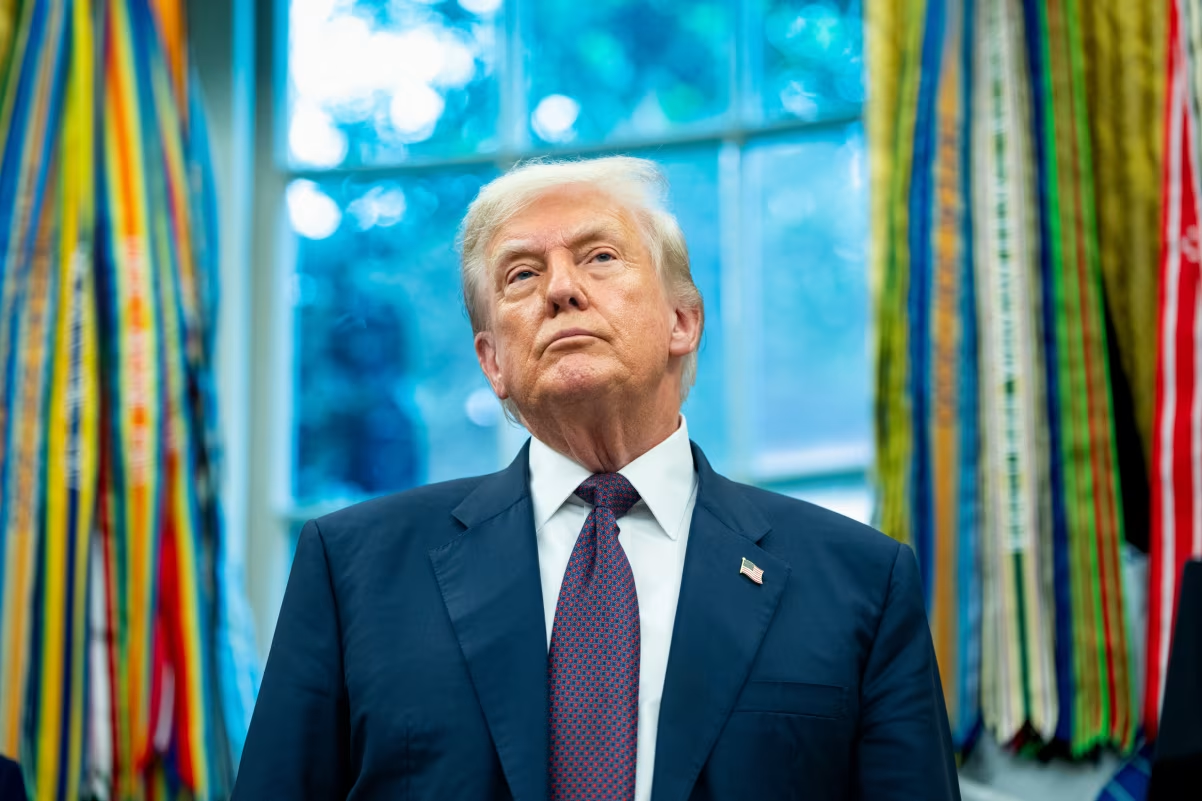
Trump may be forging progress in Ukraine or walking into Putin’s trap
Entities mentioned:
- Donald Trump: Ambition, Recognition, Legacy
- Vladimir Putin: Power, Control, Self-preservation
- Steve Witkoff: Duty, Influence, Loyalty
- Volodymyr Zelensky: Determination, Self-preservation, Unity
- David Salvo: Professional pride, Wariness, Duty
- John Bolton: Wariness, Professional pride, Duty
Article Assessment:
Credibility Score: 75/100
Bias Rating: 45/100 (Center)
Sentiment Score: 35/100
Authoritarianism Risk: 25/100 (Generally Democratic)
Bias Analysis:
The article presents multiple perspectives and voices, including critics of Trump's approach. While it leans slightly skeptical of Trump's optimism, it also acknowledges potential benefits, maintaining a relatively balanced stance.
Key metric: US Diplomatic Influence
As a social scientist, I analyze that this article highlights the complex interplay between US diplomatic efforts and the ongoing Ukraine conflict. Trump's approach to ending the war through direct engagement with Putin raises questions about the effectiveness and potential risks of such high-level diplomacy. The article suggests that while Trump's optimism about a potential breakthrough is high, there are significant doubts about Putin's true intentions and the likelihood of a genuine peace process. This situation could significantly impact US diplomatic influence, as the outcome of these proposed meetings could either enhance or diminish America's role in resolving international conflicts. The article also underscores the delicate balance between taking diplomatic risks and potentially being manipulated by adversaries, which could have long-lasting implications for US foreign policy and global stability.
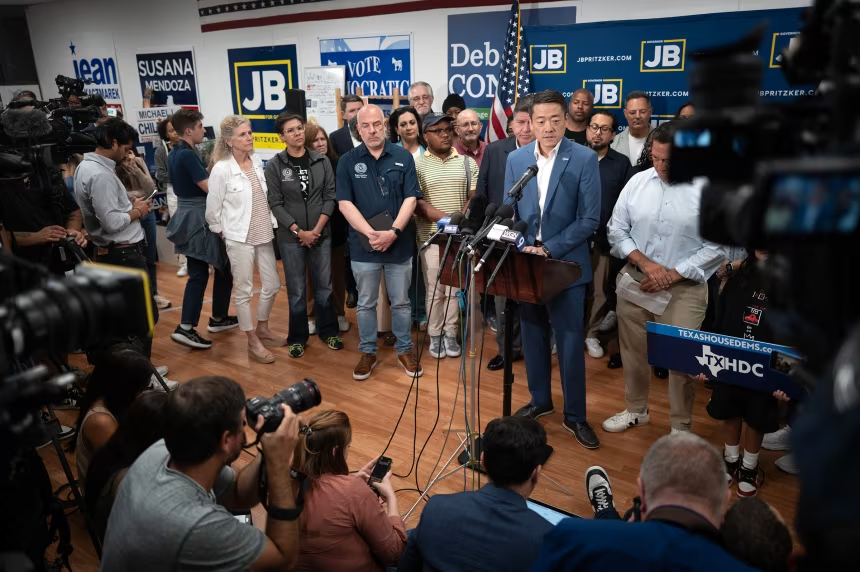
The FBI has been asked to help locate Texas House Democrats. One state lawmaker says officials would be breaking the law
Entities mentioned:
- Gene Wu: Determination, Righteousness, Self-preservation
- Texas House Democrats: Justice, Loyalty, Self-preservation
- Dustin Burrows: Control, Power, Duty
- John Cornyn: Ambition, Power, Competitive spirit
- Greg Abbott: Control, Power, Determination
- Ken Paxton: Ambition, Power, Competitive spirit
- JB Pritzker: Righteousness, Loyalty, Unity
- FBI: Duty, Control, Obligation
Article Assessment:
Credibility Score: 75/100
Bias Rating: 55/100 (Center)
Sentiment Score: 30/100
Authoritarianism Risk: 65/100 (Authoritarian Tendencies)
Bias Analysis:
The article presents multiple viewpoints and quotes from both Republican and Democratic figures. While it gives slightly more space to Democratic perspectives, it also includes detailed explanations of Republican actions and motivations.
Key metric: Political Polarization Index
As a social scientist, I analyze that this article highlights the intensifying political polarization in Texas and by extension, the United States. The use of extreme measures such as civil arrest warrants and attempts to involve federal law enforcement in a state legislative matter indicate a breakdown in normal democratic processes. This escalation of tactics could further erode trust in democratic institutions and increase partisan animosity. The involvement of multiple states and the potential use of federal resources in what is essentially an internal state issue also points to the nationalization of local politics, a trend that often exacerbates polarization. The contrasting approaches of different administrations (Bush vs. current) to similar situations also underscores how partisan politics is increasingly influencing the application of federal power.

Indiana’s Republican leaders won’t commit to redistricting after Vance visit
Entities mentioned:
- JD Vance: Power, Influence, Ambition
- Mike Braun: Wariness, Self-preservation, Loyalty
- Donald Trump: Power, Control, Ambition
- Todd Huston: Wariness, Self-preservation, Duty
- Rodric Bray: Wariness, Self-preservation, Duty
- Mitch Daniels: Righteousness, Legacy, Influence
- Frank Mrvan: Self-preservation, Determination, Duty
- André Carson: Self-preservation, Duty, Justice
- Matt Pierce: Justice, Moral outrage, Duty
Article Assessment:
Credibility Score: 75/100
Bias Rating: 45/100 (Center)
Sentiment Score: 35/100
Authoritarianism Risk: 65/100 (Authoritarian Tendencies)
Bias Analysis:
The article presents multiple viewpoints, including those of Republicans and Democrats. While it highlights the controversial nature of the redistricting effort, it maintains a relatively balanced tone, providing context and background information.
Key metric: Electoral Integrity
As a social scientist, I analyze that this article highlights a critical juncture in American democratic processes, specifically focusing on redistricting efforts in Indiana. The push for mid-cycle redistricting by the Trump administration threatens to undermine electoral integrity and further polarize the political landscape. This move, if successful, could significantly alter the balance of power in the U.S. House of Representatives, potentially swinging two Democratic seats to Republican control. The resistance from some Indiana Republican leaders, including former Governor Mitch Daniels, suggests a conflict between party loyalty and maintaining democratic norms. This situation exemplifies the broader national trend of intensifying partisan gerrymandering, which risks eroding public trust in electoral processes and representative democracy. The potential special session for redistricting also raises questions about the use of public resources for partisan gain. The Democrats' limited power to oppose such moves in Indiana further underscores the importance of checks and balances in maintaining democratic integrity.
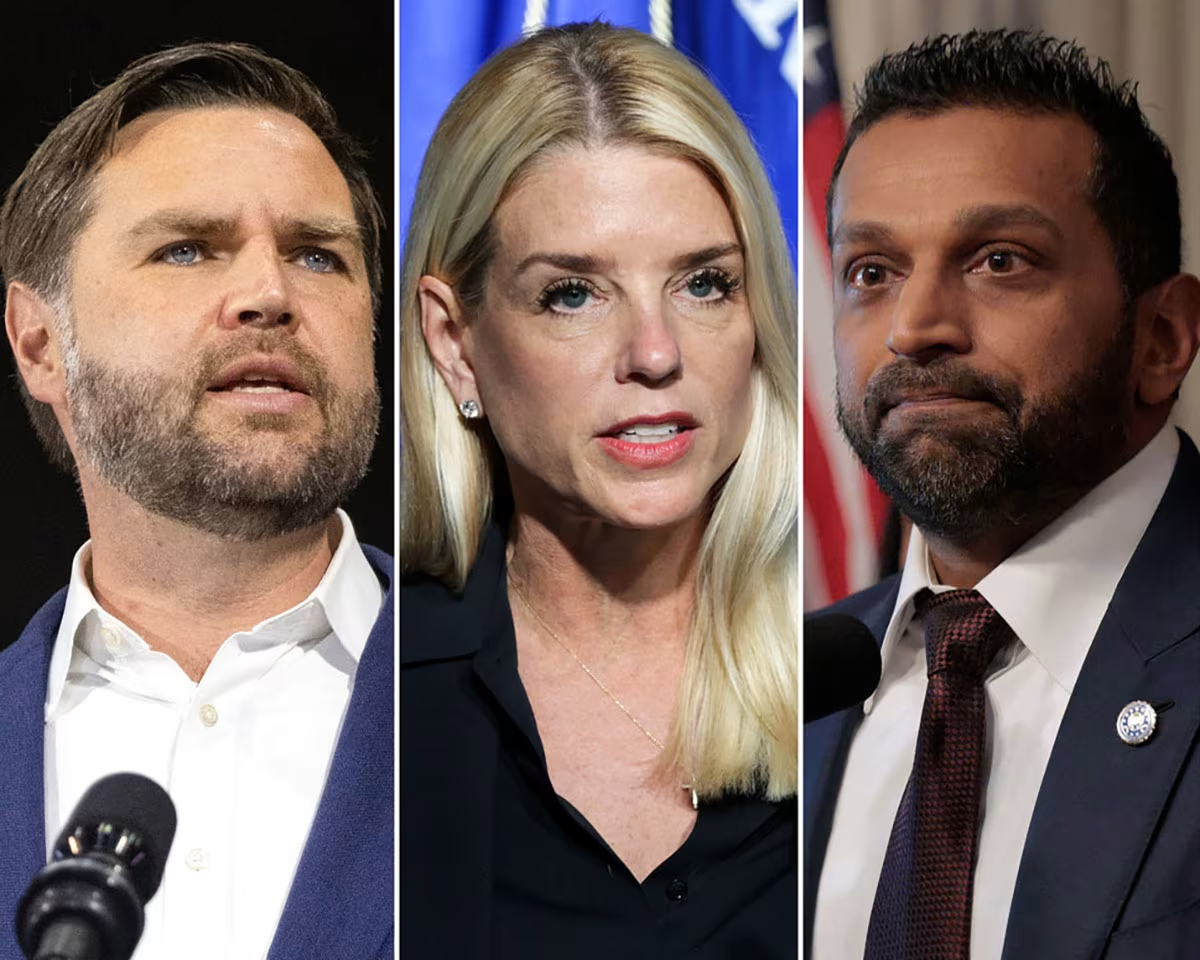
Top Trump officials discussed Epstein at White House meeting Wednesday night
Entities mentioned:
- Attorney General Pam Bondi: Justice, Professional pride, Power
- FBI Director Kash Patel: Duty, Control, Security
- Vice President JD Vance: Unity, Influence, Obligation
- White House chief of staff Susie Wiles: Control, Loyalty, Unity
- Deputy Attorney General Todd Blanche: Justice, Duty, Professional pride
- Deputy FBI Director Dan Bongino: Security, Control, Professional pride
- Jeffrey Epstein: Power, Greed, Control
- Ghislaine Maxwell: Self-preservation, Loyalty, Fear
Article Assessment:
Credibility Score: 65/100
Bias Rating: 50/100 (Center)
Sentiment Score: 35/100
Authoritarianism Risk: 55/100 (Mixed/Neutral)
Bias Analysis:
The article presents a balanced view of the situation, citing unnamed sources and reporting denied claims. It refrains from overtly partisan language or framing, maintaining a neutral stance in its reporting of the events and conflicts.
Key metric: Government Transparency and Accountability
As a social scientist, I analyze that this article reveals internal tensions and strategic disagreements within the Trump administration regarding the handling of the high-profile Epstein case. The last-minute change of meeting location to the White House suggests a desire for increased control over information and optics. The potential publication of the Maxwell conversation transcript indicates a struggle between transparency and strategic information management. The conflicts between top officials, particularly Bondi and Patel, highlight the challenges in coordinating a unified response to a sensitive and politically charged issue. This situation underscores the complexities of balancing justice, political considerations, and public perception in high-level government operations.

Here’s what could happen if Trump brings the National Guard to DC
Entities mentioned:
- Donald Trump: Control, Power, Influence
- DC Police Department: Duty, Security, Professional pride
- National Guard: Duty, Security, Obligation
- US Congress: Control, Duty, Power
- DC Mayor and City Council: Self-preservation, Control, Duty
- Federal Law Enforcement Agencies: Duty, Control, Security
Article Assessment:
Credibility Score: 75/100
Bias Rating: 45/100 (Center)
Sentiment Score: 35/100
Authoritarianism Risk: 65/100 (Authoritarian Tendencies)
Bias Analysis:
The article presents multiple perspectives, including Trump's statements, expert opinions, and factual context. While it leans slightly critical of Trump's proposals, it maintains a generally balanced approach by providing legal and historical context.
Key metric: Civil Liberties and Democratic Governance
As a social scientist, I analyze that this article highlights a potential conflict between federal and local governance in Washington, DC, with implications for civil liberties and democratic norms. Trump's threat to federalize DC's police force and deploy the National Guard represents a significant escalation in federal intervention in local affairs. This move could undermine the principles of Home Rule and local autonomy, potentially setting a precedent for increased federal control over municipal governance. The article suggests that such actions may not be justified by current crime rates, raising questions about the motivations behind these threats. The potential deployment of federal forces, reminiscent of the 2020 protests response, could lead to increased tensions between residents and law enforcement, potentially infringing on civil liberties and First Amendment rights. This situation underscores the unique and complex status of Washington, DC in the American federal system and highlights the delicate balance between federal oversight and local governance.
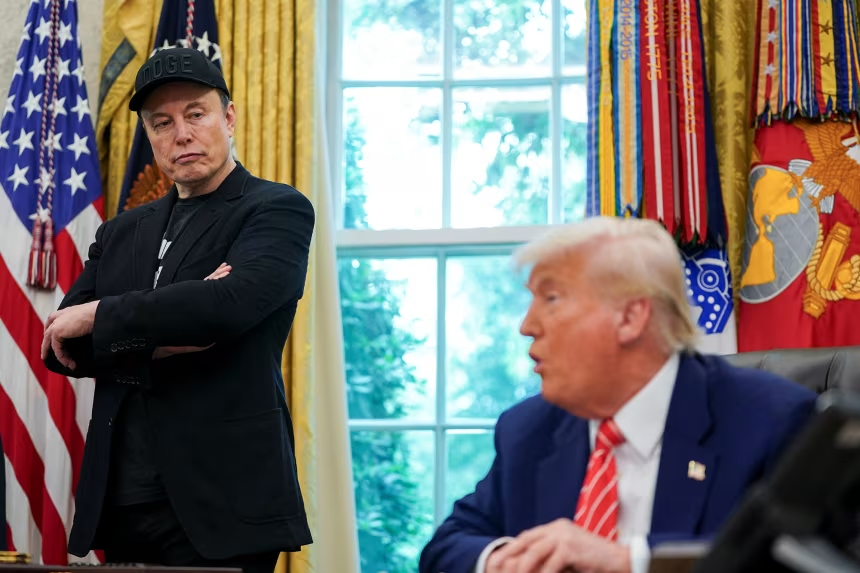
Trump administration rolls back Elon Musk’s email telling federal employees to justify their jobs
Entities mentioned:
- Trump administration: Control, Power, Influence
- Elon Musk: Ambition, Efficiency, Control
- Office of Personnel Management: Professional pride, Duty, Control
- Scott Kupor: Duty, Professional pride, Influence
- Donald Trump: Power, Control, Influence
- Federal employees: Self-preservation, Anxiety, Obligation
Article Assessment:
Credibility Score: 75/100
Bias Rating: 55/100 (Center)
Sentiment Score: 40/100
Authoritarianism Risk: 45/100 (Mixed/Neutral)
Bias Analysis:
The article presents multiple viewpoints and cites official sources, maintaining a relatively neutral stance. However, there's a slight lean towards criticizing Musk's approach, potentially reflecting a centrist or slightly left-of-center perspective on government management.
Key metric: Government Efficiency and Accountability
As a social scientist, I analyze that this article highlights a significant shift in federal employee management practices. The reversal of Musk's email policy demonstrates a tension between aggressive private sector management styles and traditional government operations. This change likely impacts government efficiency and accountability by reverting to established performance management systems. The conflict between Musk and the Trump administration also reveals the challenges of integrating external business leaders into government roles. This situation may affect public perception of government effectiveness and the administration's ability to implement reforms.
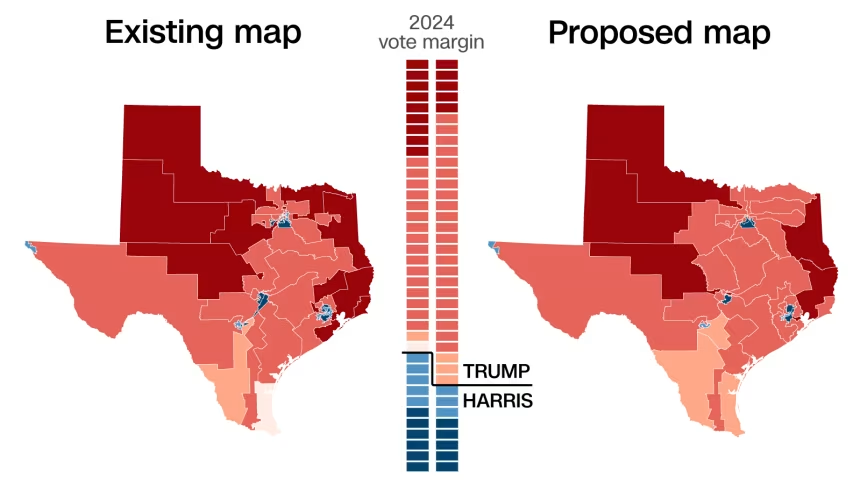
How Texas Republicans want to dismantle Democratic districts
Entities mentioned:
- Texas Republicans: Power, Control, Competitive spirit
- Texas Democrats: Self-preservation, Justice, Influence
- Donald Trump: Power, Influence, Legacy
- Rep. Al Green: Self-preservation, Duty, Influence
- Rep. Julie Johnson: Self-preservation, Duty, Influence
- Rep. Marc Veasey: Self-preservation, Duty, Influence
- Rep. Greg Casar: Self-preservation, Duty, Influence
- Rep. Lloyd Doggett: Self-preservation, Duty, Influence
- Rep. Henry Cuellar: Self-preservation, Duty, Influence
- Rep. Vicente Gonzalez: Self-preservation, Duty, Influence
- Greg Abbott: Power, Control, Influence
Article Assessment:
Credibility Score: 75/100
Bias Rating: 55/100 (Center)
Sentiment Score: 40/100
Authoritarianism Risk: 65/100 (Authoritarian Tendencies)
Bias Analysis:
The article presents a detailed, factual account of the redistricting plan, including specific district changes. While it focuses more on the Republican strategy, it does provide context on Democratic incumbents and potential impacts, maintaining a relatively balanced perspective.
Key metric: Electoral Competitiveness
As a social scientist, I analyze that the proposed redistricting plan in Texas significantly impacts electoral competitiveness. The Republicans' strategy of efficiently distributing GOP voters and targeting Democratic-held districts aims to solidify their control over the state's congressional representation. This approach could lead to a less competitive electoral landscape, potentially reducing the responsiveness of elected officials to constituents and increasing political polarization. The plan's focus on creating safe Republican districts, even in areas that were previously competitive, may result in a mismatch between overall state voting patterns and congressional representation. This redistricting effort demonstrates the ongoing tension between partisan interests and democratic principles of fair representation, highlighting the critical role of redistricting in shaping political outcomes and the balance of power.
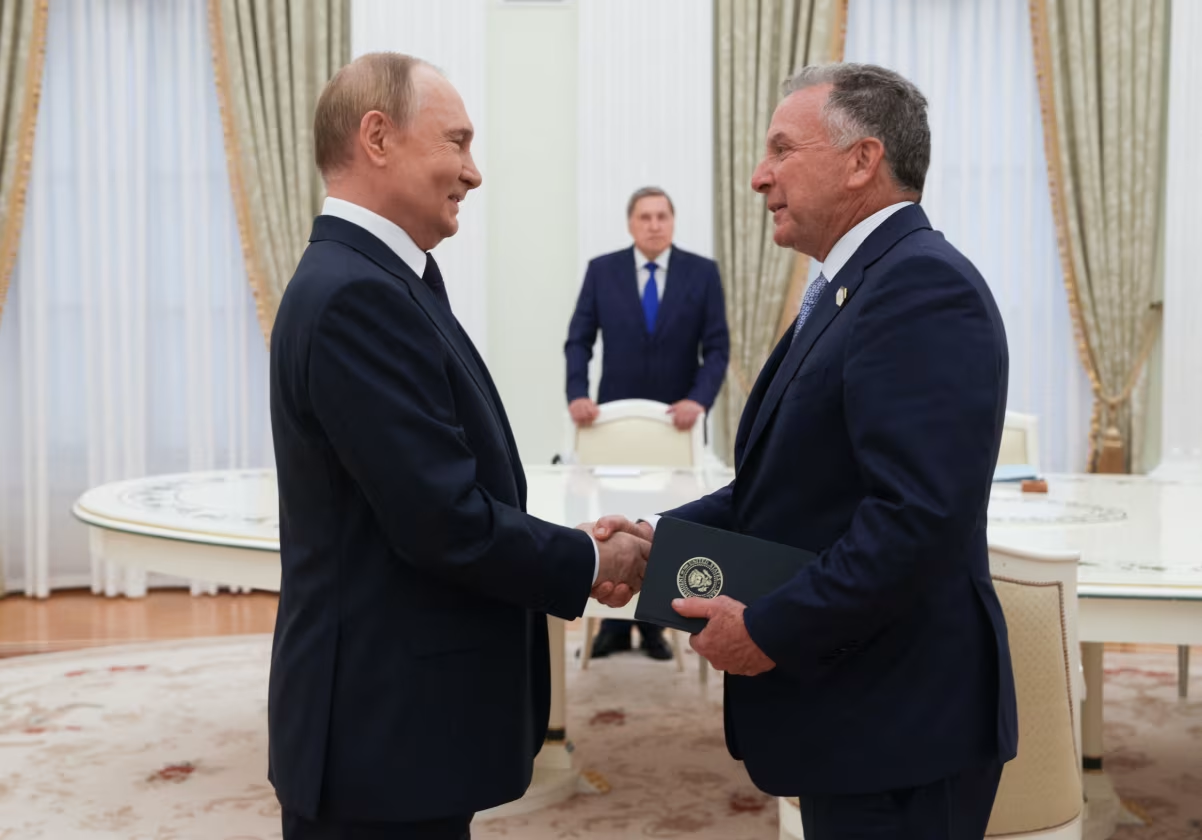
Witkoff meets with Putin as Trump’s sanctions threat looms
Entities mentioned:
- Donald Trump: Power, Control, Determination
- Steve Witkoff: Duty, Influence, Ambition
- Vladimir Putin: Power, Control, Self-preservation
- Volodymyr Zelensky: Self-preservation, Determination, Unity
- Kirill Dmitriev: Duty, Loyalty, Influence
- Dmitry Medvedev: Loyalty, Influence, Power
- Marco Rubio: Professional pride, Influence, Duty
- Scott Bessent: Duty, Influence, Professional pride
- Xi Jinping: Power, Influence, Unity
- Keith Kellogg: Duty, Influence, Professional pride
Article Assessment:
Credibility Score: 75/100
Bias Rating: 45/100 (Center)
Sentiment Score: 35/100
Authoritarianism Risk: 25/100 (Generally Democratic)
Bias Analysis:
The article presents multiple perspectives and cites various sources, including state media and unnamed officials. While it leans slightly towards a US-centric view, it attempts to provide balanced coverage of the complex situation.
Key metric: International Relations Score
As a social scientist, I analyze that this article highlights the complex dynamics of international relations, particularly between the US and Russia. The potential for new sanctions against Russia and the diplomatic efforts to avoid them demonstrate the delicate balance of power and negotiation in global politics. Trump's approach, combining threats of sanctions with diplomatic outreach, reflects a strategy of creating leverage. The involvement of other countries like China and India in Russian energy purchases adds layers of complexity to the situation. This diplomatic dance has significant implications for global stability, economic relations, and the ongoing conflict in Ukraine.

Trump threatens India with 50% tariff as negotiations fizzle and Modi keeps importing Russian oil
Entities mentioned:
- Donald Trump: Power, Control, Influence
- India: Self-preservation, Security, Independence
- Russia: Power, Influence, Self-preservation
- Steve Witkoff: Duty, Influence, Loyalty
- Vladimir Putin: Power, Control, Influence
- Joe Biden: Duty, Influence, Legacy
- Apple: Profit, Competitive spirit, Adaptation
Article Assessment:
Credibility Score: 75/100
Bias Rating: 55/100 (Center)
Sentiment Score: 30/100
Authoritarianism Risk: 65/100 (Authoritarian Tendencies)
Bias Analysis:
The article presents multiple perspectives, including Trump's stance, India's response, and contextual information about US-India trade. While it leans slightly towards criticizing Trump's approach, it maintains a relatively balanced tone by providing factual trade data and historical context.
Key metric: US-India Trade Balance
As a social scientist, I analyze that this article highlights a significant escalation in US-India trade relations, with potential far-reaching consequences for global trade dynamics and geopolitical alignments. The imposition of substantial tariffs by the US on Indian goods, particularly in response to India's continued purchase of Russian oil, signals a shift in US foreign policy that intertwines trade policy with geopolitical objectives. This move could potentially disrupt the growing US-India economic partnership, push India closer to alternative trade partners like Russia and China, and have ripple effects on global supply chains. The article also underscores the complexities of balancing economic interests with geopolitical considerations in an increasingly multipolar world. The potential for retaliatory measures from India further complicates the situation, possibly leading to a trade war that could negatively impact both economies and global trade at large.

Stanford’s student newspaper sues Trump administration over use of immigration law to target pro-Palestinian students
Entities mentioned:
- Stanford University's student-run newspaper: Justice, Freedom, Self-preservation
- Trump administration: Control, Security, Power
- State Department: Security, Control, Duty
- Homeland Security Department: Security, Control, Duty
- Foundation for Individual Rights and Expression: Justice, Freedom, Righteousness
- Marco Rubio: Power, Security, Duty
- Judge William Young: Justice, Duty, Impartiality
Article Assessment:
Credibility Score: 75/100
Bias Rating: 45/100 (Center)
Sentiment Score: 35/100
Authoritarianism Risk: 65/100 (Authoritarian Tendencies)
Bias Analysis:
The article presents multiple perspectives, including those of the plaintiffs and the government. While it appears to sympathize with the students' position, it also explains the government's rationale, maintaining a relatively balanced approach.
Key metric: Civil Liberties Index
As a social scientist, I analyze that this article highlights a significant conflict between national security interests and First Amendment rights, particularly affecting non-citizen students and academics. The lawsuit challenges the Trump administration's use of immigration law to potentially suppress pro-Palestinian speech, which could have a chilling effect on free expression in academic settings. This case exemplifies the tension between government efforts to control political narratives and the constitutional protection of free speech, even for non-citizens. The outcome of this and similar lawsuits could have far-reaching implications for the balance between national security measures and civil liberties in the United States, potentially impacting the country's Civil Liberties Index.