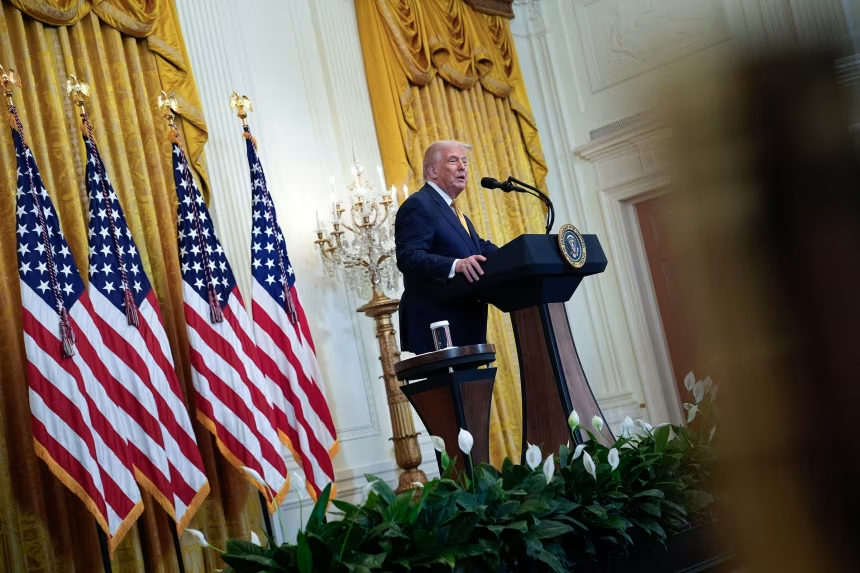
Fact check: Five false claims Trump made about inflation last night
Entities mentioned:
- Donald Trump: Power, Control, Self-preservation
- Democrats: Justice, Righteousness, Moral outrage
- Patrick De Haan: Professional pride, Duty, Righteousness
- Jerome Powell: Duty, Professional pride, Control
- Federal Reserve: Control, Stability, Professional pride
Article Assessment:
Credibility Score: 85/100
Bias Rating: 35/100 (Lean Left)
Sentiment Score: 30/100
Authoritarianism Risk: 20/100 (Strongly Democratic)
Bias Analysis:
The article leans slightly left due to its focus on fact-checking Trump's claims, which are consistently shown to be false. However, it relies heavily on verifiable data and expert sources, maintaining overall objectivity in its presentation of economic facts.
Key metric: Consumer Price Index (CPI)
As a social scientist, I analyze that this article significantly impacts the Consumer Price Index (CPI) metric by highlighting discrepancies between President Trump's claims and actual economic data. The fact-checking reveals that Trump's statements about inflation, gas prices, and grocery costs are largely inaccurate. This misinformation could potentially influence public perception of economic performance and policy effectiveness. The article's thorough debunking of these claims using verified data sources like the CPI, AAA, and GasBuddy emphasizes the importance of accurate economic reporting and its potential effects on consumer behavior and political discourse surrounding inflation and overall economic health.
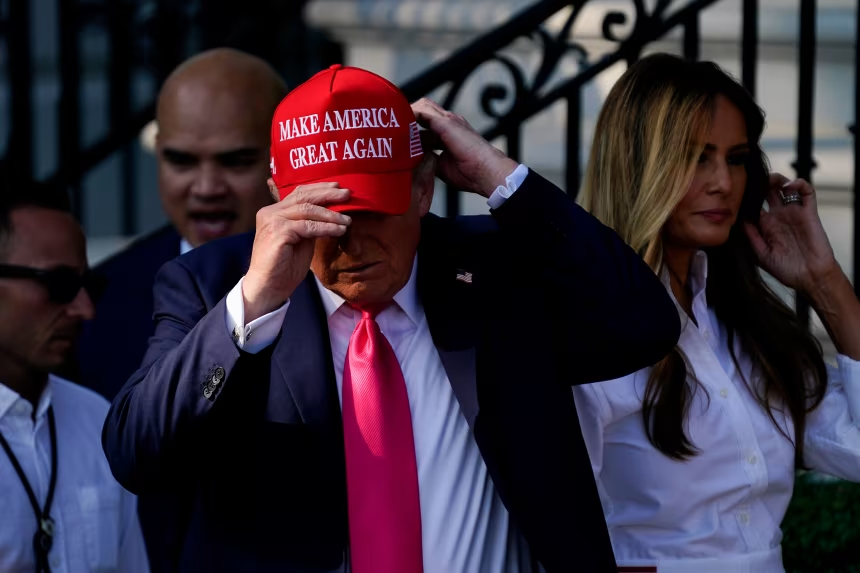
Analysis: Donald Trump’s long history of fake history
Entities mentioned:
- Donald Trump: Recognition, Self-preservation, Power
- Joe Biden: Duty, Obligation, Professional pride
- Tim Walz: Duty, Security, Control
- European Union: Unity, Security, Influence
- South Korea: Security, Self-preservation, Obligation
Article Assessment:
Credibility Score: 85/100
Bias Rating: 40/100 (Lean Left)
Sentiment Score: 30/100
Authoritarianism Risk: 20/100 (Strongly Democratic)
Bias Analysis:
The article leans slightly left due to its focus on fact-checking Trump's statements. However, it maintains credibility through extensive sourcing and balanced presentation of facts, including White House responses.
Key metric: Public Trust in Government
As a social scientist, I analyze that this article significantly impacts public trust in government by exposing numerous false claims made by former President Donald Trump. The systematic debunking of Trump's statements across various topics, including Brexit, the Iraq War, civil unrest in Minneapolis, and international relations, reveals a pattern of misinformation that could erode citizens' confidence in political leadership. The article's detailed fact-checking demonstrates how distorted narratives can be used to inflate a leader's perceived competence and foresight, potentially misleading voters and distorting public discourse. This constant stream of inaccuracies from a high-profile political figure may contribute to a broader skepticism towards government communications and decrease overall trust in political institutions.

Six months into Trump’s second term, voters remain divided
Entities mentioned:
- Donald Trump: Power, Control, Legacy
- Jaclyn Taylor: Loyalty, Pride, Enthusiasm
- Lawrence Malinconico: Moral outrage, Anxiety, Indignation
- Deven McIver: Self-preservation, Security, Wariness
- Pat Levin: Fear, Moral outrage, Anxiety
- Tonya Rincon: Moral outrage, Justice, Indignation
- Vladimir Putin: Power, Control, Influence
- Jeffrey Epstein: Power, Greed, Control
Article Assessment:
Credibility Score: 75/100
Bias Rating: 45/100 (Center)
Sentiment Score: 35/100
Authoritarianism Risk: 45/100 (Mixed/Neutral)
Bias Analysis:
The article presents views from both Trump supporters and opponents, providing a balanced perspective. While it includes more critical voices, it also fairly represents supportive opinions, maintaining a relatively centrist approach.
Key metric: Political Polarization Index
As a social scientist, I analyze that this article demonstrates the deep political divide in the United States six months into Trump's second term. The stark contrast in opinions between Trump supporters and opponents reflects a highly polarized electorate, with little middle ground. This polarization extends to various issues, including immigration, foreign policy, and economic matters. The article highlights how pre-existing views largely determine interpretations of current events, with supporters praising Trump's actions and opponents criticizing them. The Epstein saga appears to be a rare point of concern among some Trump supporters, though it hasn't significantly altered their overall support. The persistent high cost of living is a common concern across political lines, which could become a critical issue in the upcoming 2026 midterm elections. The article suggests that the political landscape remains deeply divided, with little evidence of a shift towards unity or bipartisanship.

Voters share the economic impacts of Trump’s megabill in battleground Arizona
Entities mentioned:
- Ray Flores: Ambition, Wariness, Self-preservation
- Donald Trump: Power, Influence, Legacy
- Republican Congress: Control, Competitive spirit, Influence
- Juan Ciscomani: Ambition, Power, Self-preservation
- Claudio Rodriguez: Duty, Justice, Moral outrage
Article Assessment:
Credibility Score: 75/100
Bias Rating: 55/100 (Center)
Sentiment Score: 45/100
Authoritarianism Risk: 35/100 (Generally Democratic)
Bias Analysis:
The article presents multiple perspectives, including business owners, non-profit workers, and political figures. While it leans slightly left in its framing of social safety net concerns, it balances this with positive economic impacts of Republican policies.
Key metric: Economic Impact of Policy Changes
As a social scientist, I analyze that this article highlights the complex interplay between economic policy changes and voter sentiment in a battleground state. The GOP's new policy bill, championed by Trump, has immediate effects on hiring practices and business operations, as seen in Ray Flores' restaurant. However, the delayed implementation of social safety net changes creates uncertainty for organizations like the Community Food Bank. The article suggests a potential disconnect between short-term economic benefits and long-term social consequences, which may influence voter behavior in the upcoming midterms. The Latino vote is presented as a crucial factor, with Republicans hoping to build on recent gains. The staggered implementation of policy changes complicates political messaging and voter response, potentially benefiting incumbents in the short term but creating challenges for long-term policy evaluation.

The US government has declared war on the very idea of climate change
Entities mentioned:
- Donald Trump: Power, Control, Legacy
- Environmental Protection Agency (EPA): Control, Duty, Professional pride
- Lee Zeldin: Loyalty, Ambition, Control
- Chris Wright: Greed, Self-preservation, Influence
- Katie Dykes: Duty, Righteousness, Moral outrage
- Andrew Dessler: Professional pride, Righteousness, Duty
- Phil Duffy: Professional pride, Moral outrage, Duty
- Michael Mann: Righteousness, Moral outrage, Professional pride
Article Assessment:
Credibility Score: 70/100
Bias Rating: 35/100 (Lean Left)
Sentiment Score: 25/100
Authoritarianism Risk: 65/100 (Authoritarian Tendencies)
Bias Analysis:
The article leans left, presenting a critical view of Trump administration policies. While it includes multiple perspectives, it gives more weight to climate scientists and environmental advocates, potentially under-representing opposing viewpoints.
Key metric: Environmental Protection and Sustainability
As a social scientist, I analyze that this article highlights a significant shift in US climate policy under the Trump administration. The actions described, particularly the move to undo the 'endangerment finding', represent a fundamental change in how the US government approaches climate change. This shift could have long-lasting effects on environmental protection, potentially hampering efforts to address climate change at the federal level. The article suggests a conflict between economic interests (particularly in fossil fuels) and environmental concerns, with the current administration prioritizing the former. This approach contradicts the scientific consensus on climate change and could impact the US's role in global climate efforts. The contrast between the administration's stance and the views of state officials and scientists indicates a growing divide in climate policy approaches, which could lead to increased tensions between federal and state governments on environmental issues.

In the Epstein scandal, like other Washington storms, the victims are an afterthought
Entities mentioned:
- Virginia Giuffre: Justice, Self-preservation, Recognition
- Jeffrey Epstein: Power, Control, Greed
- Ghislaine Maxwell: Power, Greed, Control
- Donald Trump: Self-preservation, Power, Control
- Prince Andrew: Self-preservation, Reputation, Denial
- Randee Kogan: Professional pride, Duty, Empathy
- Todd Blanche: Duty, Professional pride, Loyalty
Article Assessment:
Credibility Score: 75/100
Bias Rating: 40/100 (Lean Left)
Sentiment Score: 25/100
Authoritarianism Risk: 30/100 (Generally Democratic)
Bias Analysis:
The article leans slightly left, critiquing Trump and right-wing conspiracy theories more than other political actors. However, it maintains a focus on victims and includes multiple perspectives, balancing its overall presentation.
Key metric: Public Trust in Government Institutions
As a social scientist, I analyze that this article highlights the complex interplay between political power, media coverage, and the impact on victims in high-profile scandals. The Epstein case and its connections to influential figures like Trump and Prince Andrew demonstrate how victims' experiences can be overshadowed by political maneuvering and media sensationalism. This dynamic erodes public trust in government institutions, as it suggests that powerful individuals may escape scrutiny or consequences for their actions. The article's focus on the re-traumatization of victims and the dehumanizing effect of media coverage points to systemic issues in how society handles such cases, potentially leading to decreased faith in the justice system and political leadership.
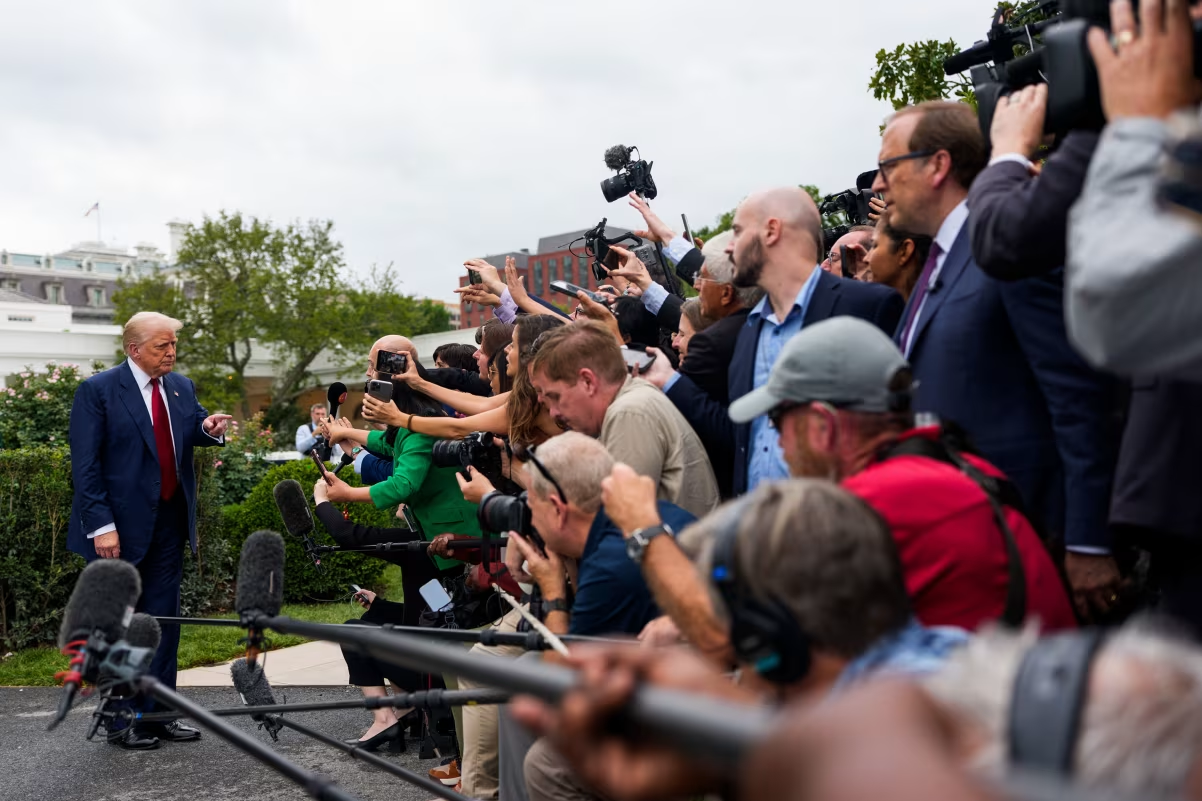
Trump’s rewriting of reality on jobs numbers is chilling, but it could backfire
Entities mentioned:
- Donald Trump: Power, Control, Self-preservation
- Erika McEntarfer: Professional pride, Duty, Integrity
- Bureau of Labor Statistics: Duty, Professional pride, Integrity
- Federal Reserve: Independence, Duty, Professional pride
- Kevin Hassett: Loyalty, Duty, Self-preservation
- Chuck Schumer: Opposition, Indignation, Duty
- Jamieson Greer: Loyalty, Duty, Self-preservation
- William Beach: Professional pride, Integrity, Concern
Article Assessment:
Credibility Score: 75/100
Bias Rating: 30/100 (Lean Left)
Sentiment Score: 25/100
Authoritarianism Risk: 70/100 (Authoritarian Tendencies)
Bias Analysis:
The article leans left in its framing, presenting a critical view of Trump's actions and their implications. While it cites various sources, the overall tone and language choice suggest a negative stance towards the administration.
Key metric: Economic Stability and Credibility
As a social scientist, I analyze that this article highlights a significant threat to the integrity and independence of key economic institutions in the United States. The firing of the Bureau of Labor Statistics Commissioner and attempts to influence the Federal Reserve indicate a trend towards politicizing economic data and policy. This could have severe consequences for the U.S. economy's reputation and stability. The article suggests that Trump's actions may erode investor and business confidence, potentially leading to economic uncertainty and instability. The comparison to countries like Argentina, Greece, and China underscores the risks of manipulating economic data for political gain. The broader implications of these actions point to a weakening of democratic norms and an increase in authoritarian tendencies, which could have long-lasting effects on U.S. governance and economic policy.
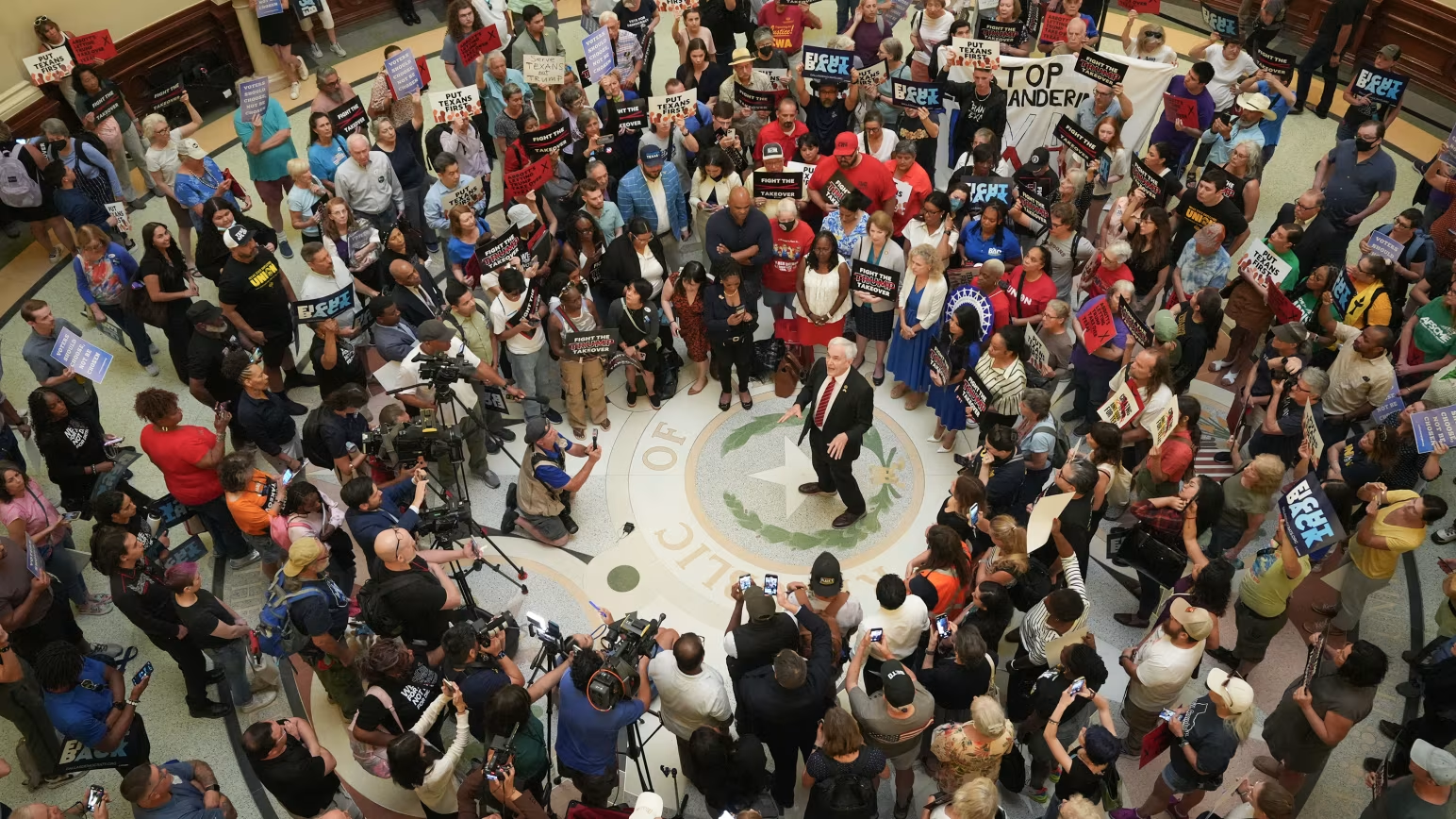
Why Trump’s Texas battle over the House could end up affecting every American
Entities mentioned:
- Donald Trump: Power, Control, Ambition
- Democratic Party: Competitive spirit, Self-preservation, Justice
- Republican Party: Power, Control, Competitive spirit
- Texas State Lawmakers (Democratic): Righteousness, Determination, Resistance
- Kathy Hochul: Competitive spirit, Determination, Power
- Gavin Newsom: Ambition, Competitive spirit, Justice
- Greg Abbott: Loyalty, Power, Control
- Mike Johnson: Power, Loyalty, Control
Article Assessment:
Credibility Score: 65/100
Bias Rating: 35/100 (Lean Left)
Sentiment Score: 30/100
Authoritarianism Risk: 55/100 (Mixed/Neutral)
Bias Analysis:
The article leans slightly left, focusing more on Democratic perspectives and strategies. While it mentions Republican actions, it frames them more negatively and gives more space to Democratic justifications.
Key metric: Electoral Integrity
As a social scientist, I analyze that this article highlights a significant escalation in the ongoing battle over redistricting and its impact on electoral integrity in the United States. The Democrats' shift towards more aggressive tactics in response to Republican gerrymandering efforts in Texas represents a potential turning point in how both parties approach electoral map-drawing. This development could have far-reaching consequences for the balance of power in the House of Representatives and the overall health of American democracy. The article suggests that Democrats are abandoning previous commitments to nonpartisan redistricting commissions in favor of a more combative approach, mirroring Republican tactics. This shift indicates a growing concern among Democrats about losing ground in the electoral landscape and a willingness to engage in similar practices they have previously criticized. The potential for a 'race to the bottom' in gerrymandering could further erode public trust in the electoral system and exacerbate political polarization. The focus on Texas as a battleground for this issue underscores the state's importance in national politics and its role as a bellwether for broader trends in electoral strategy.
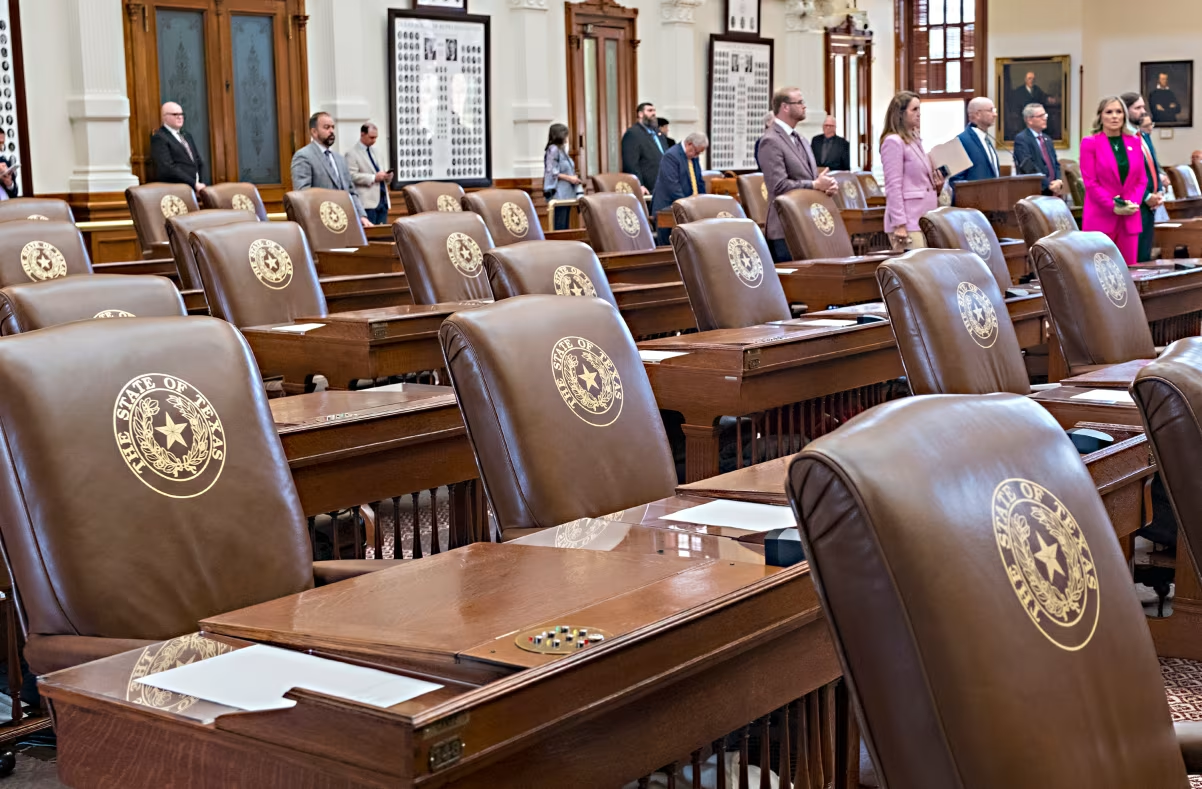
What is gerrymandering? Why is it legal?
Entities mentioned:
- Republicans: Power, Control, Self-preservation
- Democrats: Power, Justice, Competitive spirit
- Supreme Court: Influence, Legacy, Control
- Texas Legislature: Power, Control, Loyalty
- President Trump: Power, Control, Self-preservation
- Gov. Greg Abbott: Loyalty, Power, Control
Article Assessment:
Credibility Score: 75/100
Bias Rating: 45/100 (Center)
Sentiment Score: 35/100
Authoritarianism Risk: 65/100 (Authoritarian Tendencies)
Bias Analysis:
The article presents a balanced view of the redistricting issue, discussing actions and motivations of both Republicans and Democrats. While it critiques Republican efforts more heavily, it also acknowledges Democratic gerrymandering and provides context for the historical and legal aspects of the issue.
Key metric: Electoral Competitiveness
As a social scientist, I analyze that this article highlights the ongoing battle over redistricting and its impact on electoral competitiveness in the United States. The practice of gerrymandering, while historically used by both major parties, is currently being leveraged more aggressively by Republicans, particularly in Texas. This mid-decade redistricting effort, prompted by the Trump administration, could significantly alter the balance of power in the House of Representatives. The article underscores how recent Supreme Court decisions have emboldened partisan gerrymandering efforts, potentially leading to a redistricting war across multiple states. This situation poses a substantial threat to fair representation and the principle of voters choosing their representatives rather than the reverse. The analysis also points out the limitations faced by Democrats in counteracting these efforts due to their own commitments to nonpartisan redistricting processes in some states they control. Overall, this development could lead to a decrease in electoral competitiveness, with more safe seats for the party controlling the redistricting process, potentially undermining the responsiveness of the electoral system to shifts in public opinion.
- Read more about What is gerrymandering? Why is it legal?
- Log in to post comments
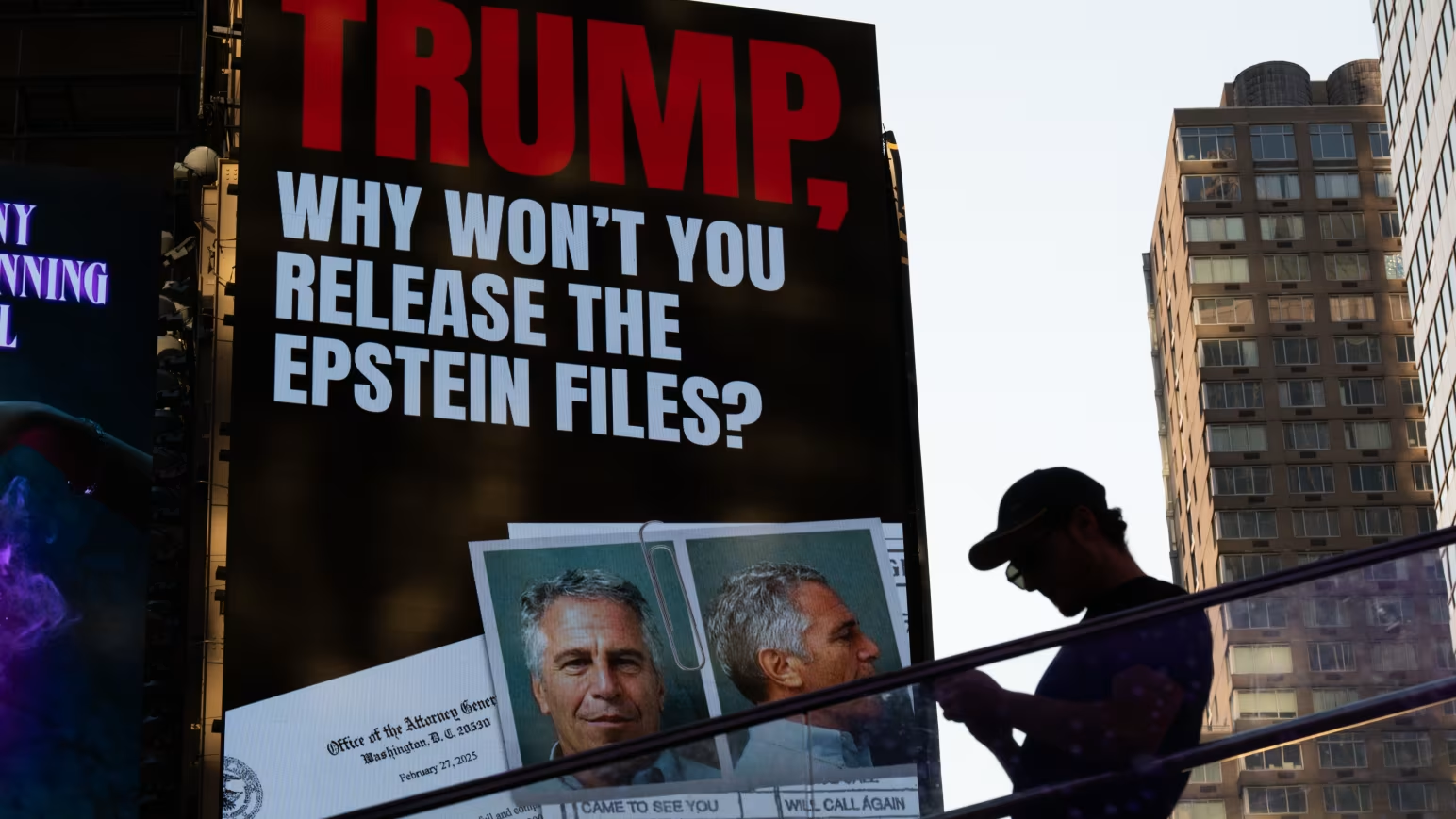
Tapes, transcripts, subpoenas, and legal twists: Trump’s Epstein storm deepens again
Entities mentioned:
- Donald Trump: Self-preservation, Power, Control
- Jeffrey Epstein: Power, Control, Greed
- Ghislaine Maxwell: Self-preservation, Loyalty, Fear
- Todd Blanche: Duty, Loyalty, Professional pride
- JD Vance: Loyalty, Ambition, Power
- House Oversight Committee: Justice, Duty, Influence
Article Assessment:
Credibility Score: 70/100
Bias Rating: 40/100 (Lean Left)
Sentiment Score: 30/100
Authoritarianism Risk: 55/100 (Mixed/Neutral)
Bias Analysis:
The article leans slightly left, evidenced by its critical tone towards the Trump administration and emphasis on potential wrongdoing. However, it also presents multiple perspectives and includes factual reporting on actions taken by various parties.
Key metric: Public Trust in Government
As a social scientist, I analyze that this article reveals a complex web of political maneuvering, legal challenges, and ethical concerns surrounding the Epstein case and its connection to the Trump administration. The ongoing scandal threatens to erode public trust in government institutions, particularly the Justice Department, as it raises questions about potential abuse of power and political interference in legal matters. The administration's handling of the Maxwell interviews and potential transcript release suggests a struggle between transparency and political self-interest, while the House Oversight Committee's selective subpoenas indicate partisan motivations in the investigation. This situation highlights the tension between democratic accountability and the potential for authoritarian tendencies in high-level government operations.