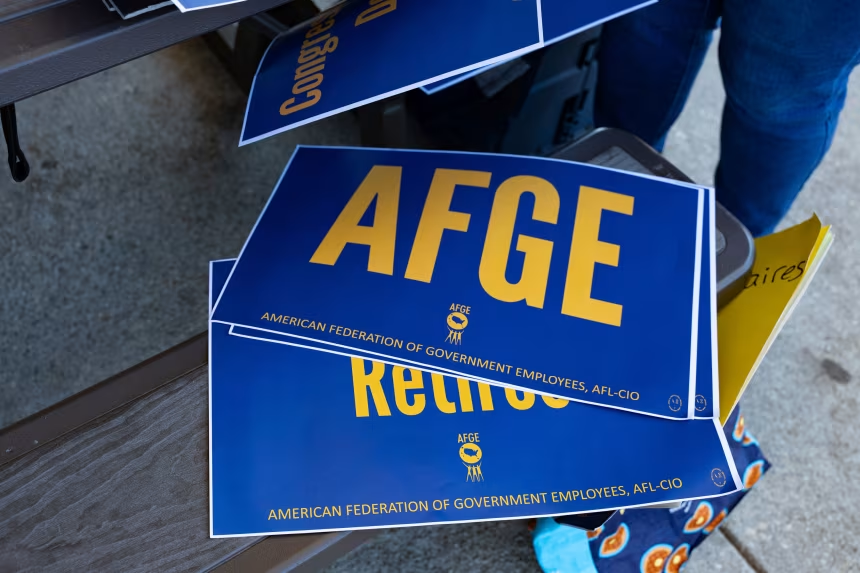
VA terminates key union contracts
Entities mentioned:
- Department of Veterans Affairs: Control, Efficiency, Professional pride
- President Donald Trump: Power, Control, Ambition
- VA Secretary Doug Collins: Duty, Efficiency, Control
- American Federation of Government Employees: Justice, Loyalty, Self-preservation
- National Nurses United: Justice, Professional pride, Duty
- Everett Kelley: Indignation, Justice, Loyalty
Article Assessment:
Credibility Score: 70/100
Bias Rating: 55/100 (Center)
Sentiment Score: 30/100
Authoritarianism Risk: 65/100 (Authoritarian Tendencies)
Bias Analysis:
The article presents perspectives from both the VA administration and union representatives, showing an attempt at balance. However, there's slightly more space given to union viewpoints and criticisms of the decision, suggesting a slight lean towards labor interests.
Key metric: Federal Employee Job Satisfaction and Morale
As a social scientist, I analyze that this decision to terminate union contracts at the VA will likely have significant negative impacts on federal employee job satisfaction and morale. The move represents a major shift in labor relations within the federal government, potentially weakening employee protections and collective bargaining power. This could lead to decreased job security, reduced benefits, and less favorable working conditions for VA employees. The administration's justification of improved efficiency and veteran care may be offset by potential declines in employee engagement and retention, which could ultimately affect the quality of services provided to veterans. The conflict between the administration's goals and union interests highlights a broader ideological divide on the role of public sector unions in government efficiency and employee rights.
- Read more about VA terminates key union contracts
- Log in to post comments
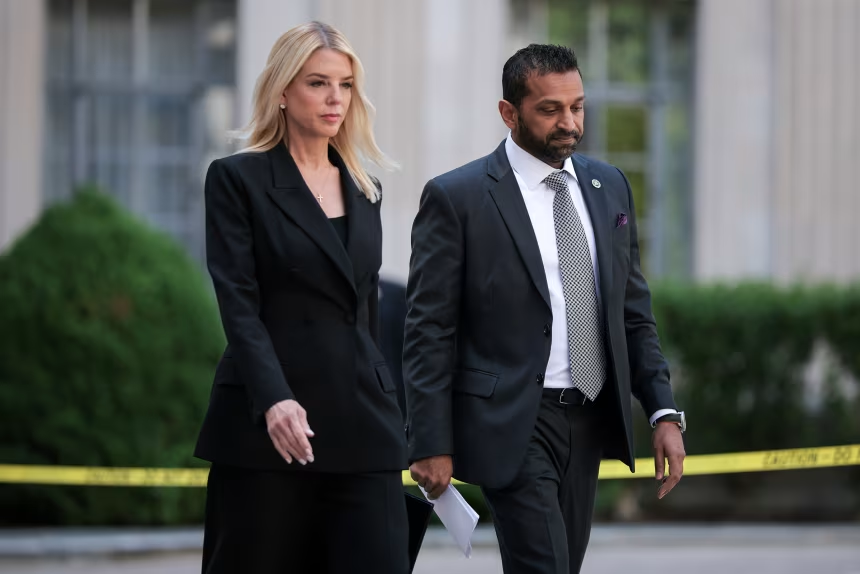
Planned dinner for Trump officials to discuss Epstein appears to have been moved amid media scrutiny
Entities mentioned:
- JD Vance: Unity, Influence, Duty
- Pam Bondi: Power, Recognition, Professional pride
- Kash Patel: Power, Professional pride, Loyalty
- Susie Wiles: Control, Unity, Duty
- Dan Bongino: Self-preservation, Professional pride, Recognition
- Todd Blanche: Duty, Professional pride, Loyalty
- William Martin: Loyalty, Duty, Control
Article Assessment:
Credibility Score: 65/100
Bias Rating: 55/100 (Center)
Sentiment Score: 35/100
Authoritarianism Risk: 45/100 (Mixed/Neutral)
Bias Analysis:
The article presents multiple viewpoints and relies on unnamed sources, which is common in political reporting. While it focuses on internal conflicts in the Trump administration, it maintains a relatively neutral tone in its presentation of facts.
Key metric: Government Transparency and Accountability
As a social scientist, I analyze that this article reveals internal conflicts and attempts at realignment within the Trump administration regarding the handling of the Epstein case. The planned dinner, which was apparently moved or canceled due to media scrutiny, indicates a desire to present a unified front and regain control of the narrative. The tensions between key figures like Bondi, Patel, and Bongino highlight the challenges in managing high-profile cases and maintaining cohesion within the administration. The article suggests a struggle between transparency and control of information, which directly impacts government accountability. The administration's response to media attention by potentially altering their meeting plans also demonstrates the influence of public scrutiny on government operations.
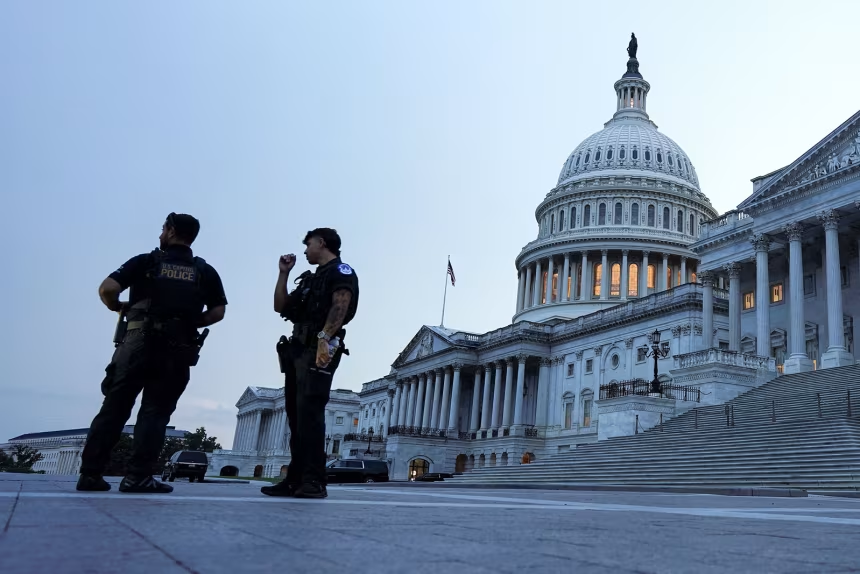
White House plans increase in federal law enforcement in DC over crime as Trump threatens to bring in National Guard
Entities mentioned:
- Trump administration: Control, Power, Security
- Donald Trump: Power, Control, Recognition
- ICE: Duty, Control, Security
- FBI: Duty, Security, Justice
- National Guard: Duty, Security, Control
- Department of Homeland Security: Security, Control, Duty
- Karoline Leavitt: Duty, Loyalty, Professional pride
- Muriel Bowser: Duty, Security, Self-preservation
- DC Police Department: Duty, Security, Professional pride
- Gavin Newsom: Moral outrage, Self-preservation, Control
Article Assessment:
Credibility Score: 70/100
Bias Rating: 55/100 (Center)
Sentiment Score: 30/100
Authoritarianism Risk: 65/100 (Authoritarian Tendencies)
Bias Analysis:
The article presents multiple viewpoints and cites official sources, but there's a slight lean towards questioning Trump's claims. It includes contradictory crime statistics and criticism of Trump's actions, balancing official statements with factual context.
Key metric: Crime Rate in Washington, DC
As a social scientist, I analyze that this article highlights a complex interplay between federal and local governance, public safety concerns, and political motivations. The Trump administration's plan to increase federal law enforcement presence in Washington, DC, ostensibly to address crime issues, raises questions about the balance of power between federal and local authorities. The discrepancy between Trump's claims of increased crime and the actual crime statistics reported by DC Police suggests potential political motivations behind the move. The threat to deploy the National Guard and take over the DC Police Department indicates a significant escalation in federal intervention in local affairs, which could have implications for democratic governance and federalism. This situation reflects broader tensions in American politics regarding law and order, federal vs. local control, and the use of security forces for political purposes.

Trump reignites threat to take over DC after former DOGE worker assaulted in attempted carjacking
Entities mentioned:
- Donald Trump: Power, Control, Influence
- Edward Coristine: Self-preservation, Security, Fear
- DC Police Department: Duty, Security, Professional pride
- Elon Musk: Influence, Recognition, Ambition
- Muriel Bowser: Self-preservation, Duty, Security
- Jeanine Pirro: Loyalty, Influence, Justice
- Christina Henderson: Duty, Justice, Righteousness
Article Assessment:
Credibility Score: 70/100
Bias Rating: 55/100 (Center)
Sentiment Score: 30/100
Authoritarianism Risk: 65/100 (Authoritarian Tendencies)
Bias Analysis:
The article presents multiple viewpoints, including Trump's statements, local officials' responses, and conflicting crime statistics. However, there's slightly more emphasis on Trump's perspective and actions, potentially skewing the overall narrative.
Key metric: Crime Rate
As a social scientist, I analyze that this article highlights the complex interplay between federal and local governance in Washington, DC. Trump's threats to federalize the city's administration in response to a high-profile crime incident demonstrate a potential shift in federal-local relations. This could significantly impact the crime rate metric, as increased federal intervention might lead to stricter law enforcement but could also create tensions with local authorities and communities. The conflicting crime statistics presented (Trump's claims vs. official DC Police data) underscore the importance of data interpretation in shaping public policy and perception. The situation also reveals the delicate balance local leaders like Mayor Bowser must maintain between addressing crime concerns and preserving local autonomy, especially under pressure from federal authorities.
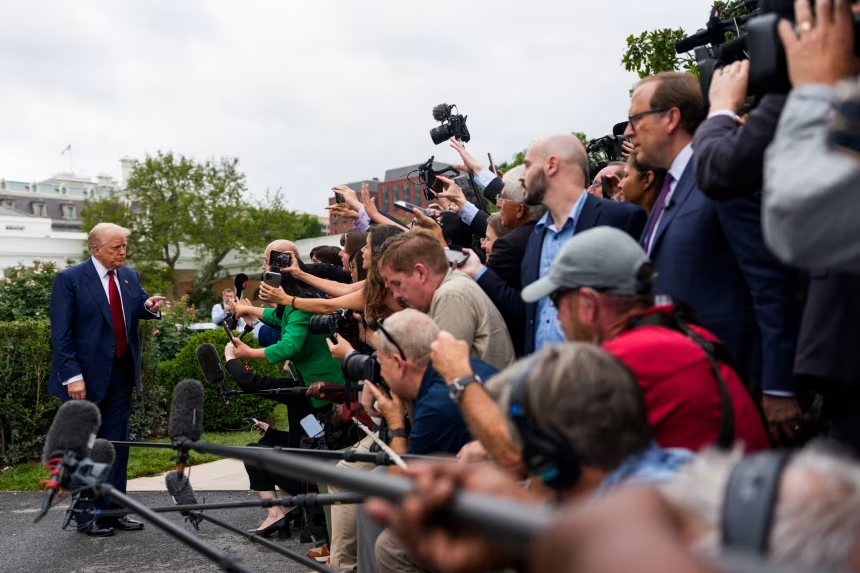
Trump voter regret might be setting in – slowly
Entities mentioned:
- Donald Trump: Power, Control, Legacy
- Trump voters: Loyalty, Wariness, Anxiety
- Kamala Harris: Ambition, Duty, Recognition
- University of Massachusetts Amherst: Curiosity, Professional pride
- Republican Party: Unity, Power, Control
Article Assessment:
Credibility Score: 75/100
Bias Rating: 40/100 (Lean Left)
Sentiment Score: 35/100
Authoritarianism Risk: 20/100 (Strongly Democratic)
Bias Analysis:
The article leans slightly left, focusing more on potential Trump voter regret than on positive aspects of his presidency. However, it attempts balance by acknowledging the limitations of the data and providing context for the findings.
Key metric: Voter Satisfaction and Political Stability
As a social scientist, I analyze that this article highlights a potential shift in voter sentiment among Trump supporters, which could significantly impact political stability and voter satisfaction in the US. The data presented suggests a growing disillusionment among some Trump voters, with factors such as policy decisions, handling of the Epstein files, and general performance contributing to this trend. This shift, while not dramatic, could have long-term implications for political allegiances and future electoral outcomes. The article's use of multiple polls and data points strengthens its argument, though it's important to note that voter regret is still a minority sentiment among Trump supporters.
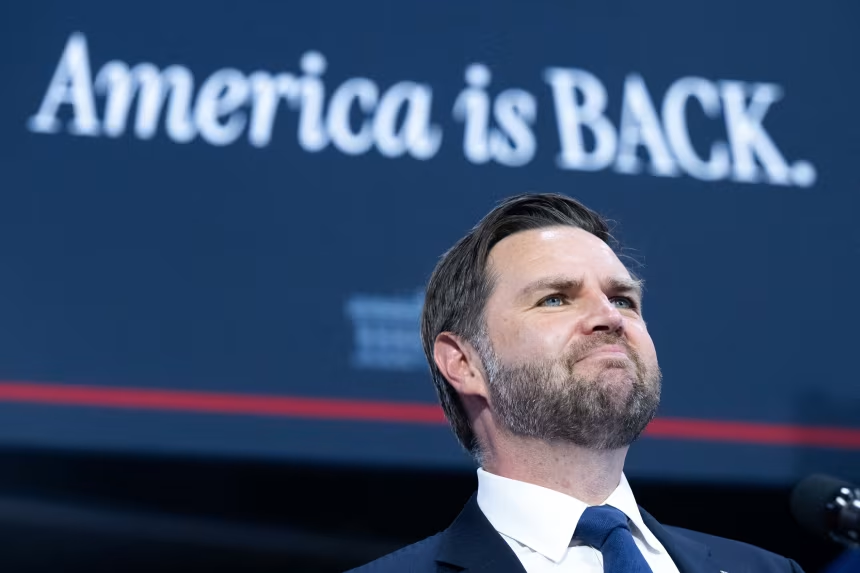
Vance embraces his growing role as Trump’s chief problem solver — and the implications for a 2028 run
Entities mentioned:
- JD Vance: Ambition, Loyalty, Power
- Donald Trump: Power, Control, Legacy
- Republican Party (GOP): Power, Influence, Unity
- Marco Rubio: Ambition, Power, Recognition
- Pete Hegseth: Duty, Professional pride, Loyalty
- Robert F. Kennedy Jr.: Ambition, Legacy, Influence
- Jack Posobiec: Influence, Loyalty, Recognition
Article Assessment:
Credibility Score: 70/100
Bias Rating: 55/100 (Center)
Sentiment Score: 60/100
Authoritarianism Risk: 45/100 (Mixed/Neutral)
Bias Analysis:
The article presents a relatively balanced view of Vance's role, including both praise and potential risks. While it leans slightly towards a positive portrayal of Vance, it also includes cautionary notes about the volatility of political fortunes.
Key metric: Presidential Approval Rating
As a social scientist, I analyze that this article highlights the growing influence of JD Vance within the Trump administration and his potential as a future presidential candidate. Vance's increasing role as a problem solver and his alignment with Trump's agenda directly impact the administration's effectiveness and, consequently, the President's approval ratings. The article suggests that Vance's political future is tightly linked to Trump's success, indicating that current approval ratings may have long-term implications for both figures. The focus on Vance's ability to navigate complex issues and maintain relationships across various political spheres demonstrates how internal dynamics within an administration can significantly influence public perception and support.

‘It’s bush league’: Florida law enforcement agencies aren’t happy with how ICE is recruiting local officers
Entities mentioned:
- Immigration and Customs Enforcement (ICE): Ambition, Control, Power
- Florida law enforcement agencies: Professional pride, Loyalty, Indignation
- Madison Sheahan: Duty, Determination, Ambition
- Kristi Noem: Ambition, Influence, Control
- Charles Ramsey: Professional pride, Duty, Wariness
- Pinellas County Sheriff's Office: Indignation, Professional pride, Loyalty
- John Mina: Professional pride, Self-respect, Determination
- Grady Judd: Indignation, Professional pride, Loyalty
Article Assessment:
Credibility Score: 75/100
Bias Rating: 55/100 (Center)
Sentiment Score: 35/100
Authoritarianism Risk: 45/100 (Mixed/Neutral)
Bias Analysis:
The article presents multiple perspectives, including those critical of ICE and those supporting stricter immigration enforcement. While it gives more space to critics of ICE's tactics, it also includes ICE's viewpoint and factual information about their recruitment efforts.
Key metric: Immigration Enforcement Effectiveness
As a social scientist, I analyze that this article highlights a growing tension between federal and local law enforcement agencies regarding immigration enforcement. ICE's aggressive recruitment tactics, while aimed at bolstering their ranks to meet political demands, are causing friction with local agencies who feel their partnerships are being exploited. This conflict could potentially undermine the effectiveness of immigration enforcement by straining relationships between ICE and local law enforcement, leading to reduced cooperation and information sharing. The substantial financial incentives offered by ICE also raise concerns about brain drain from local agencies, which could impact their overall performance and community safety efforts. This situation reflects broader challenges in balancing federal immigration priorities with local law enforcement needs and resources.
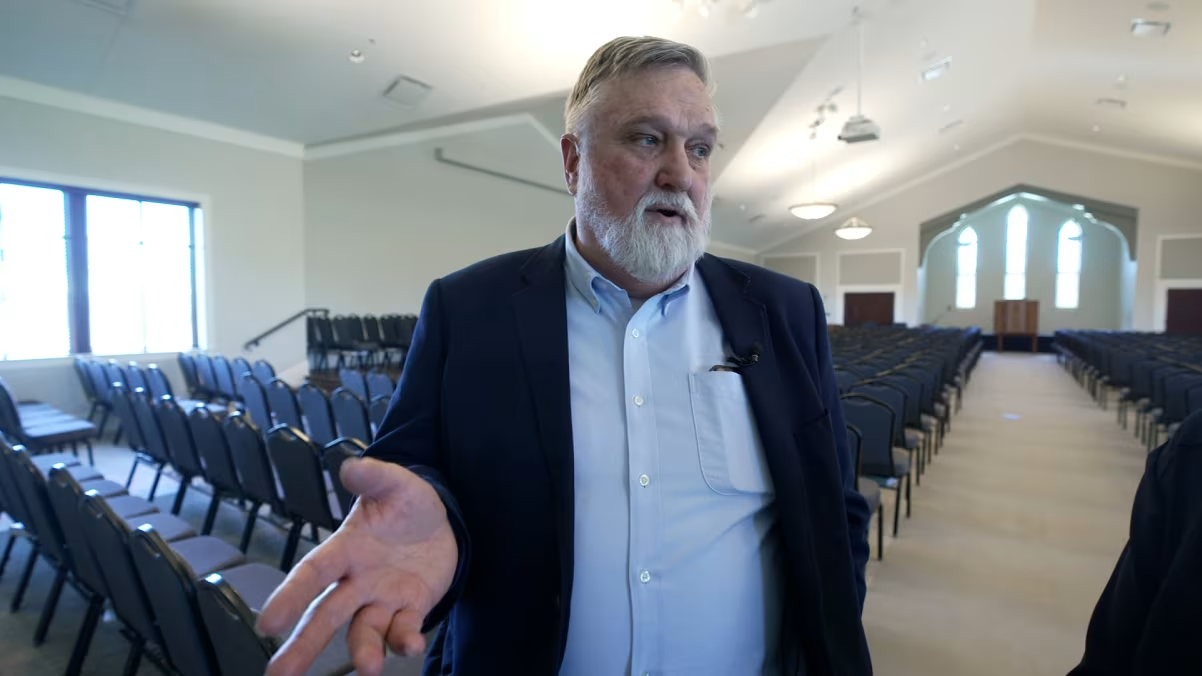
Inside one pastor’s crusade for Christian domination in the age of Trump
Entities mentioned:
- Douglas Wilson: Righteousness, Influence, Control
- Pete Hegseth: Loyalty, Power, Righteousness
- Donald Trump: Power, Influence, Control
- Conservative Partnership Institute: Influence, Power, Control
- Christ Church Washington DC: Influence, Righteousness, Unity
Article Assessment:
Credibility Score: 75/100
Bias Rating: 40/100 (Lean Left)
Sentiment Score: 35/100
Authoritarianism Risk: 65/100 (Authoritarian Tendencies)
Bias Analysis:
The article leans slightly left, presenting a critical view of Christian nationalism while giving voice to its proponents. It provides context and multiple perspectives, but the framing suggests concern about the movement's impact.
Key metric: Religious Freedom Index
As a social scientist, I analyze that this article highlights the growing influence of Christian nationalist ideologies within conservative political circles, particularly in the context of the Trump administration. The establishment of Christ Church Washington DC, linked to Douglas Wilson's network, near the US Capitol symbolizes an attempt to increase religious influence in politics. This development, coupled with Secretary Hegseth's involvement, suggests a potential shift towards more theocratic governance, which could significantly impact religious freedom and separation of church and state. The article raises concerns about the implications for minority religions, women's rights, and LGBTQ+ rights if such ideologies gain further traction in government.

Longtime Biden aide testifies in GOP probe that former president aged on job but remained ‘fully engaged’
Entities mentioned:
- Joe Biden: Legacy, Duty, Power
- Anita Dunn: Loyalty, Professional pride, Duty
- House Oversight Committee: Righteousness, Control, Influence
- Robert Hur: Duty, Justice, Professional pride
- Bruce Reed: Loyalty, Duty, Professional pride
- Steve Ricchetti: Loyalty, Duty, Professional pride
- Mike Donilon: Loyalty, Duty, Professional pride
- Dr. Kevin O'Connor: Professional pride, Self-preservation, Duty
- Anthony Bernal: Self-preservation, Loyalty, Duty
- Annie Tomasini: Self-preservation, Loyalty, Duty
Article Assessment:
Credibility Score: 70/100
Bias Rating: 55/100 (Center)
Sentiment Score: 45/100
Authoritarianism Risk: 30/100 (Generally Democratic)
Bias Analysis:
The article presents multiple perspectives, including both supportive statements from Biden's former aides and the ongoing Republican investigation. While it leans slightly towards defending Biden, it also includes potentially damaging information, maintaining a relatively balanced approach.
Key metric: Presidential Approval Rating
As a social scientist, I analyze that this article highlights the ongoing debate about President Biden's cognitive abilities and its potential impact on public perception. The testimony of former aides, particularly Anita Dunn, appears to be an attempt to counter narratives about Biden's mental fitness. The Republican-led probe and the refusal of some aides to testify suggest a politically charged atmosphere. This investigation and the associated media coverage could significantly influence public opinion on Biden's capability to lead, potentially affecting his approval ratings and re-election prospects. The emphasis on aging and cognitive abilities in high office also raises broader questions about age and leadership in American politics.
Trump calls for a new census to exclude undocumented immigrants
Entities mentioned:
- Donald Trump: Power, Control, Influence
- Department of Commerce: Duty, Obligation, Professional pride
- Jeffrey Wice: Professional pride, Duty, Curiosity
- Census Bureau: Duty, Professional pride, Accuracy
- Marjorie Taylor Greene: Ambition, Influence, Loyalty
- Ron DeSantis: Ambition, Competitive spirit, Power
- Howard Lutnick: Duty, Obligation, Professional pride
- Gina Raimondo: Duty, Professional pride, Loyalty
- Erika McEntarfer: Professional pride, Duty, Integrity
Article Assessment:
Credibility Score: 70/100
Bias Rating: 55/100 (Center)
Sentiment Score: 35/100
Authoritarianism Risk: 65/100 (Authoritarian Tendencies)
Bias Analysis:
The article presents multiple viewpoints, including Trump's proposal and critiques from experts. However, it gives more space to arguments against the proposal, suggesting a slight center-left lean.
Key metric: Electoral Representation
As a social scientist, I analyze that this proposal to exclude undocumented immigrants from the census could significantly impact electoral representation and the distribution of federal resources. This move would likely shift political power towards areas with fewer immigrants, potentially benefiting Republican-leaning states. The proposal challenges longstanding constitutional interpretations and could face legal hurdles. It also raises concerns about the politicization of traditionally non-partisan government functions like the census, which could undermine public trust in these institutions. The timing and feasibility of conducting a new census before 2030 are questionable, given the extensive planning and resources required for such an undertaking.