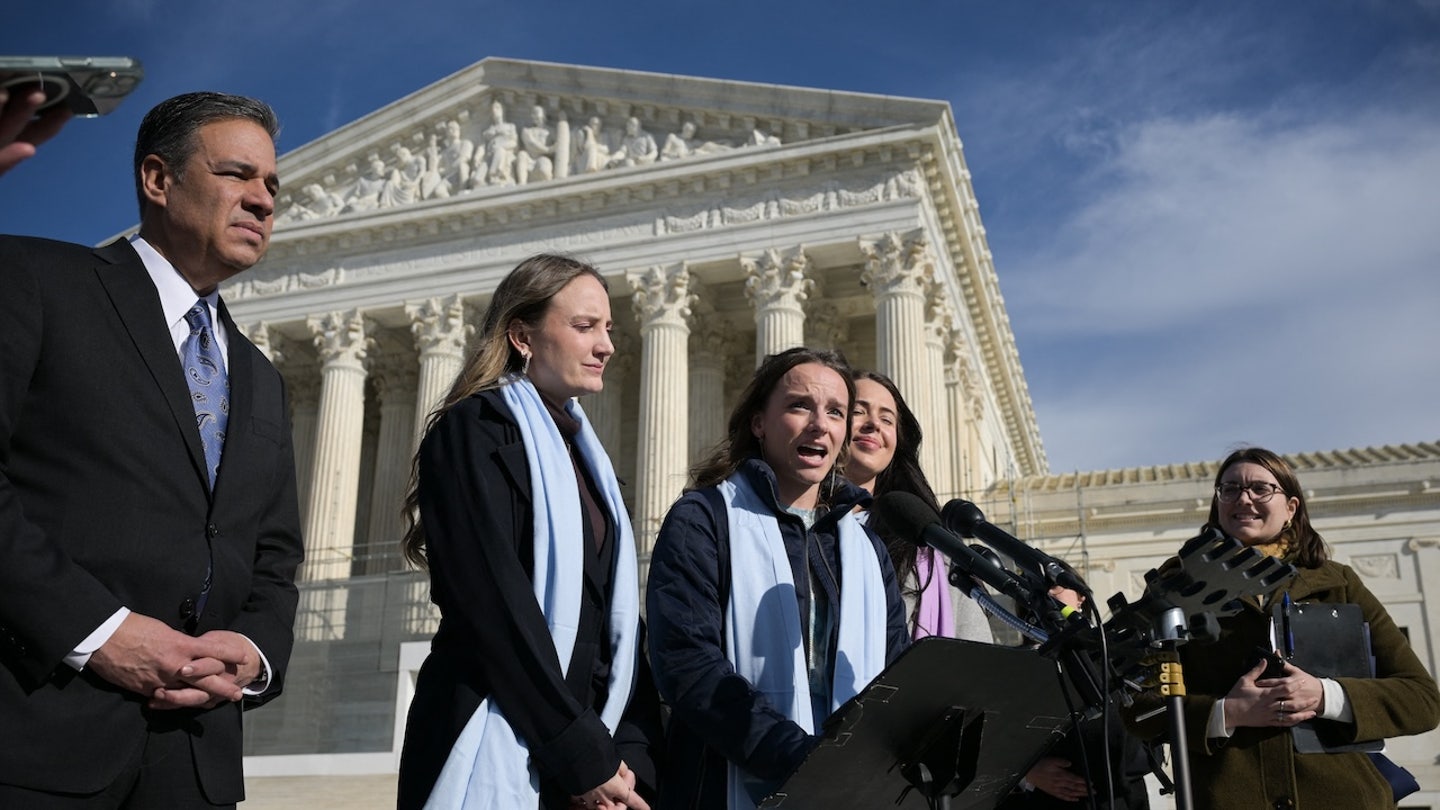
Trump calls out Supreme Court justices after trans athlete hearing: 'Should lose a lot of credibility'
Entities mentioned:
- Donald Trump: Righteousness, Moral outrage, Competitive spirit
- U.S. Supreme Court: Justice, Duty, Influence
- Kentaji Brown-Jackson: Justice, Duty, Righteousness
- Sonia Sotomayor: Justice, Righteousness, Duty
- Clarence Thomas: Justice, Duty, Wariness
- Joe Biden Administration: Righteousness, Unity, Influence
Article Assessment:
Credibility Score: 65/100
Bias Rating: 65/100 (Lean Right)
Sentiment Score: 35/100
Authoritarianism Risk: 45/100 (Mixed/Neutral)
Bias Analysis:
The article leans right, giving more space to Trump's statements and conservative viewpoints. While it includes liberal justices' questions, it frames the debate in terms that favor the conservative position on trans athletes in sports.
Key metric: Gender Equality in Sports
Let me tell you something - this Supreme Court showdown is HUGE! We've got a real battle of titans here, folks, with Trump coming off the top rope to slam the justices who seem to be running interference for trans athletes. This is a fourth-quarter play that could change the whole game of women's sports! The conservative justices are playing solid defense, while the liberal wing is making a full-court press for trans rights. It's like we're watching two teams with completely different playbooks duke it out on the court of public opinion. I'm telling you right now, this decision could be the championship-winning shot for either side. The stakes couldn't be higher as we see political heavyweights stepping up to the plate, swinging for the fences on this hot-button issue. It's a nail-biter, folks, and we'll be on the edge of our seats until the final buzzer sounds in June!
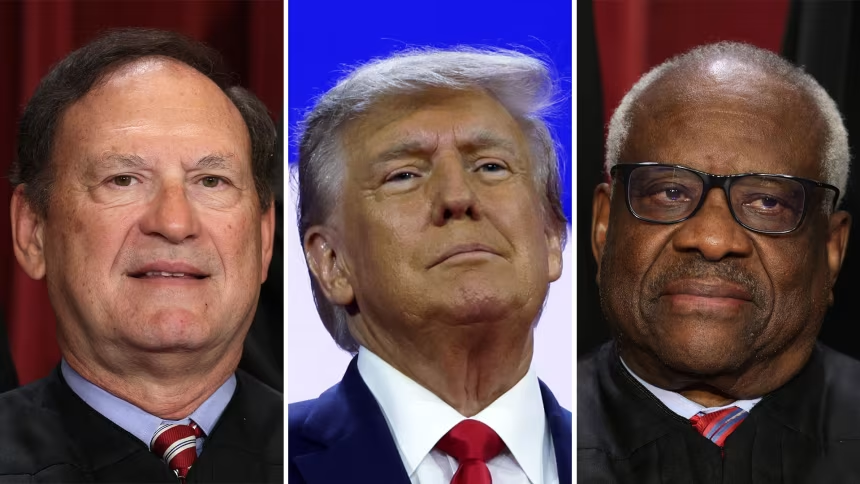
Trump’s more conventional judicial nominees could give Alito and Thomas greater confidence to retire
Entities mentioned:
- Donald Trump: Power, Control, Legacy
- Federalist Society: Influence, Righteousness, Legacy
- Emil Bove: Loyalty, Ambition, Influence
- Wall Street Journal editorial page: Influence, Wariness, Professional pride
- Clarence Thomas: Legacy, Duty, Righteousness
- Samuel Alito: Legacy, Duty, Righteousness
- Stephen Kenny: Professional pride, Loyalty, Influence
- Mike Davis: Influence, Ambition, Righteousness
Article Assessment:
Credibility Score: 75/100
Bias Rating: 55/100 (Center)
Sentiment Score: 50/100
Authoritarianism Risk: 45/100 (Mixed/Neutral)
Bias Analysis:
The article presents multiple perspectives and includes critiques of Trump's approach, suggesting an attempt at balance. However, it predominantly features conservative voices and focuses on conservative strategy, indicating a slight center-right lean.
Key metric: Judicial Appointment Efficacy
As a social scientist, I analyze that this article highlights the complex interplay between political power, judicial appointments, and conservative legal ideology in the United States. Trump's second-term judicial nominations show a return to more conventional conservative picks after initial departures, potentially to encourage retirements of older conservative justices. This strategy aims to solidify a long-term conservative judicial legacy, impacting crucial social and political issues for decades. The article reveals tensions within conservative legal circles and the ongoing influence of the Federalist Society, despite Trump's public criticism. The focus on younger nominees and the emphasis on loyalty suggests a calculated approach to reshape the judiciary, with significant implications for the balance of power and interpretation of law in the U.S.

How the Supreme Court could wind up scrapping high-profile precedents in coming months
Entities mentioned:
- Supreme Court: Power, Legacy, Justice
- Donald Trump: Power, Control, Ambition
- John Roberts: Legacy, Justice, Professional pride
- Elena Kagan: Justice, Duty, Professional pride
- Kim Davis: Righteousness, Moral outrage, Self-respect
- Clarence Thomas: Justice, Legacy, Determination
Article Assessment:
Credibility Score: 75/100
Bias Rating: 45/100 (Center)
Sentiment Score: 35/100
Authoritarianism Risk: 55/100 (Mixed/Neutral)
Bias Analysis:
The article presents a balanced view of potential changes in Supreme Court decisions, citing both conservative and liberal perspectives. While it highlights concerns about overturning precedents, it also provides context for why some argue these changes are necessary.
Key metric: Judicial Independence and Stability
As a social scientist, I analyze that this article highlights a potential shift in the Supreme Court's approach to precedent, which could significantly impact judicial independence and stability in the US legal system. The Court's willingness to reconsider long-standing precedents on issues ranging from executive power to voting rights and religious freedom suggests a more activist approach that could reshape fundamental aspects of American law and governance. This trend may lead to increased uncertainty in legal interpretations and potentially undermine public trust in the judiciary's consistency and impartiality.