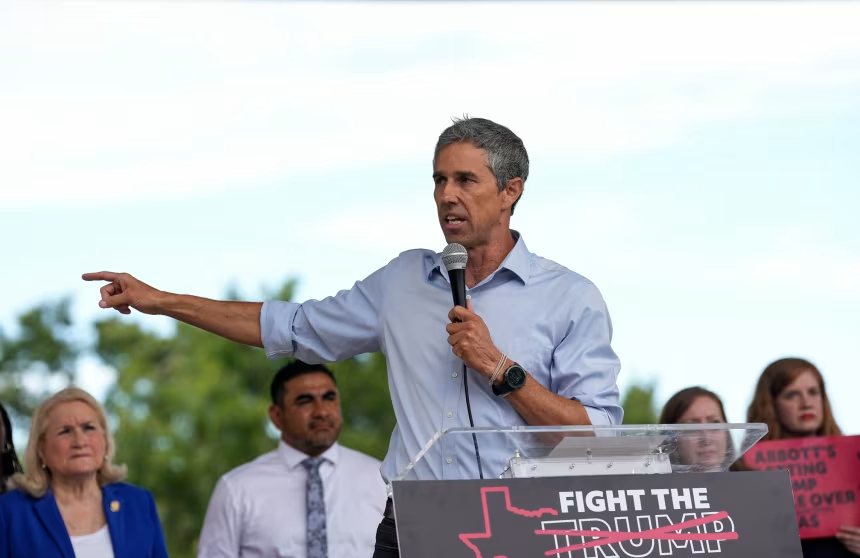
Beto O’Rourke raises funds for Texas Democrats, says 2026 midterms will be decided this summer
Entities mentioned:
- Beto O'Rourke: Ambition, Righteousness, Justice
- Texas Democrats: Justice, Determination, Self-preservation
- Texas Republicans: Power, Control, Ambition
- Greg Abbott: Control, Power, Competitive spirit
- Ken Paxton: Ambition, Power, Competitive spirit
- Alexandria Ocasio-Cortez: Justice, Influence, Loyalty
Article Assessment:
Credibility Score: 70/100
Bias Rating: 35/100 (Lean Left)
Sentiment Score: 30/100
Authoritarianism Risk: 45/100 (Mixed/Neutral)
Bias Analysis:
The article leans left in its framing, giving more space to Democratic perspectives and motivations. While it includes Republican viewpoints, these are often presented in a more critical light.
Key metric: Electoral Integrity
As a social scientist, I analyze that this article highlights a significant political conflict in Texas over redistricting, which has broader implications for national electoral politics. The actions of Texas Democrats leaving the state to prevent a quorum, and the subsequent fundraising efforts led by Beto O'Rourke, represent a high-stakes battle over electoral map-drawing that could impact future Congressional representation. The aggressive response from Republican leadership, including threats of arrest and disqualification, escalates the conflict and raises concerns about the use of state power in partisan struggles. O'Rourke's framing of the issue as a fight against 'authoritarian power' and the potential impact on future elections, including a hypothetical third Trump term, elevates the perceived importance of this local conflict to a national level. This situation reflects broader trends in American politics, including increasing polarization, the use of procedural tactics in legislative battles, and concerns about the fairness of electoral processes.
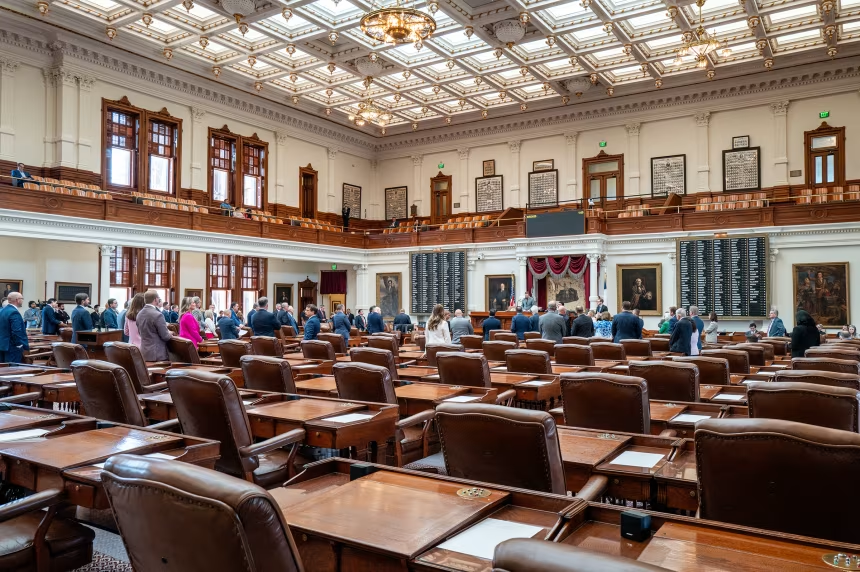
Will Texas Democrats’ walkout work?
Entities mentioned:
- Texas Democrats: Justice, Determination, Righteousness
- Texas Republicans: Power, Control, Ambition
- President Donald Trump: Power, Influence, Control
- Oregon Republicans: Loyalty, Righteousness, Obligation
Article Assessment:
Credibility Score: 75/100
Bias Rating: 45/100 (Center)
Sentiment Score: 35/100
Authoritarianism Risk: 25/100 (Generally Democratic)
Bias Analysis:
The article presents a balanced view, discussing both Democratic and Republican perspectives on walkouts and gerrymandering. While slightly more space is given to Democratic arguments, the piece includes counterpoints and potential criticisms of the walkout strategy.
Key metric: Electoral Integrity
As a social scientist, I analyze that this article highlights the ongoing struggle over redistricting and its impact on electoral integrity in the United States. The Texas Democrats' walkout represents a dramatic escalation in the fight against gerrymandering, particularly mid-decade redistricting efforts. This tactic, while potentially effective in the short term, faces significant challenges in terms of sustainability and public perception. The article suggests that while Americans generally disapprove of gerrymandering, their views can be influenced by partisan loyalty. The success of this strategy will likely depend on the Democrats' ability to frame the issue effectively and maintain public support over an extended period. The long-term implications for electoral integrity are significant, as this confrontation could either lead to fairer districting practices or further entrench partisan manipulation of electoral maps.
- Read more about Will Texas Democrats’ walkout work?
- Log in to post comments
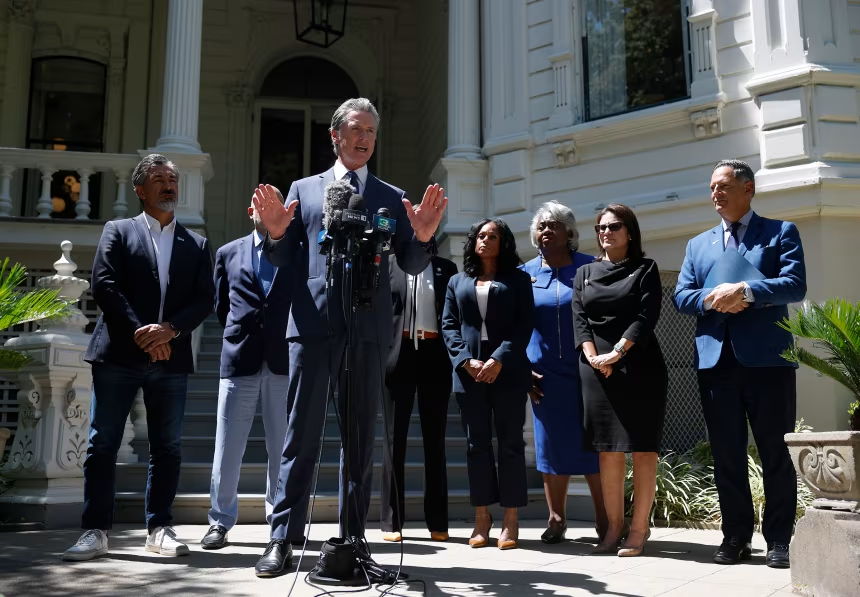
A California plan is likely the Democrats’ best option in the redistricting wars
Entities mentioned:
- Texas Republicans: Power, Control, Competitive spirit
- California Democrats: Competitive spirit, Righteousness, Power
- Gavin Newsom: Determination, Competitive spirit, Justice
- Democratic Party: Self-preservation, Power, Competitive spirit
- Republican Party: Power, Control, Competitive spirit
- Kathy Hochul: Determination, Justice, Competitive spirit
- Kevin Kiley: Righteousness, Duty, Professional pride
- Mike Johnson: Leadership, Power, Control
- JB Pritzker: Competitive spirit, Power, Influence
- David Moon: Justice, Competitive spirit, Power
Article Assessment:
Credibility Score: 75/100
Bias Rating: 45/100 (Center)
Sentiment Score: 35/100
Authoritarianism Risk: 55/100 (Mixed/Neutral)
Bias Analysis:
The article presents perspectives from both Democratic and Republican sides, attempting to provide a balanced view of the redistricting issue. However, there is slightly more focus on Democratic strategies and quotes from Democratic officials, which is balanced by critical analysis of the limitations they face.
Key metric: Congressional Seat Distribution
As a social scientist, I analyze that this article highlights the intensifying partisan battle over redistricting, with both major parties seeking to gain or maintain power through the redrawing of congressional districts. The focus on California's potential response to Texas' redistricting efforts underscores the tit-for-tat nature of this political maneuvering. This struggle significantly impacts the distribution of congressional seats, potentially altering the balance of power in the U.S. House of Representatives. The article reveals a complex landscape where some states have independent commissions to prevent gerrymandering, while others allow for more partisan control. This situation raises concerns about the fairness of representation and the integrity of the democratic process, as both parties appear willing to exploit redistricting for political gain. The potential for mid-decade redistricting in multiple states could lead to increased political instability and further erosion of public trust in electoral systems.

Justice Department to seek federal hate crime charges and death penalty in killing of Israeli Embassy staffers
Entities mentioned:
- Justice Department: Justice, Duty, Righteousness
- Elias Rodriguez: Moral outrage, Revenge, Righteousness
- Trump Justice Department: Determination, Justice, Power
- Yaron Lischinsky: Duty, Professional pride
- Sarah Milgrim: Duty, Professional pride
- Jeanine Pirro: Justice, Ambition, Professional pride
Article Assessment:
Credibility Score: 75/100
Bias Rating: 55/100 (Center)
Sentiment Score: 30/100
Authoritarianism Risk: 35/100 (Generally Democratic)
Bias Analysis:
The article presents a balanced view of the case, including both the prosecution's perspective and potential challenges. While it mentions the Trump Justice Department's approach, it does not overtly favor or criticize any political stance.
Key metric: Domestic Terrorism Incidents
As a social scientist, I analyze that this case represents a significant escalation in the US government's approach to hate crimes and terrorism, particularly those targeting the Jewish community. The decision to pursue federal hate crime charges and potentially seek the death penalty indicates a strong stance against antisemitism and violence towards foreign officials. This case may set a precedent for how similar incidents are handled in the future, potentially impacting the frequency and nature of such attacks. The difficulty in proving hate crime motivations, especially when political motivations are intertwined, highlights the complexities in prosecuting these cases. The swift action and high-profile nature of the case may serve as a deterrent, but could also inflame tensions in already polarized communities.
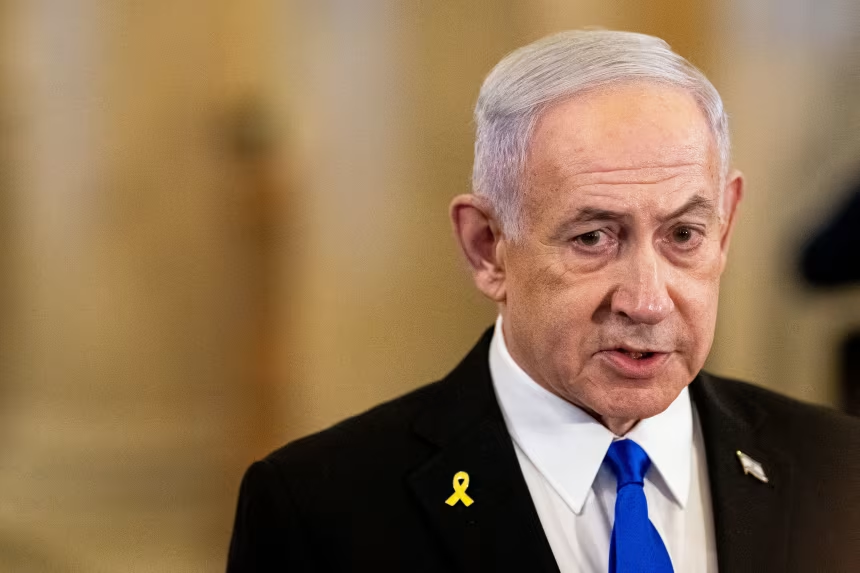
Pro-Israel Democrats try breaking with Netanyahu to stop party’s shift amid Gaza crisis
Entities mentioned:
- Benjamin Netanyahu: Power, Control, Self-preservation
- Democratic Party: Unity, Influence, Self-preservation
- AIPAC: Influence, Loyalty, Power
- Brian Schatz: Justice, Moral outrage, Professional pride
- Mikie Sherrill: Duty, Justice, Self-preservation
- Tim Walz: Ambition, Influence, Professional pride
- Cory Booker: Ambition, Loyalty, Self-preservation
- John Fetterman: Loyalty, Determination, Moral outrage
- Bernie Sanders: Justice, Moral outrage, Influence
- Rahm Emanuel: Ambition, Influence, Self-preservation
Article Assessment:
Credibility Score: 75/100
Bias Rating: 45/100 (Center)
Sentiment Score: 35/100
Bias Analysis:
The article presents multiple perspectives within the Democratic Party, including both pro-Israel and critical voices. While it leans slightly towards highlighting critical views of Netanyahu, it also includes counterpoints and context, maintaining a relatively balanced approach.
Key metric: Democratic Party Unity and Voter Support
As a social scientist, I analyze that this article highlights a significant shift in the Democratic Party's stance towards Israel, particularly in relation to Prime Minister Netanyahu's policies. This shift is driven by moral outrage over the humanitarian crisis in Gaza and a strategic calculation about future voter support, especially among younger Democrats. The party is attempting to balance its traditional pro-Israel stance with criticism of Netanyahu's government, hoping to maintain unity while adapting to changing voter sentiments. This balancing act could have significant implications for party cohesion, future elections, and U.S.-Israel relations. The article suggests that this issue may become a litmus test in upcoming elections, potentially reshaping the Democratic Party's foreign policy platform and its relationship with pro-Israel lobbying groups like AIPAC.
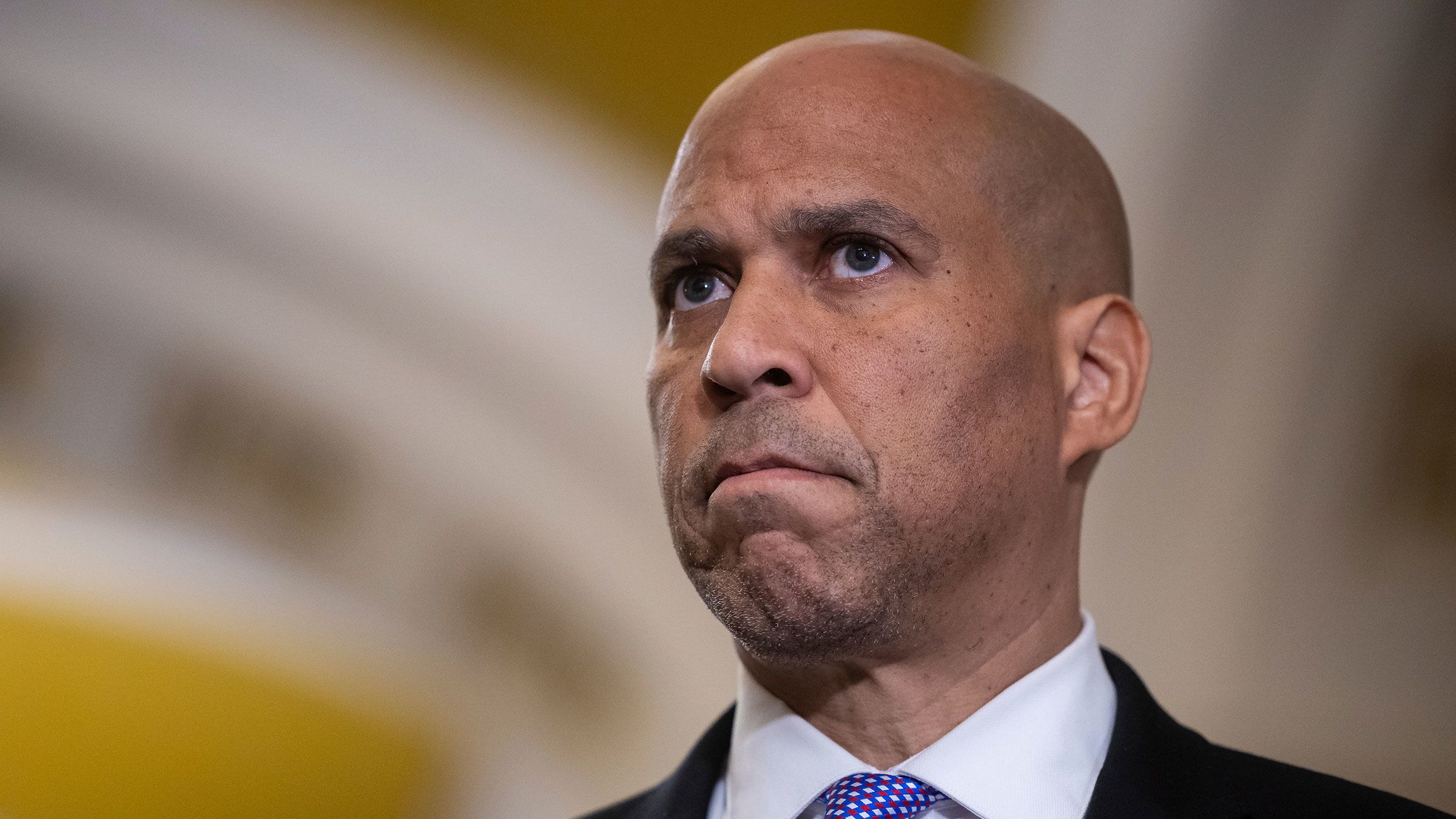
Cory Booker’s message to the Democratic Party: Don’t bend the knee to Trump
Entities mentioned:
- Cory Booker: Righteousness, Moral outrage, Determination
- Donald Trump: Power, Control, Influence
- Democratic Party: Unity, Self-preservation, Power
- Republican Party: Power, Control, Competitive spirit
Article Assessment:
Credibility Score: 75/100
Bias Rating: 40/100 (Lean Left)
Sentiment Score: 35/100
Bias Analysis:
The article leans slightly left, primarily due to its focus on a Democratic senator's perspective and criticism of Trump. While it includes some counterpoints, the overall framing favors Democratic viewpoints and concerns.
Key metric: Political Polarization Index
As a social scientist, I analyze that this article highlights the growing polarization in American politics, with Senator Booker calling for a more aggressive stance against President Trump. This approach could potentially increase political divisions and affect governance. Booker's rhetoric about 'bending the knee' and fighting against 'authoritarianism' suggests a deepening of party lines and a possible escalation of political conflict. His call for Democrats to engage in partisan redistricting, despite previous stances on nonpartisan approaches, indicates a shift towards more aggressive political tactics. This could further erode trust in democratic institutions and processes, potentially leading to increased voter cynicism and decreased faith in the political system.
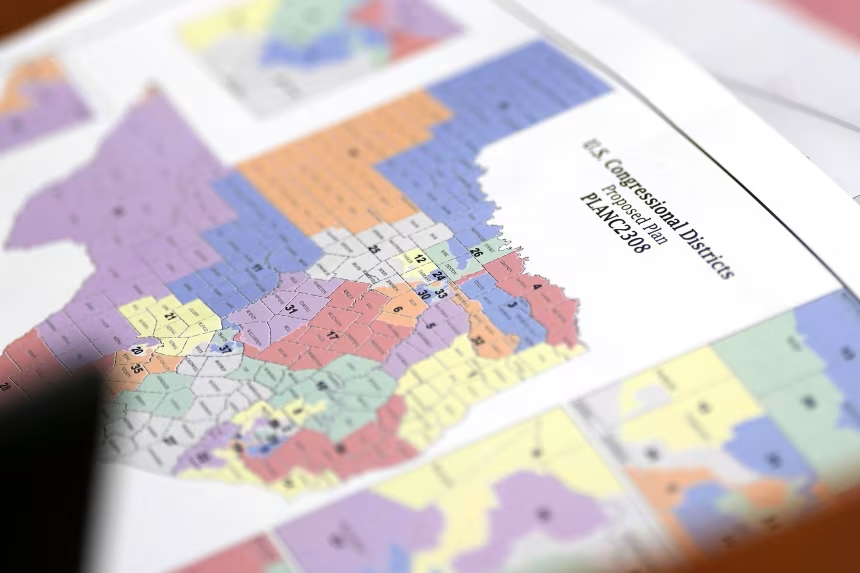
What happens next in Texas redistricting and for Democrats facing civil arrest warrants
Entities mentioned:
- Texas Republicans: Power, Control, Determination
- Texas Democrats: Righteousness, Moral outrage, Justice
- Greg Abbott: Power, Control, Ambition
- Dustin Burrows: Duty, Control, Determination
- Ken Paxton: Power, Control, Moral outrage
- Sarah Chen: Justice, Professional pride, Duty
- Jolanda Jones: Righteousness, Defiance, Justice
- Andrew Cates: Professional pride, Curiosity, Duty
- James Talarico: Duty, Righteousness, Moral outrage
Article Assessment:
Credibility Score: 75/100
Bias Rating: 55/100 (Center)
Sentiment Score: 35/100
Bias Analysis:
The article presents views from both Republican and Democratic sides, including quotes from various officials and legal experts. While it gives slightly more space to explaining the Democrats' position, it maintains a generally balanced tone in reporting the facts of the situation.
Key metric: Political Polarization Index
As a social scientist, I analyze that this article highlights the increasing polarization in American politics, particularly at the state level. The extreme measures taken by both parties - Republicans issuing civil arrest warrants and Democrats fleeing the state - demonstrate a breakdown in normal legislative processes. This escalation of tactics could further erode public trust in democratic institutions and increase partisan animosity. The redistricting effort at the center of this conflict has potential long-term implications for political representation and power balance, both in Texas and at the national level. The use of law enforcement in a political dispute also raises questions about the separation of powers and the limits of executive authority in compelling legislative action.

How Texas’ redistricting effort is having major implications across the US
Entities mentioned:
- Texas Legislature: Power, Control, Competitive spirit
- Texas House Democrats: Justice, Self-preservation, Determination
- Gov. Greg Abbott: Power, Control, Ambition
- President Donald Trump: Power, Influence, Legacy
- Democratic Governors: Retaliation, Power, Competitive spirit
- Beto O'Rourke: Loyalty, Unity, Justice
Article Assessment:
Credibility Score: 75/100
Bias Rating: 55/100 (Center)
Sentiment Score: 35/100
Bias Analysis:
The article presents multiple perspectives, including those of Republicans and Democrats, and cites specific data points. However, there's slightly more emphasis on Democratic responses and potential consequences for Republicans, suggesting a slight center-left lean.
Key metric: Political Polarization Index
As a social scientist, I analyze that this redistricting effort in Texas is likely to significantly increase political polarization across the United States. The aggressive redrawing of congressional districts to favor one party over another undermines the principles of fair representation and exacerbates partisan tensions. The retaliatory actions being considered by Democratic governors in other states suggest a potential escalation of gerrymandering nationwide, which could further entrench political divisions and reduce the number of competitive districts. This situation may lead to more extreme candidates being elected, less bipartisan cooperation, and increased gridlock in Congress. The use of tactics such as lawmakers fleeing the state to prevent quorum also indicates a breakdown in normal legislative processes, potentially eroding public trust in democratic institutions.
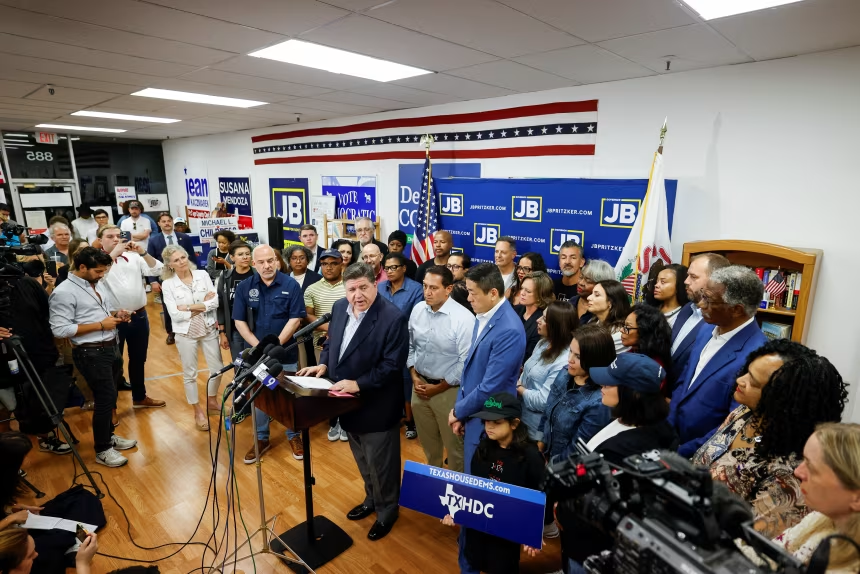
Texas Democrats leave the state to prevent vote on GOP-drawn congressional map
Entities mentioned:
- Texas House Democrats: Justice, Self-preservation, Moral outrage
- Texas Republicans: Power, Control, Ambition
- Donald Trump: Power, Influence, Control
- Greg Abbott: Control, Power, Determination
- Gene Wu: Justice, Duty, Moral outrage
- JB Pritzker: Unity, Justice, Moral outrage
- Ken Paxton: Ambition, Power, Control
- Eric Holder: Justice, Righteousness, Determination
Article Assessment:
Credibility Score: 75/100
Bias Rating: 45/100 (Center)
Sentiment Score: 35/100
Bias Analysis:
The article presents perspectives from both Democrats and Republicans, quoting multiple sources from each side. While it gives slightly more space to Democratic arguments, it also includes Republican justifications and counterarguments, maintaining a relatively balanced approach.
Key metric: Electoral Integrity
As a social scientist, I analyze that this article highlights a significant political conflict in Texas over redistricting, which has broader implications for national electoral dynamics. The Democrats' drastic action of leaving the state to prevent a quorum reflects the high stakes of this redistricting effort, which could potentially eliminate five Democratic U.S. House seats. This conflict exemplifies the intensifying partisan struggle over electoral maps, with both sides accusing the other of unfair practices. The involvement of national figures and the threat of similar actions in other states suggests this could be a preview of widespread redistricting battles, potentially destabilizing the electoral landscape and eroding public trust in the democratic process. The extreme measures taken by both parties indicate a deepening political polarization and a willingness to push constitutional and procedural boundaries, which could have long-term effects on American democracy and governance.