State Department human rights report scaled back, omits details on abuses in politically allied countries
Entities mentioned:
- US State Department: Control, Influence, Duty
- Trump administration: Power, Control, Influence
- Marco Rubio: Loyalty, Power, Influence
- Michael Honigstein: Professional pride, Duty, Righteousness
- Tammy Bruce: Loyalty, Duty, Control
- El Salvador government: Power, Control, Self-preservation
- Israeli government: Self-preservation, Power, Control
- Hamas: Power, Control, Revenge
- Russian government: Power, Control, Influence
- Chinese government: Power, Control, Unity
Article Assessment:
Credibility Score: 65/100
Bias Rating: 55/100 (Center)
Sentiment Score: 30/100
Authoritarianism Risk: 55/100 (Mixed/Neutral)
Bias Analysis:
The article presents multiple perspectives and cites specific examples of changes in the report. However, it leans slightly critical of the administration's approach, which may reflect a slight center-left bias in framing.
Key metric: Global Democracy Index
As a social scientist, I analyze that the significant reduction in detail and criticism within the State Department's human rights report suggests a shift in US foreign policy priorities. This change appears to downplay human rights concerns in countries politically aligned with the current administration, potentially impacting the Global Democracy Index. The omission of specific sections on issues like LGBTQ+ rights, women's rights, and racial violence indicates a narrowing focus on human rights reporting. This could lead to decreased international pressure on human rights violators and potentially embolden authoritarian regimes. The report's streamlining may reduce its effectiveness as a tool for human rights advocacy and diplomatic leverage, potentially weakening the US's role in promoting global democracy and human rights standards.
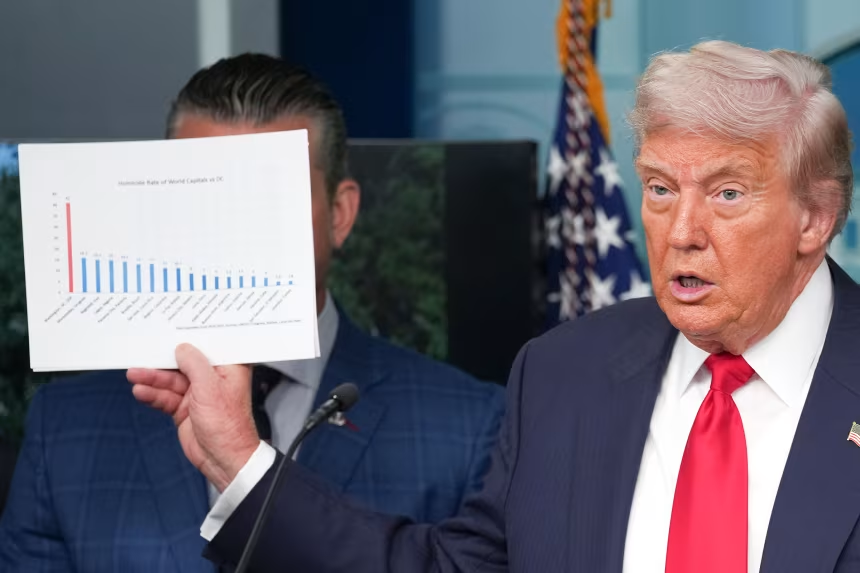
Fact check: Violent crime in DC has fallen in 2024 and 2025 after a 2023 spike
Entities mentioned:
- Donald Trump: Power, Control, Influence
- Washington, DC: Security, Self-preservation, Unity
- Jeff Asher: Professional pride, Duty, Curiosity
- Adam Gelb: Professional pride, Duty, Curiosity
- Council on Criminal Justice: Professional pride, Duty, Influence
- Ed Martin: Loyalty, Duty, Professional pride
- Washington police union: Self-preservation, Influence, Professional pride
Article Assessment:
Credibility Score: 85/100
Bias Rating: 45/100 (Center)
Sentiment Score: 55/100
Authoritarianism Risk: 35/100 (Generally Democratic)
Bias Analysis:
The article presents a balanced view, providing data and expert opinions that contradict the President's claims. While it leans slightly left by challenging Trump's statements, it maintains objectivity by acknowledging uncertainties and including various perspectives.
Key metric: Violent Crime Rate
As a social scientist, I analyze that this article primarily focuses on the discrepancy between President Trump's claims about rising crime in Washington, DC, and the actual crime statistics. The data presented shows a clear decline in violent crime, including homicides and carjackings, since a spike in 2023. This trend aligns with national patterns of decreasing violent crime. The article challenges the President's narrative by providing concrete statistics and expert opinions, highlighting the importance of accurate data representation in policy discussions. The dispute over data manipulation adds a layer of complexity to the interpretation of crime statistics, though multiple independent sources support the declining trend. This situation underscores the potential for political motivations to influence the presentation and interpretation of crime data, which can have significant implications for public policy and resource allocation in law enforcement.
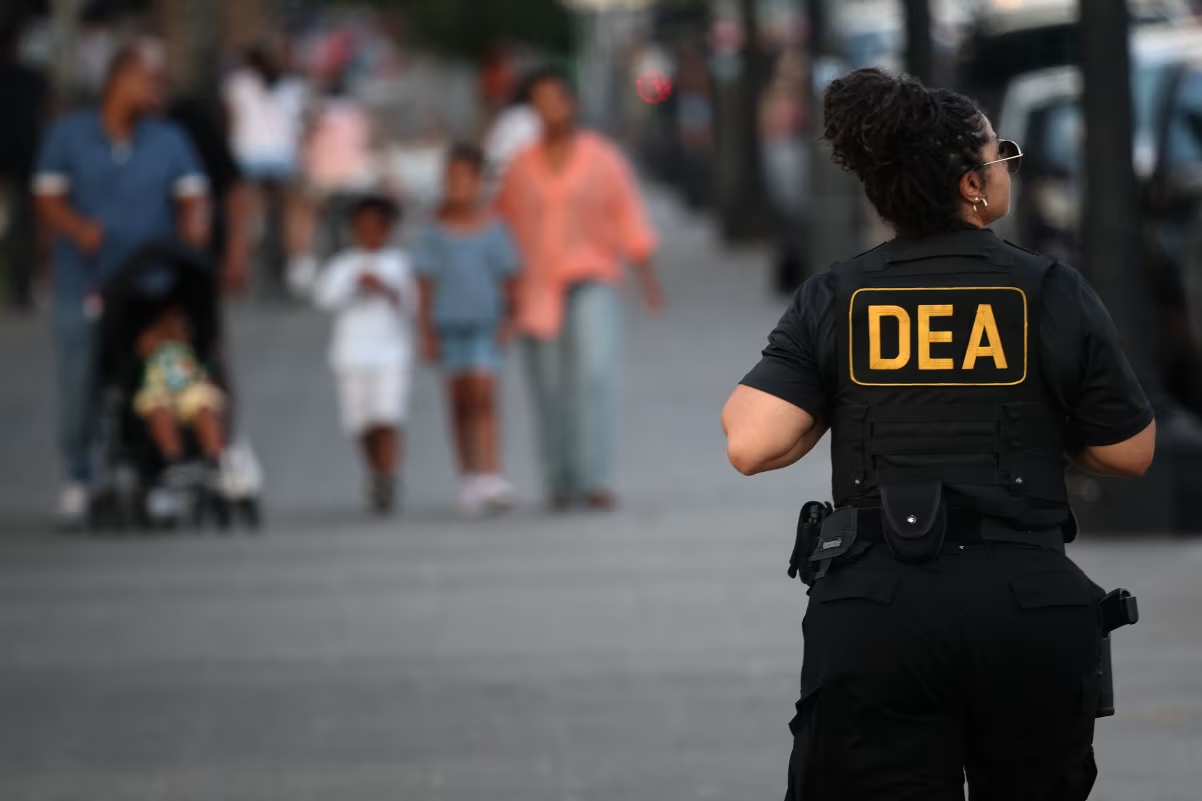
Trump’s Washington, DC, crackdown is a political stunt. But it could take a much darker turn
Entities mentioned:
- Donald Trump: Power, Control, Ambition
- Muriel Bowser: Duty, Self-preservation, Professional pride
- Pete Hegseth: Loyalty, Ambition, Influence
- Pam Bondi: Loyalty, Power, Influence
- Kash Patel: Loyalty, Power, Influence
- Greggory Pemberton: Professional pride, Security, Duty
- Karen Bass: Righteousness, Duty, Wariness
Article Assessment:
Credibility Score: 75/100
Bias Rating: 35/100 (Lean Left)
Sentiment Score: 30/100
Authoritarianism Risk: 70/100 (Authoritarian Tendencies)
Bias Analysis:
The article leans left in its framing, emphasizing potential authoritarian risks and presenting Trump's actions in a critical light. However, it does attempt to provide some balance by including perspectives from Trump supporters and acknowledging real crime concerns.
Key metric: Democratic Institutions and Norms
As a social scientist, I analyze that this article highlights a concerning trend of President Trump using exaggerated claims of crises to justify expanding executive power and militarizing civilian functions. The deployment of federal troops to Washington, DC, based on questionable crime statistics, represents a potential erosion of local autonomy and democratic norms. This action, combined with other recent power grabs mentioned in the article, suggests a pattern of centralizing authority and bypassing traditional checks and balances. The contrast between Trump's rhetoric and actual crime data, as well as the strategic responses from local officials like Mayor Bowser, illustrates the tension between federal overreach and local governance. This situation raises significant questions about the long-term implications for federalism, separation of powers, and the potential for authoritarian drift in American democracy.
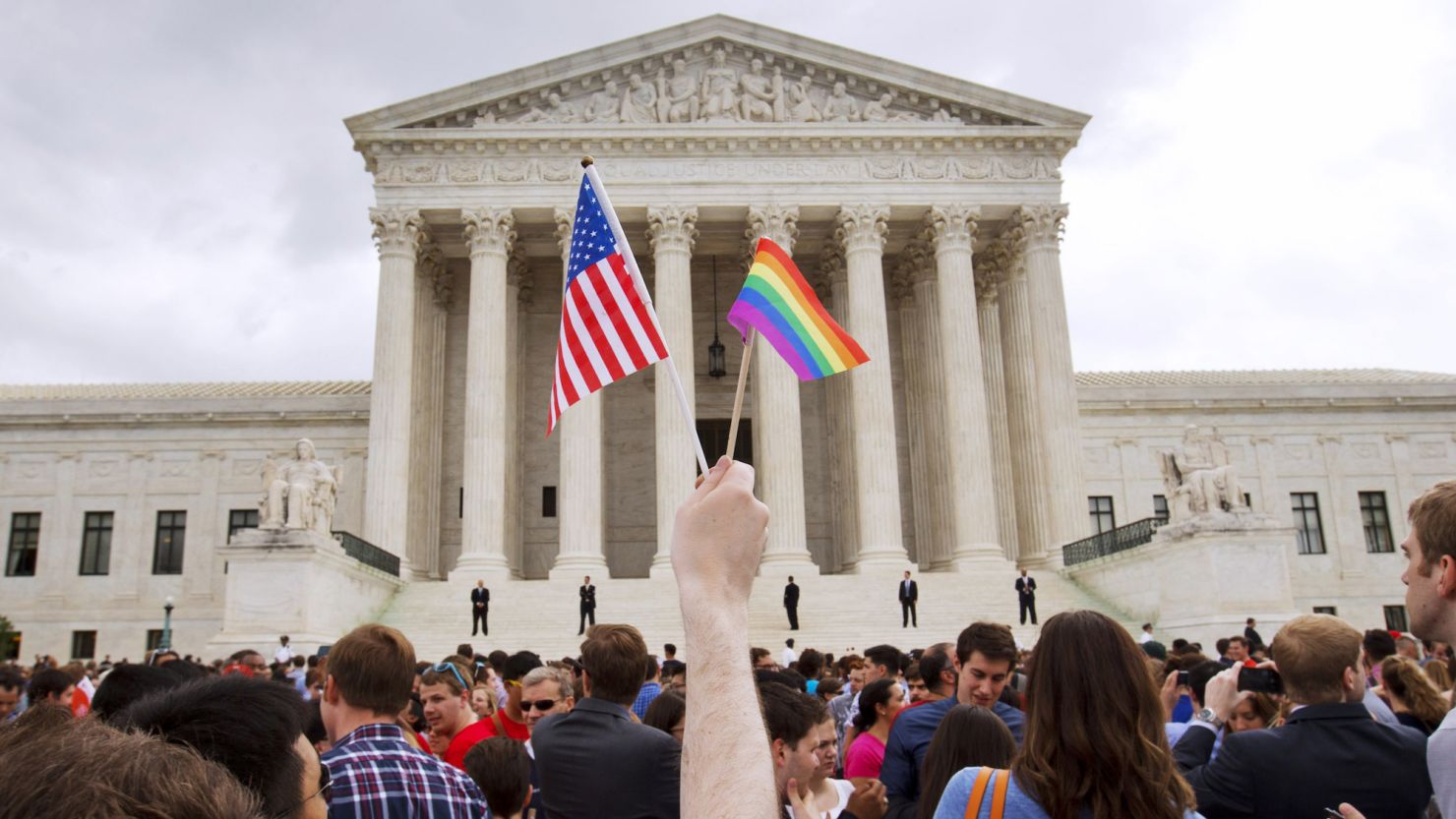
The Supreme Court blessed same-sex marriage 10 years ago. Is a backlash brewing?
Entities mentioned:
- Supreme Court: Justice, Power, Legacy
- Kim Davis: Righteousness, Moral outrage, Loyalty
- Mary Bonauto: Justice, Determination, Professional pride
- Donald Trump: Power, Influence, Self-preservation
- Southern Baptists: Righteousness, Moral outrage, Unity
- Justice Clarence Thomas: Justice, Control, Legacy
- Justice Samuel Alito: Justice, Control, Legacy
- Justice Neil Gorsuch: Justice, Duty, Professional pride
- Chief Justice John Roberts: Duty, Legacy, Wariness
- Kristen Soltis Anderson: Professional pride, Curiosity, Influence
Article Assessment:
Credibility Score: 75/100
Bias Rating: 45/100 (Center)
Sentiment Score: 55/100
Authoritarianism Risk: 30/100 (Generally Democratic)
Bias Analysis:
The article presents a balanced view, incorporating perspectives from both supporters and opponents of same-sex marriage. It relies on reputable sources and polling data, but slightly leans towards a pro-LGBTQ+ rights stance in its framing.
Key metric: LGBTQ+ Rights and Equality Index
As a social scientist, I analyze that this article highlights the significant progress made in LGBTQ+ rights, particularly same-sex marriage, over the past decade. However, it also points to emerging signs of potential backlash, especially from religious conservatives and certain Supreme Court justices. The article suggests a complex interplay between legal decisions, public opinion, and political maneuvering. While same-sex marriage has become widely accepted, there are efforts to challenge this progress, particularly through religious liberty arguments. The shifting focus to trans rights issues indicates an evolving landscape of LGBTQ+ rights debates. The potential for the Supreme Court to revisit the Obergefell decision, given its more conservative composition, presents a significant risk to the current status of marriage equality. This situation underscores the ongoing tension between progressive social change and conservative resistance, highlighting the fragility of civil rights gains and the importance of continued advocacy and vigilance in maintaining and expanding LGBTQ+ rights.

Trump gets what he wants in DC crackdown as Democrats fumble response
Entities mentioned:
- Donald Trump: Power, Control, Influence
- Democratic Party: Justice, Unity, Self-preservation
- Chuck Schumer: Righteousness, Duty, Indignation
- Hakeem Jeffries: Righteousness, Duty, Indignation
- Jamie Raskin: Justice, Righteousness, Moral outrage
- Chuck Rocha: Professional pride, Influence, Unity
- Wes Moore: Professional pride, Duty, Justice
- Karoline Leavitt: Loyalty, Duty, Control
Article Assessment:
Credibility Score: 75/100
Bias Rating: 45/100 (Center)
Sentiment Score: 35/100
Authoritarianism Risk: 55/100 (Mixed/Neutral)
Bias Analysis:
The article presents multiple perspectives, including critiques of both Trump and Democrats. While it leans slightly critical of Trump's approach, it also highlights Democratic shortcomings, maintaining a relatively balanced view.
Key metric: Public Safety and Crime Rate
As a social scientist, I analyze that this article highlights the complex political dynamics surrounding crime and public safety in Washington D.C. Trump's aggressive approach to crime in the capital city exposes the Democrats' struggle to effectively counter his law-and-order rhetoric. The article suggests that Democrats are failing to address voters' immediate concerns about safety, instead focusing on criticizing Trump's authoritarian tendencies. This political maneuvering impacts public safety perceptions and potentially actual crime rates, as it may lead to short-term, politically motivated actions rather than sustainable, evidence-based policies. The article also points to a broader issue of partisan polarization hindering effective governance and problem-solving in addressing complex social issues like crime.
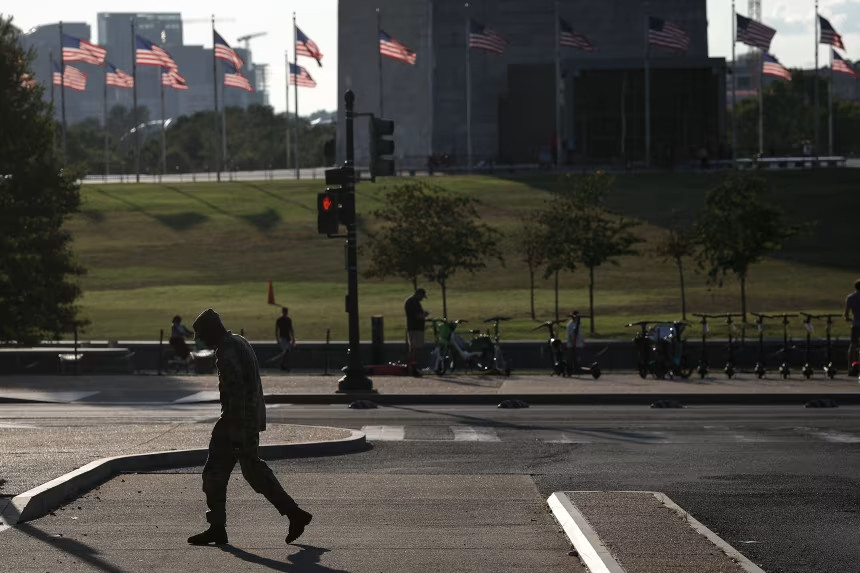
Trump deployed the National Guard and declared federal control of DC police. Here’s how he is able to do it
Entities mentioned:
- Donald Trump: Power, Control, Legacy
- DC National Guard: Duty, Obligation, Security
- Washington, DC Police Department: Security, Professional pride, Duty
- US Congress: Control, Duty, Influence
- Muriel Bowser: Indignation, Self-preservation, Duty
- Greggory Pemberton: Professional pride, Security, Loyalty
- Federal Bureau of Investigation (FBI): Duty, Security, Professional pride
Article Assessment:
Credibility Score: 75/100
Bias Rating: 55/100 (Center)
Sentiment Score: 35/100
Authoritarianism Risk: 65/100 (Authoritarian Tendencies)
Bias Analysis:
The article presents multiple perspectives and includes factual data, showing an attempt at balanced reporting. However, there's a slight lean towards questioning the necessity of Trump's actions, potentially indicating a slight center-left bias.
Key metric: Federal-State Power Balance
As a social scientist, I analyze that this article highlights a significant shift in the federal-state power balance, particularly in Washington, DC. Trump's unprecedented move to take control of DC's police department and deploy the National Guard demonstrates an expansion of federal authority in local affairs. This action, while legally permissible under the Home Rule Act, raises concerns about the erosion of local autonomy and the potential for abuse of presidential power. The justification for this intervention appears to be based on crime rates, although the article notes that crime has actually been declining in recent years. This discrepancy between the stated rationale and statistical reality suggests potential political motivations behind the decision. The move also sets a precedent that could impact future federal-state relations and the balance of power in other cities, despite the unique legal status of Washington, DC. The reaction from local officials, particularly Mayor Bowser, indicates tension between local and federal authorities, which could have long-term implications for governance and policy implementation in the capital.

White House lands on Trump-Putin summit location as officials race to prepare for historic Alaska meeting
Entities mentioned:
- President Donald Trump: Ambition, Power, Legacy
- Vladimir Putin: Power, Influence, Control
- White House officials: Duty, Professional pride, Security
- Secretary of State Marco Rubio: Duty, Influence, Professional pride
- John Bolton: Wariness, Criticism, Influence
- President Joe Biden: Duty, Security, Influence
- Steve Witkoff: Loyalty, Influence, Duty
- Volodymyr Zelensky: Security, Influence, Self-preservation
Article Assessment:
Credibility Score: 70/100
Bias Rating: 55/100 (Center)
Sentiment Score: 45/100
Authoritarianism Risk: 35/100 (Generally Democratic)
Bias Analysis:
The article presents multiple perspectives, including critics of the summit. However, it leans slightly towards emphasizing concerns and potential risks, while still maintaining a relatively balanced approach.
Key metric: International Relations and Diplomacy
As a social scientist, I analyze that this summit between Trump and Putin represents a significant shift in US-Russia relations, potentially impacting global geopolitics. The rushed nature of the preparations and the choice of location in Alaska suggest an unconventional approach to diplomacy. The one-on-one format raises concerns about transparency and accountability. The exclusion of Ukraine's President Zelensky from direct participation could affect the balance of power discussions regarding the ongoing conflict. This meeting may influence international perceptions of US foreign policy and its stance towards Russia, potentially altering alliances and diplomatic strategies globally.
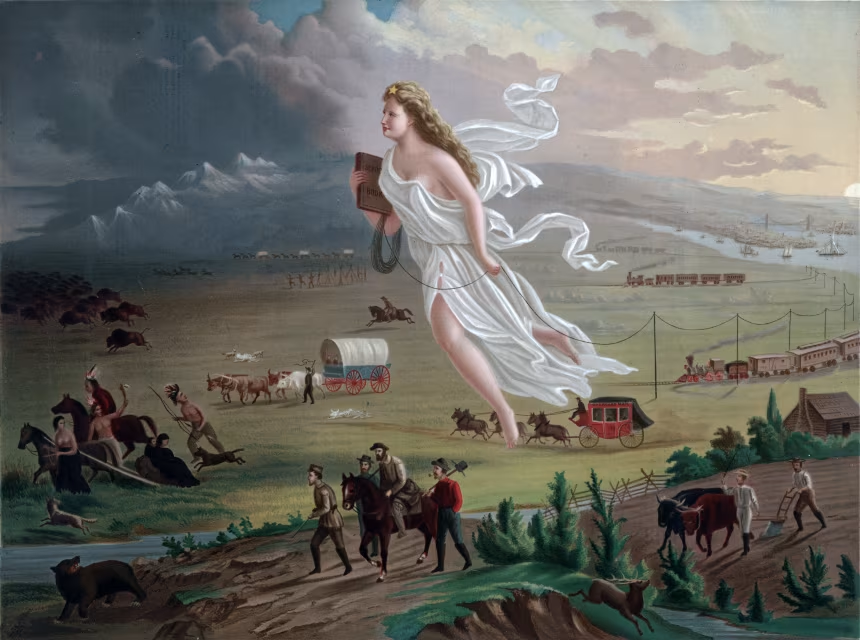
On social media, the Department of Homeland Security appeals to nostalgia — with motifs of White identity
Entities mentioned:
- Department of Homeland Security: Security, Control, Influence
- Immigration and Customs Enforcement: Control, Duty, Security
- President Donald Trump: Power, Control, Influence
- Nicholas J. Cull: Professional pride, Curiosity, Duty
- Tricia McLaughlin: Loyalty, Duty, Self-preservation
- Anat Shenker-Osorio: Righteousness, Professional pride, Moral outrage
- Ian Haney López: Professional pride, Moral outrage, Justice
- Patrick Fontes: Professional pride, Moral outrage, Duty
- Kristy Dalton: Professional pride, Curiosity, Duty
- Morgan Weistling: Self-preservation, Indignation, Justice
- Thomas Kinkade Foundation: Legacy, Justice, Moral outrage
- Black Rebel Motorcycle Club: Self-preservation, Indignation, Justice
Article Assessment:
Credibility Score: 75/100
Bias Rating: 35/100 (Lean Left)
Sentiment Score: 25/100
Authoritarianism Risk: 65/100 (Authoritarian Tendencies)
Bias Analysis:
The article leans left, presenting a critical view of DHS's social media strategy with quotes primarily from experts who express concern. While it includes DHS statements, the overall framing emphasizes potential negative implications of the agency's approach.
Key metric: Social Cohesion
As a social scientist, I analyze that this article highlights a concerning shift in government communication strategy that could significantly impact social cohesion in the United States. The Department of Homeland Security's use of nostalgic, nationalist, and potentially xenophobic imagery in its social media recruitment efforts appears to be tapping into divisive cultural narratives. This approach, while potentially effective for recruitment, risks further polarizing an already divided populace. The use of historical imagery and religious symbolism, coupled with language that echoes white nationalist rhetoric, could exacerbate existing tensions around immigration and national identity. This strategy may attract certain demographics to DHS roles but could alienate others and undermine trust in government institutions among minority communities. The controversy surrounding the unauthorized use of artworks also raises questions about the agency's respect for intellectual property and its overall ethical standards in public communication.
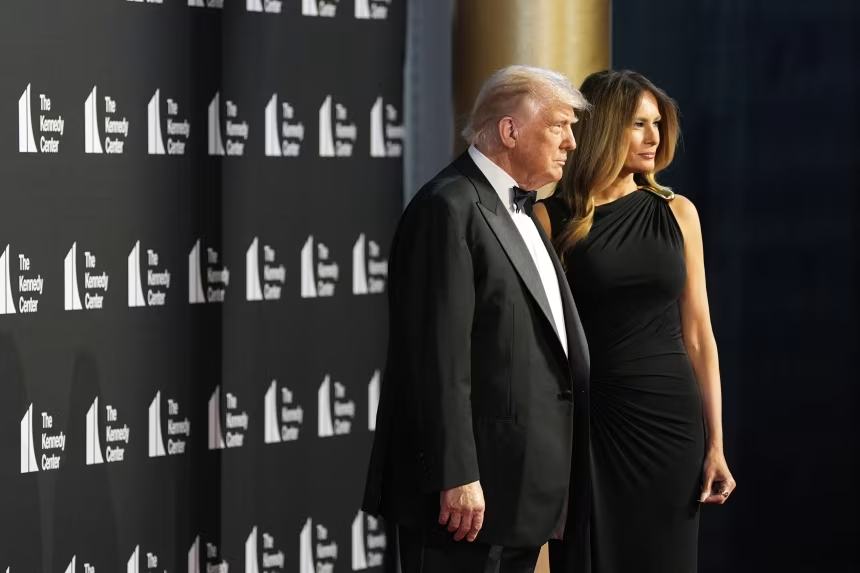
Trump set to announce Kennedy Center Honorees as he tries to put his stamp on DC
Entities mentioned:
- Donald Trump: Power, Control, Legacy
- Kennedy Center: Recognition, Influence, Professional pride
- Republican Party: Loyalty, Power, Control
- Democratic Party: Moral outrage, Justice, Freedom
- Artists/Performers: Self-respect, Freedom, Professional pride
Article Assessment:
Credibility Score: 70/100
Bias Rating: 55/100 (Center)
Sentiment Score: 35/100
Authoritarianism Risk: 65/100 (Authoritarian Tendencies)
Bias Analysis:
The article presents multiple viewpoints and includes criticisms of Trump's actions, but also gives significant space to Trump's perspective. While it leans slightly towards skepticism of Trump's moves, it maintains a relatively balanced tone overall.
Key metric: Cultural Polarization Index
As a social scientist, I analyze that this article highlights a significant shift in the politicization of cultural institutions, particularly the Kennedy Center. Trump's aggressive takeover and reshaping of the center's leadership, programming, and even physical structure represents an unprecedented level of executive interference in traditionally non-partisan cultural spaces. This move is likely to exacerbate existing cultural and political divisions, potentially leading to increased polarization in the arts and entertainment sectors. The cancellation of shows and resignation of artists in response to these changes indicate a growing rift between different ideological camps in the cultural sphere, which could have long-lasting effects on artistic expression and cultural unity in the United States.

White House orders review of Smithsonian museums and exhibits to ensure alignment with Trump directive
Entities mentioned:
- White House: Control, Power, Influence
- Smithsonian Institution: Professional pride, Duty, Self-preservation
- Donald Trump: Control, Power, Legacy
- Lonnie Bunch III: Professional pride, Duty, Self-preservation
- JD Vance: Loyalty, Power, Control
- Lindsey Halligan: Loyalty, Duty, Influence
- Vince Haley: Loyalty, Duty, Influence
- Russell Vought: Loyalty, Duty, Influence
Article Assessment:
Credibility Score: 75/100
Bias Rating: 45/100 (Center)
Sentiment Score: 35/100
Authoritarianism Risk: 70/100 (Authoritarian Tendencies)
Bias Analysis:
The article presents a balanced view of the situation, including perspectives from both the White House and the Smithsonian. While it highlights concerns about the review, it also includes the administration's justifications, maintaining a relatively neutral stance.
Key metric: Cultural Institution Independence
As a social scientist, I analyze that this article reveals a significant attempt by the executive branch to exert control over cultural institutions, potentially compromising their independence and scholarly integrity. The White House's review of Smithsonian exhibits indicates a push towards aligning historical narratives with the administration's ideological preferences, which could lead to a politicization of public education and cultural presentation. This action may have far-reaching consequences for the autonomy of cultural institutions and the objective presentation of history, potentially impacting public trust in these institutions and the broader understanding of American history and values.