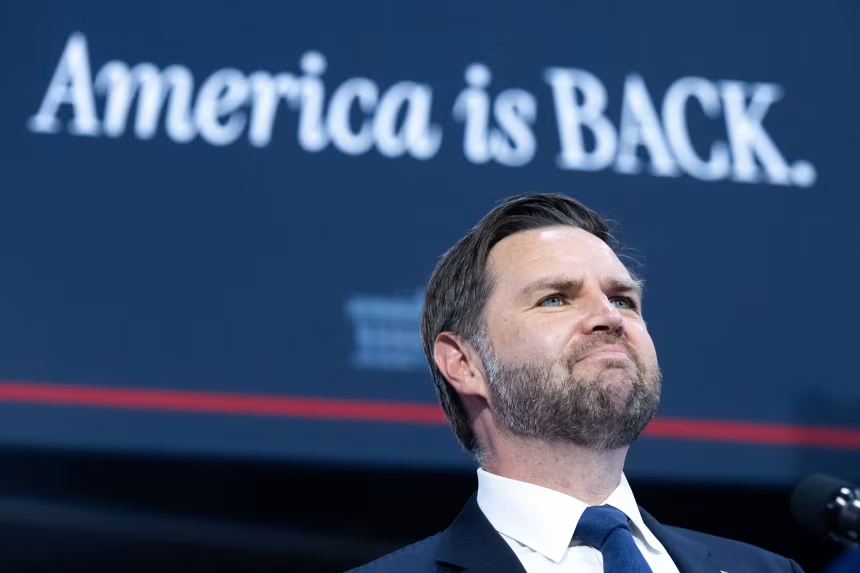
Vance embraces his growing role as Trump’s chief problem solver — and the implications for a 2028 run
Entities mentioned:
- JD Vance: Ambition, Loyalty, Power
- Donald Trump: Power, Control, Legacy
- Republican Party (GOP): Power, Influence, Unity
- Marco Rubio: Ambition, Power, Recognition
- Pete Hegseth: Duty, Professional pride, Loyalty
- Robert F. Kennedy Jr.: Ambition, Legacy, Influence
- Jack Posobiec: Influence, Loyalty, Recognition
Article Assessment:
Credibility Score: 70/100
Bias Rating: 55/100 (Center)
Sentiment Score: 60/100
Authoritarianism Risk: 45/100 (Mixed/Neutral)
Bias Analysis:
The article presents a relatively balanced view of Vance's role, including both praise and potential risks. While it leans slightly towards a positive portrayal of Vance, it also includes cautionary notes about the volatility of political fortunes.
Key metric: Presidential Approval Rating
As a social scientist, I analyze that this article highlights the growing influence of JD Vance within the Trump administration and his potential as a future presidential candidate. Vance's increasing role as a problem solver and his alignment with Trump's agenda directly impact the administration's effectiveness and, consequently, the President's approval ratings. The article suggests that Vance's political future is tightly linked to Trump's success, indicating that current approval ratings may have long-term implications for both figures. The focus on Vance's ability to navigate complex issues and maintain relationships across various political spheres demonstrates how internal dynamics within an administration can significantly influence public perception and support.

Inside one pastor’s crusade for Christian domination in the age of Trump
Entities mentioned:
- Douglas Wilson: Righteousness, Influence, Control
- Pete Hegseth: Loyalty, Power, Righteousness
- Donald Trump: Power, Influence, Control
- Conservative Partnership Institute: Influence, Power, Control
- Christ Church Washington DC: Influence, Righteousness, Unity
Article Assessment:
Credibility Score: 75/100
Bias Rating: 40/100 (Lean Left)
Sentiment Score: 35/100
Authoritarianism Risk: 65/100 (Authoritarian Tendencies)
Bias Analysis:
The article leans slightly left, presenting a critical view of Christian nationalism while giving voice to its proponents. It provides context and multiple perspectives, but the framing suggests concern about the movement's impact.
Key metric: Religious Freedom Index
As a social scientist, I analyze that this article highlights the growing influence of Christian nationalist ideologies within conservative political circles, particularly in the context of the Trump administration. The establishment of Christ Church Washington DC, linked to Douglas Wilson's network, near the US Capitol symbolizes an attempt to increase religious influence in politics. This development, coupled with Secretary Hegseth's involvement, suggests a potential shift towards more theocratic governance, which could significantly impact religious freedom and separation of church and state. The article raises concerns about the implications for minority religions, women's rights, and LGBTQ+ rights if such ideologies gain further traction in government.
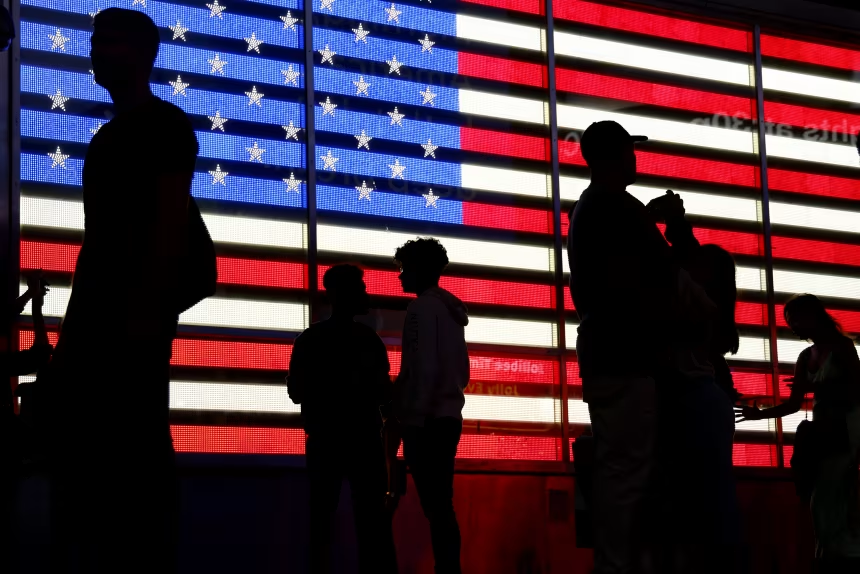
Trump calls for a new census to exclude undocumented immigrants
Entities mentioned:
- Donald Trump: Power, Control, Influence
- Department of Commerce: Duty, Obligation, Professional pride
- Jeffrey Wice: Professional pride, Duty, Curiosity
- Census Bureau: Duty, Professional pride, Accuracy
- Marjorie Taylor Greene: Ambition, Influence, Loyalty
- Ron DeSantis: Ambition, Competitive spirit, Power
- Howard Lutnick: Duty, Obligation, Professional pride
- Gina Raimondo: Duty, Professional pride, Loyalty
- Erika McEntarfer: Professional pride, Duty, Integrity
Article Assessment:
Credibility Score: 70/100
Bias Rating: 55/100 (Center)
Sentiment Score: 35/100
Authoritarianism Risk: 65/100 (Authoritarian Tendencies)
Bias Analysis:
The article presents multiple viewpoints, including Trump's proposal and critiques from experts. However, it gives more space to arguments against the proposal, suggesting a slight center-left lean.
Key metric: Electoral Representation
As a social scientist, I analyze that this proposal to exclude undocumented immigrants from the census could significantly impact electoral representation and the distribution of federal resources. This move would likely shift political power towards areas with fewer immigrants, potentially benefiting Republican-leaning states. The proposal challenges longstanding constitutional interpretations and could face legal hurdles. It also raises concerns about the politicization of traditionally non-partisan government functions like the census, which could undermine public trust in these institutions. The timing and feasibility of conducting a new census before 2030 are questionable, given the extensive planning and resources required for such an undertaking.

Fault Lines
Entities mentioned:
- Donald Trump: Power, Influence, Legacy
- Joe Biden: Legacy, Duty, Influence
- Republican Party: Control, Power, Competitive spirit
- Democratic Party: Competitive spirit, Justice, Influence
- Mike Lux: Professional pride, Influence, Justice
- Brad Todd: Professional pride, Loyalty, Competitive spirit
- Celinda Lake: Professional pride, Influence, Curiosity
Article Assessment:
Credibility Score: 75/100
Bias Rating: 45/100 (Center)
Sentiment Score: 40/100
Authoritarianism Risk: 25/100 (Generally Democratic)
Bias Analysis:
The article presents perspectives from both Republican and Democratic strategists, offering a relatively balanced view. However, there's a slight lean towards Democratic critiques of the bill, potentially reflecting the source's editorial stance.
Key metric: Economic Inequality
As a social scientist, I analyze that this article highlights the complex interplay between policy decisions and political strategy in the context of a major tax and budget bill. The legislation, signed by Trump, is presented as potentially harmful to many Republican-held districts, particularly through cuts to Medicaid and clean energy incentives. However, the analysis suggests that these economic impacts may not translate directly into political consequences due to entrenched cultural and ideological factors. The article points to a disconnect between economic self-interest and voting patterns in many rural and working-class areas, which could maintain Republican support despite potential negative impacts from the bill. The Democrats are portrayed as seeing an opportunity to appeal to working-class voters by framing the bill as favoring the wealthy at the expense of average Americans. This situation underscores the ongoing realignment of political coalitions and the challenges faced by both parties in navigating changing demographic and economic landscapes.
- Read more about Fault Lines
- Log in to post comments

What Matters
Entities mentioned:
- Donald Trump: Power, Control, Influence
- Department of Justice: Control, Righteousness, Duty
- Federal Communications Commission: Control, Influence, Duty
- Paramount: Self-preservation, Obligation, Professional pride
- CBS News: Professional pride, Obligation, Self-preservation
- Stephen Colbert: Moral outrage, Justice, Freedom
- Columbia University: Self-preservation, Obligation, Professional pride
- Harvard University: Self-preservation, Professional pride, Obligation
- Harmeet Dhillon: Righteousness, Duty, Justice
- Jim Ryan: Professional pride, Obligation, Self-preservation
- Ryan Walters: Righteousness, Control, Influence
Article Assessment:
Credibility Score: 65/100
Bias Rating: 35/100 (Lean Left)
Sentiment Score: 30/100
Authoritarianism Risk: 70/100 (Authoritarian Tendencies)
Bias Analysis:
The article leans left in its framing, presenting the Trump administration's actions critically. While it includes multiple sources and examples, the language used often implies disapproval of the administration's policies.
Key metric: Social Cohesion Index
As a social scientist, I analyze that this article highlights a significant shift in the U.S. government's approach to diversity and inclusion policies, particularly in education, media, and private enterprise. The Trump administration's actions, as described, appear to be systematically dismantling diversity initiatives through financial pressure, regulatory threats, and policy changes. This approach is likely to have a substantial impact on the Social Cohesion Index, potentially decreasing social integration and increasing polarization. The government's use of financial leverage and regulatory power to influence institutional policies may lead to decreased trust in public institutions and heightened social tensions. Furthermore, the emphasis on religious expression in the workplace, coupled with the suppression of certain forms of diversity, could exacerbate existing social divisions and potentially lead to increased discrimination and inequality. The long-term effects of these policies could significantly alter the social fabric of the United States, potentially reversing decades of progress in civil rights and equal opportunity.
- Read more about What Matters
- Log in to post comments
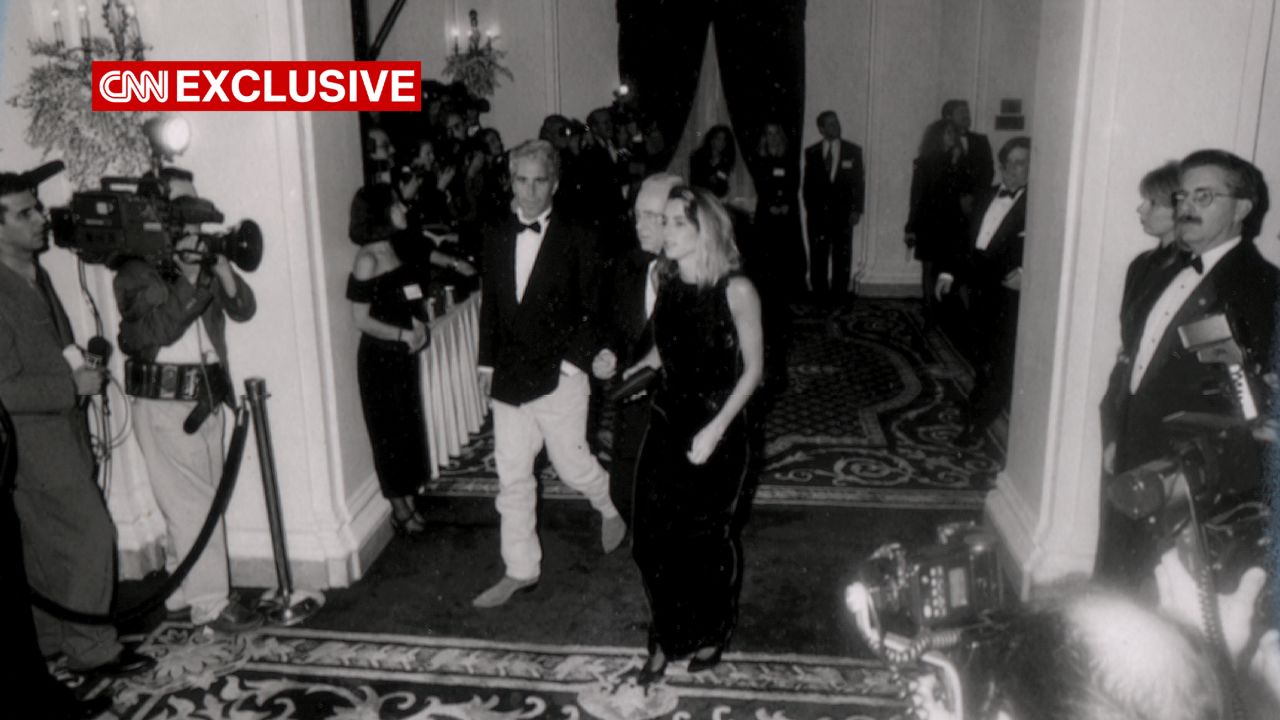
Exclusive: Newly discovered photos and video shed fresh light on Trump’s ties to Jeffrey Epstein
Entities mentioned:
- Donald Trump: Self-preservation, Power, Control
- Jeffrey Epstein: Power, Influence, Greed
- Justice Department: Control, Duty, Obligation
- Steven Cheung: Loyalty, Professional pride, Duty
- Ghislaine Maxwell: Self-preservation, Loyalty, Power
Article Assessment:
Credibility Score: 75/100
Bias Rating: 45/100 (Center)
Sentiment Score: 35/100
Authoritarianism Risk: 25/100 (Generally Democratic)
Bias Analysis:
The article presents a balanced view, including statements from both sides and relying on verifiable evidence. However, the focus on Trump's connections to Epstein could be seen as slightly left-leaning, given the potential political implications.
Key metric: Public Trust in Government
As a social scientist, I analyze that this article significantly impacts public trust in government by revealing potentially compromising connections between a former U.S. president and a convicted sex offender. The newly uncovered evidence of Trump's association with Epstein, spanning decades, raises questions about judgment and character that could erode confidence in political leadership. The Justice Department's handling of Epstein-related files further complicates the issue, potentially fueling conspiracy theories and distrust in institutional transparency. This could lead to decreased civic engagement and increased polarization, as supporters and critics interpret the information through their respective ideological lenses.
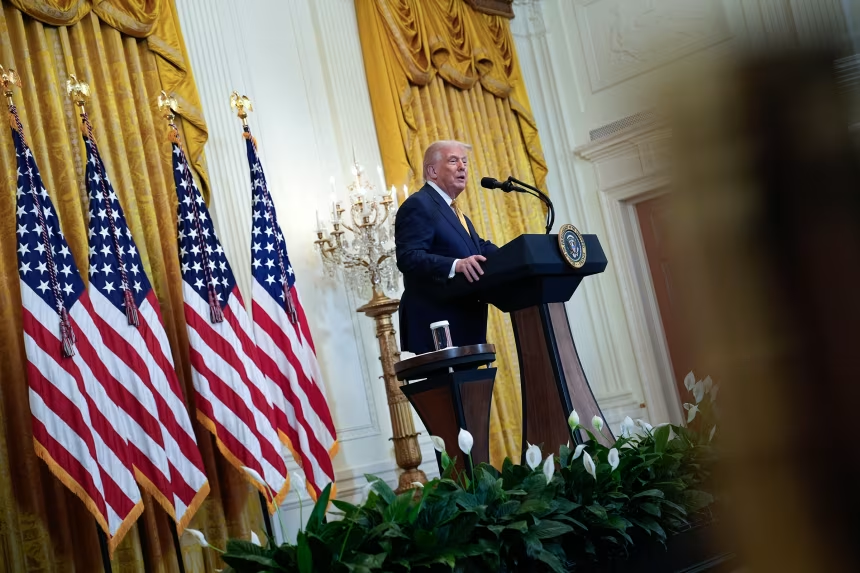
Fact check: Five false claims Trump made about inflation last night
Entities mentioned:
- Donald Trump: Power, Control, Self-preservation
- Democrats: Justice, Righteousness, Moral outrage
- Patrick De Haan: Professional pride, Duty, Righteousness
- Jerome Powell: Duty, Professional pride, Control
- Federal Reserve: Control, Stability, Professional pride
Article Assessment:
Credibility Score: 85/100
Bias Rating: 35/100 (Lean Left)
Sentiment Score: 30/100
Authoritarianism Risk: 20/100 (Strongly Democratic)
Bias Analysis:
The article leans slightly left due to its focus on fact-checking Trump's claims, which are consistently shown to be false. However, it relies heavily on verifiable data and expert sources, maintaining overall objectivity in its presentation of economic facts.
Key metric: Consumer Price Index (CPI)
As a social scientist, I analyze that this article significantly impacts the Consumer Price Index (CPI) metric by highlighting discrepancies between President Trump's claims and actual economic data. The fact-checking reveals that Trump's statements about inflation, gas prices, and grocery costs are largely inaccurate. This misinformation could potentially influence public perception of economic performance and policy effectiveness. The article's thorough debunking of these claims using verified data sources like the CPI, AAA, and GasBuddy emphasizes the importance of accurate economic reporting and its potential effects on consumer behavior and political discourse surrounding inflation and overall economic health.
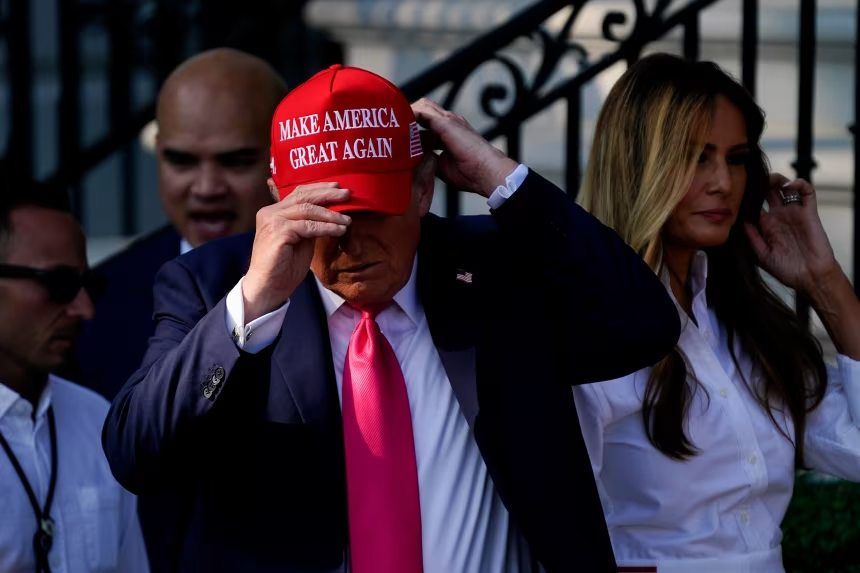
Analysis: Donald Trump’s long history of fake history
Entities mentioned:
- Donald Trump: Recognition, Self-preservation, Power
- Joe Biden: Duty, Obligation, Professional pride
- Tim Walz: Duty, Security, Control
- European Union: Unity, Security, Influence
- South Korea: Security, Self-preservation, Obligation
Article Assessment:
Credibility Score: 85/100
Bias Rating: 40/100 (Lean Left)
Sentiment Score: 30/100
Authoritarianism Risk: 20/100 (Strongly Democratic)
Bias Analysis:
The article leans slightly left due to its focus on fact-checking Trump's statements. However, it maintains credibility through extensive sourcing and balanced presentation of facts, including White House responses.
Key metric: Public Trust in Government
As a social scientist, I analyze that this article significantly impacts public trust in government by exposing numerous false claims made by former President Donald Trump. The systematic debunking of Trump's statements across various topics, including Brexit, the Iraq War, civil unrest in Minneapolis, and international relations, reveals a pattern of misinformation that could erode citizens' confidence in political leadership. The article's detailed fact-checking demonstrates how distorted narratives can be used to inflate a leader's perceived competence and foresight, potentially misleading voters and distorting public discourse. This constant stream of inaccuracies from a high-profile political figure may contribute to a broader skepticism towards government communications and decrease overall trust in political institutions.

Six months into Trump’s second term, voters remain divided
Entities mentioned:
- Donald Trump: Power, Control, Legacy
- Jaclyn Taylor: Loyalty, Pride, Enthusiasm
- Lawrence Malinconico: Moral outrage, Anxiety, Indignation
- Deven McIver: Self-preservation, Security, Wariness
- Pat Levin: Fear, Moral outrage, Anxiety
- Tonya Rincon: Moral outrage, Justice, Indignation
- Vladimir Putin: Power, Control, Influence
- Jeffrey Epstein: Power, Greed, Control
Article Assessment:
Credibility Score: 75/100
Bias Rating: 45/100 (Center)
Sentiment Score: 35/100
Authoritarianism Risk: 45/100 (Mixed/Neutral)
Bias Analysis:
The article presents views from both Trump supporters and opponents, providing a balanced perspective. While it includes more critical voices, it also fairly represents supportive opinions, maintaining a relatively centrist approach.
Key metric: Political Polarization Index
As a social scientist, I analyze that this article demonstrates the deep political divide in the United States six months into Trump's second term. The stark contrast in opinions between Trump supporters and opponents reflects a highly polarized electorate, with little middle ground. This polarization extends to various issues, including immigration, foreign policy, and economic matters. The article highlights how pre-existing views largely determine interpretations of current events, with supporters praising Trump's actions and opponents criticizing them. The Epstein saga appears to be a rare point of concern among some Trump supporters, though it hasn't significantly altered their overall support. The persistent high cost of living is a common concern across political lines, which could become a critical issue in the upcoming 2026 midterm elections. The article suggests that the political landscape remains deeply divided, with little evidence of a shift towards unity or bipartisanship.

Voters share the economic impacts of Trump’s megabill in battleground Arizona
Entities mentioned:
- Ray Flores: Ambition, Wariness, Self-preservation
- Donald Trump: Power, Influence, Legacy
- Republican Congress: Control, Competitive spirit, Influence
- Juan Ciscomani: Ambition, Power, Self-preservation
- Claudio Rodriguez: Duty, Justice, Moral outrage
Article Assessment:
Credibility Score: 75/100
Bias Rating: 55/100 (Center)
Sentiment Score: 45/100
Authoritarianism Risk: 35/100 (Generally Democratic)
Bias Analysis:
The article presents multiple perspectives, including business owners, non-profit workers, and political figures. While it leans slightly left in its framing of social safety net concerns, it balances this with positive economic impacts of Republican policies.
Key metric: Economic Impact of Policy Changes
As a social scientist, I analyze that this article highlights the complex interplay between economic policy changes and voter sentiment in a battleground state. The GOP's new policy bill, championed by Trump, has immediate effects on hiring practices and business operations, as seen in Ray Flores' restaurant. However, the delayed implementation of social safety net changes creates uncertainty for organizations like the Community Food Bank. The article suggests a potential disconnect between short-term economic benefits and long-term social consequences, which may influence voter behavior in the upcoming midterms. The Latino vote is presented as a crucial factor, with Republicans hoping to build on recent gains. The staggered implementation of policy changes complicates political messaging and voter response, potentially benefiting incumbents in the short term but creating challenges for long-term policy evaluation.