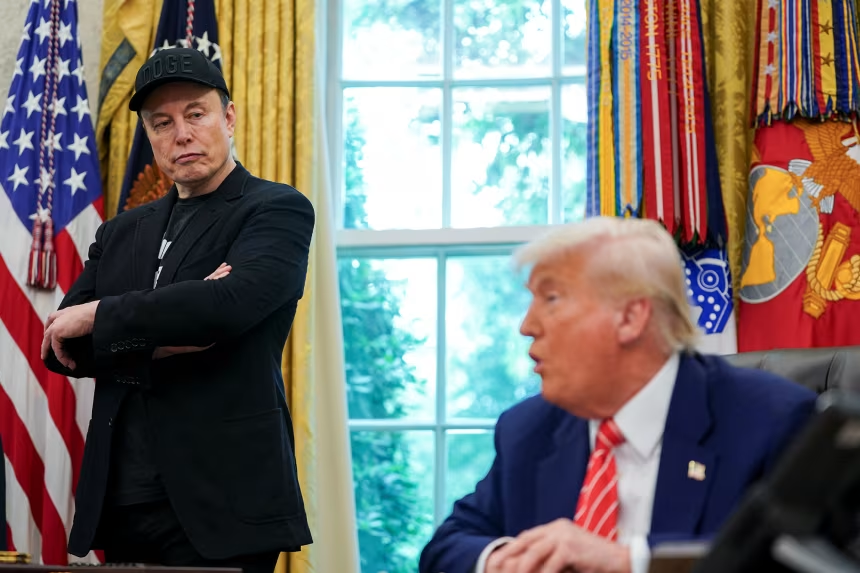
Trump administration rolls back Elon Musk’s email telling federal employees to justify their jobs
Entities mentioned:
- Trump administration: Control, Power, Influence
- Elon Musk: Ambition, Efficiency, Control
- Office of Personnel Management: Professional pride, Duty, Control
- Scott Kupor: Duty, Professional pride, Influence
- Donald Trump: Power, Control, Influence
- Federal employees: Self-preservation, Anxiety, Obligation
Article Assessment:
Credibility Score: 75/100
Bias Rating: 55/100 (Center)
Sentiment Score: 40/100
Authoritarianism Risk: 45/100 (Mixed/Neutral)
Bias Analysis:
The article presents multiple viewpoints and cites official sources, maintaining a relatively neutral stance. However, there's a slight lean towards criticizing Musk's approach, potentially reflecting a centrist or slightly left-of-center perspective on government management.
Key metric: Government Efficiency and Accountability
As a social scientist, I analyze that this article highlights a significant shift in federal employee management practices. The reversal of Musk's email policy demonstrates a tension between aggressive private sector management styles and traditional government operations. This change likely impacts government efficiency and accountability by reverting to established performance management systems. The conflict between Musk and the Trump administration also reveals the challenges of integrating external business leaders into government roles. This situation may affect public perception of government effectiveness and the administration's ability to implement reforms.

Trump administration to reinstall two Confederate statues
Entities mentioned:
- Trump administration: Control, Legacy, Pride
- Donald Trump: Power, Legacy, Influence
- US National Park Service: Duty, Obligation, Professional pride
- Pete Hegseth: Loyalty, Righteousness, Influence
- Glenn Youngkin: Pride, Legacy, Influence
- Biden administration: Justice, Unity, Righteousness
- Eleanor Holmes Norton: Justice, Moral outrage, Determination
Article Assessment:
Credibility Score: 75/100
Bias Rating: 55/100 (Center)
Sentiment Score: 35/100
Authoritarianism Risk: 65/100 (Authoritarian Tendencies)
Bias Analysis:
The article presents multiple viewpoints, including those supporting and opposing the reinstatement of Confederate monuments. However, there's a slight lean towards critical perspectives of the action, particularly in the detailed explanation of the monuments' controversial aspects.
Key metric: Social Cohesion
As a social scientist, I analyze that this article highlights a significant regression in social progress and national unity. The reinstatement of Confederate monuments, particularly in the aftermath of widespread protests against racial injustice, signals a deliberate attempt to reassert narratives that many view as supportive of systemic racism. This action is likely to exacerbate existing social tensions, potentially leading to decreased trust in government institutions and increased polarization among different demographic groups. The justification of these actions through executive orders and reinterpretations of historical narratives suggests a concerning trend towards using governmental power to shape public memory and national identity in ways that may marginalize certain communities. This could have long-term implications for social cohesion, civic engagement, and the collective understanding of American history.