
Exclusive: Federal law enforcement to begin interviewing unaccompanied migrant children in government custody
Entities mentioned:
- Trump administration: Control, Security, Justice
- Department of Homeland Security: Duty, Security, Control
- Health and Human Services: Duty, Obligation, Security
- Immigration and Customs Enforcement: Control, Security, Duty
- Office of Refugee Resettlement: Duty, Obligation, Security
- Immigrant advocates: Justice, Moral outrage, Protection
Article Assessment:
Credibility Score: 75/100
Bias Rating: 55/100 (Center)
Sentiment Score: 35/100
Authoritarianism Risk: 65/100 (Authoritarian Tendencies)
Bias Analysis:
The article presents multiple viewpoints, including those of the administration and immigrant advocates. While it leans slightly towards the concerns of advocates, it also includes the administration's justifications for the policy change.
Key metric: Immigration Enforcement Effectiveness
As a social scientist, I analyze that this article highlights a significant shift in the Trump administration's approach to handling unaccompanied migrant children. The decision to conduct in-person interviews with these children in government shelters represents an intensification of immigration enforcement efforts. This policy change could have substantial impacts on the well-being of migrant children, the effectiveness of the sponsorship program, and overall immigration dynamics. The administration's stated goal of identifying and addressing potential criminal activities conflicts with advocates' concerns about child welfare and the potential chilling effect on immigrant families. This tension reflects broader debates in U.S. immigration policy regarding the balance between enforcement and humanitarian considerations.

Justice Department says it wants to release Epstein grand jury exhibits in addition to transcripts
Entities mentioned:
- Justice Department: Duty, Transparency, Obligation
- Jeffrey Epstein: Self-preservation, Power, Control
- Ghislaine Maxwell: Self-preservation, Loyalty, Control
- Pam Bondi: Duty, Obligation, Professional pride
- Todd Blanche: Duty, Professional pride, Obligation
- Jay Clayton: Duty, Professional pride, Justice
- Donald Trump: Self-preservation, Power, Control
- Richard Berman: Justice, Duty, Professional pride
- Paul Engelmayer: Justice, Duty, Professional pride
Article Assessment:
Credibility Score: 75/100
Bias Rating: 45/100 (Center)
Sentiment Score: 40/100
Authoritarianism Risk: 30/100 (Generally Democratic)
Bias Analysis:
The article presents a balanced view of the situation, including perspectives from multiple parties involved. While it mentions Trump's involvement, it does not appear to lean heavily towards any political stance, maintaining a mostly neutral tone.
Key metric: Government Transparency Index
As a social scientist, I analyze that this article highlights a significant tension between government transparency and individual privacy rights. The Justice Department's move to release grand jury materials in high-profile cases involving Jeffrey Epstein and Ghislaine Maxwell reflects an attempt to increase transparency, likely in response to public and political pressure. However, this effort is complicated by the need to protect victims' identities and respect legal processes. The involvement of high-profile figures, including former President Trump, adds a political dimension that may influence the handling and perception of the case. This situation tests the balance between public interest, individual rights, and the integrity of the justice system, potentially impacting public trust in governmental institutions and the judicial process.
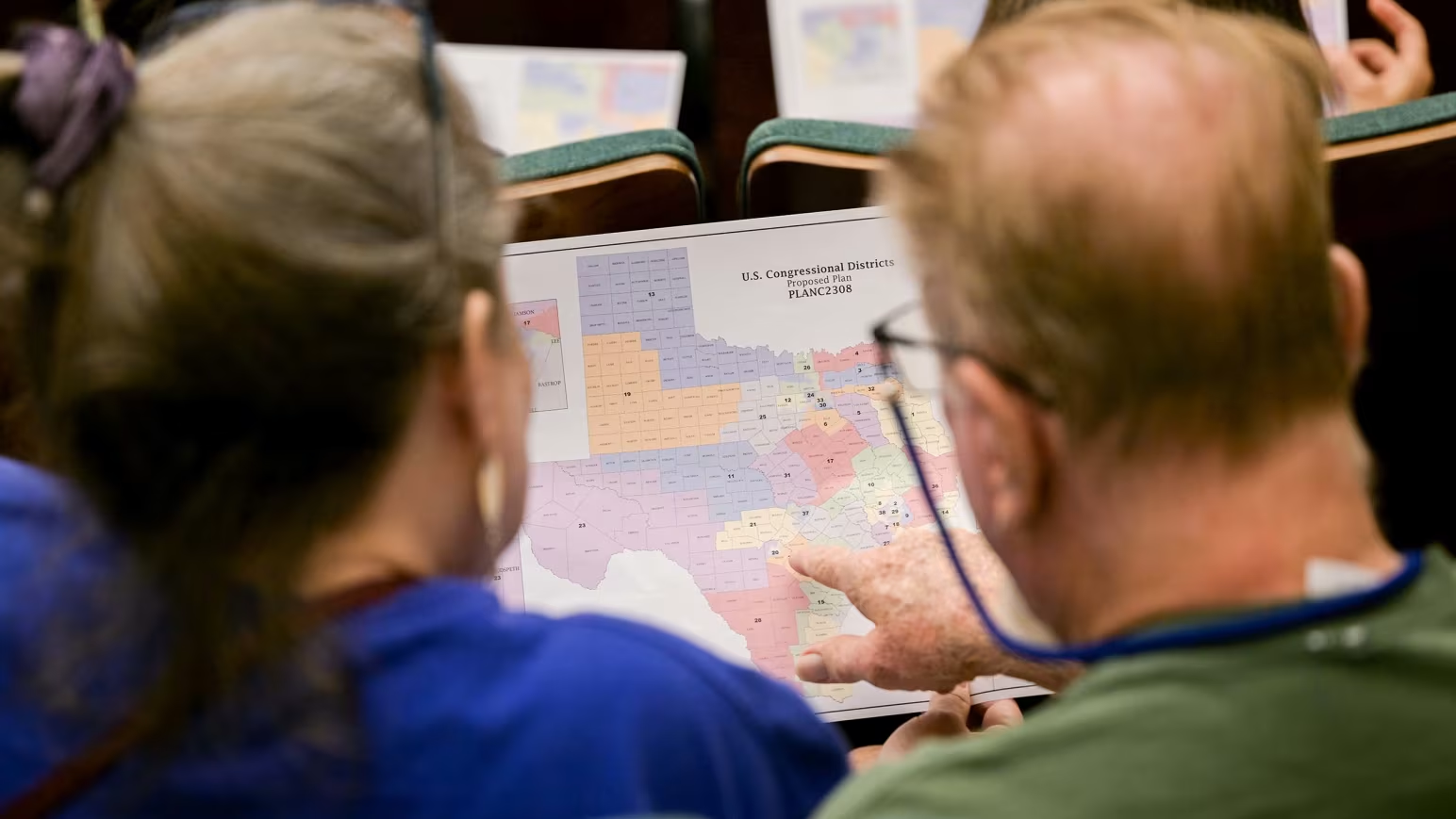
Democrats delay Texas redistricting again, escalating a standoff with GOP leaders
Entities mentioned:
- Texas Democrats: Justice, Determination, Moral outrage
- Texas Republicans: Power, Control, Ambition
- Gov. Greg Abbott: Power, Determination, Control
- House Speaker Dustin Burrows: Power, Control, Duty
- Attorney General Ken Paxton: Power, Ambition, Control
- Sen. John Cornyn: Power, Ambition, Loyalty
- Beto O'Rourke: Justice, Influence, Moral outrage
- Gov. Gavin Newsom: Competitive spirit, Power, Justice
- Gov. JB Pritzker: Justice, Moral outrage, Unity
Article Assessment:
Credibility Score: 75/100
Bias Rating: 55/100 (Center)
Sentiment Score: 30/100
Authoritarianism Risk: 65/100 (Authoritarian Tendencies)
Bias Analysis:
The article presents perspectives from both Democrats and Republicans, quoting multiple sources from each side. While it gives slightly more space to Democratic viewpoints, it also includes Republican justifications and actions, maintaining a relatively balanced approach.
Key metric: Voting Rights and Electoral Integrity
As a social scientist, I analyze that this article highlights a significant political conflict in Texas over redistricting, which has broader implications for national electoral politics. The standoff between Democrats and Republicans demonstrates the high stakes of redistricting in determining future political control. The Democrats' decision to deny quorum by leaving the state reflects the intensity of the conflict and their limited options within the legislative process. The Republicans' aggressive response, including threats of arrest and financial penalties, indicates the importance they place on passing their preferred maps. This conflict is part of a larger national trend of partisan redistricting battles, with potential ripple effects in other states. The involvement of federal officials and out-of-state governors further emphasizes the national significance of this state-level dispute. The conflict raises concerns about the fairness of the redistricting process and its impact on democratic representation, potentially eroding public trust in electoral systems and exacerbating political polarization.
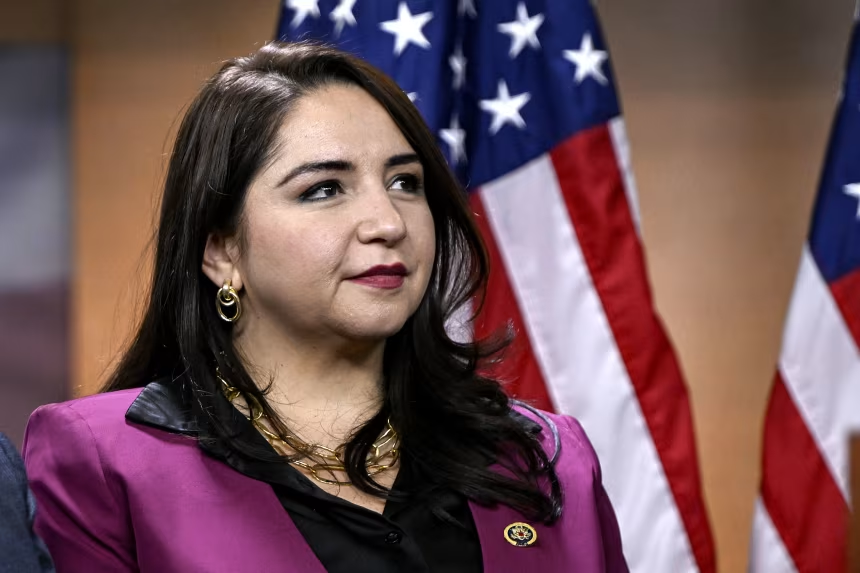
GOP lawmaker pushes to strip Democrat of committee assignment after saying she’s ‘a proud Guatemalan before I am an American’
Entities mentioned:
- Carlos Gimenez: Righteousness, Patriotism, Duty
- Delia Ramirez: Pride, Self-respect, Justice
- Republican Party: Control, Power, Loyalty
- Democratic Party: Unity, Justice, Influence
- House Homeland Security Committee: Security, Control, Duty
- Clay Higgins: Righteousness, Control, Duty
- LaMonica McIver: Justice, Moral outrage, Duty
Article Assessment:
Credibility Score: 75/100
Bias Rating: 55/100 (Center)
Sentiment Score: 30/100
Authoritarianism Risk: 55/100 (Mixed/Neutral)
Bias Analysis:
The article presents multiple viewpoints and includes direct quotes from both sides. However, there's slightly more space given to the Republican perspective, which may suggest a subtle lean towards center-right.
Key metric: Political Polarization Index
As a social scientist, I analyze that this article highlights increasing political polarization in the United States, particularly around issues of immigration and national identity. The attempt to remove Rep. Ramirez from her committee assignment based on her comments about her heritage demonstrates a growing tension between multicultural identities and perceived loyalty to the nation. This incident may exacerbate existing divisions and potentially impact legislative effectiveness on homeland security issues. The parallel situation with Rep. McIver further illustrates the intensifying partisan conflicts within government institutions. These actions could lead to decreased cooperation between parties and potentially undermine the functioning of important committees. The debate also reflects broader societal discussions about what it means to be American in a diverse nation, and how cultural heritage intersects with national identity and loyalty.

Airman charged in fatal firearm incident at Wyoming Air Force Base
Entities mentioned:
- US airman (unnamed): Self-preservation, Fear, Obligation
- Airman Brayden Lovan: Duty, Loyalty, Professional pride
- Air Force: Security, Justice, Duty
- Air Force Global Strike Command: Security, Professional pride, Duty
- Sig Sauer: Professional pride, Cooperation, Self-preservation
- Col. Jeremy Sheppard: Duty, Recognition, Loyalty
Article Assessment:
Credibility Score: 75/100
Bias Rating: 50/100 (Center)
Sentiment Score: 30/100
Authoritarianism Risk: 35/100 (Generally Democratic)
Bias Analysis:
The article presents a balanced account of the incident, providing statements from multiple official sources without apparent partisan slant. It refrains from speculation and emphasizes the presumption of innocence, indicating a neutral stance.
Key metric: Military Readiness and Safety
As a social scientist, I analyze that this incident significantly impacts US military readiness and safety protocols. The fatal discharge of a firearm on an Air Force base raises serious questions about training, equipment safety, and adherence to protocols. The charging of an airman with obstruction of justice suggests potential systemic issues in reporting and accountability. The Air Force's decision to pause the use of M18 handguns indicates a proactive approach to safety but may temporarily affect operational readiness. This event could lead to broader reviews of firearms handling procedures and safety measures across military branches, potentially resulting in policy changes and increased training requirements. The incident also highlights the risks associated with routine duties in non-combat settings, which could impact recruitment, retention, and public perception of military service safety.

Trump administration seeking $1 billion settlement from UCLA
Entities mentioned:
- Trump administration: Control, Power, Influence
- University of California, Los Angeles (UCLA): Self-preservation, Professional pride, Freedom
- Julio Frenk: Duty, Concern, Professional pride
- James B. Milliken: Duty, Self-preservation, Righteousness
- Department of Justice: Control, Power, Justice
- Donald Trump: Power, Control, Influence
- Scott Wiener: Moral outrage, Righteousness, Unity
Article Assessment:
Credibility Score: 75/100
Bias Rating: 45/100 (Center)
Sentiment Score: 30/100
Authoritarianism Risk: 65/100 (Authoritarian Tendencies)
Bias Analysis:
The article presents multiple viewpoints, including those of the Trump administration, UCLA officials, and state representatives. While it leans slightly critical of the administration's actions, it provides context and balanced reporting on the situation.
Key metric: Higher Education Funding and Policy
As a social scientist, I analyze that this article highlights a significant conflict between the Trump administration and UCLA, representing a broader clash over higher education policies and funding. The administration's aggressive approach, including funding freezes and demands for substantial settlements, appears to be part of a larger strategy to reshape higher education policies, particularly around issues of diversity, protests, and gender-related matters. This conflict has potential far-reaching implications for academic freedom, research funding, and the autonomy of public universities. The scale of the proposed settlement and the specific policy changes demanded suggest an attempt to exert federal control over university operations and policies, which could set a precedent for other institutions. The resistance from UCLA and California state officials indicates a strong pushback against what they perceive as federal overreach, highlighting tensions between state and federal governance in education.
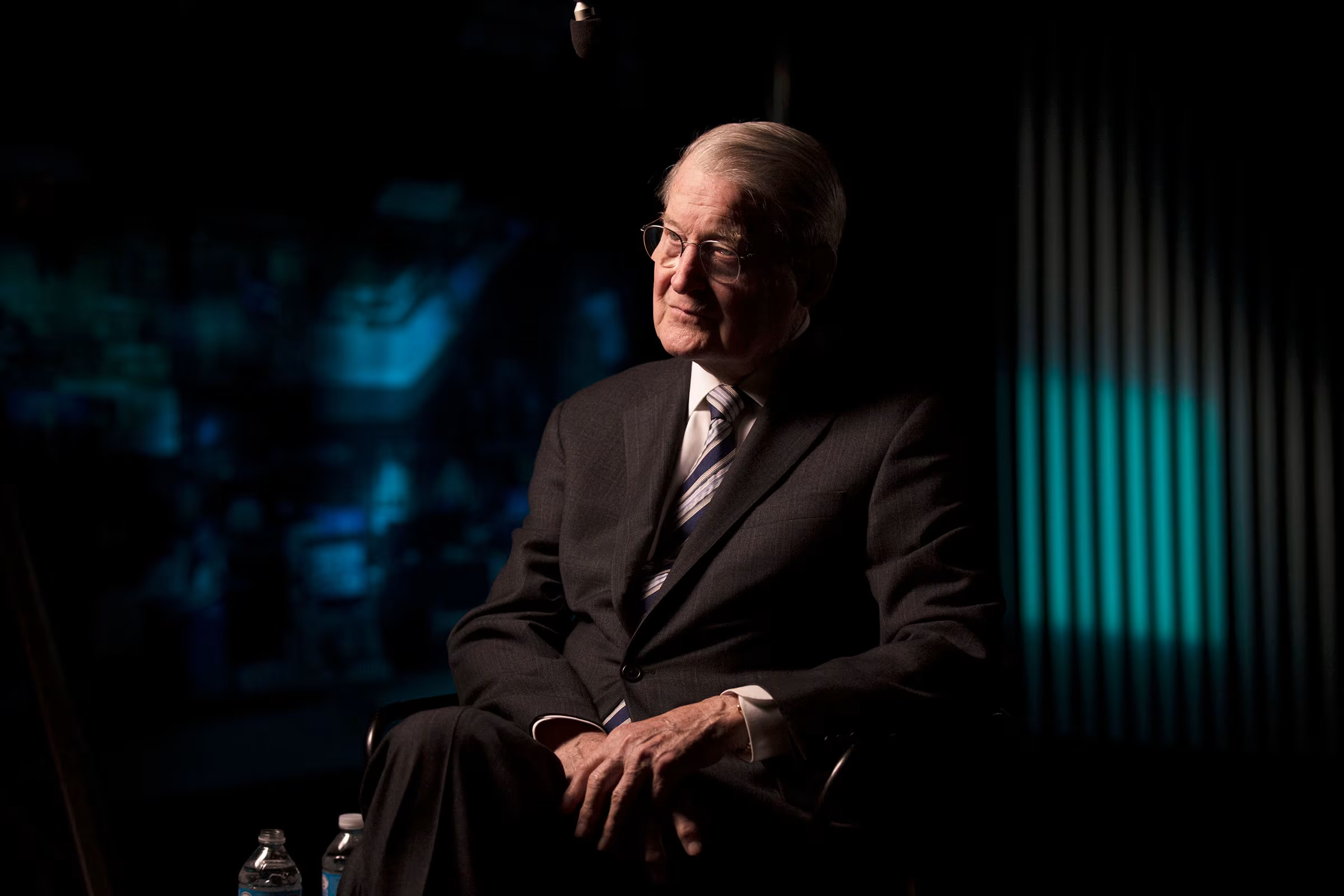
William Webster, former head of FBI and CIA, dies
Entities mentioned:
- William Webster: Duty, Professional pride, Integrity
- FBI: Reputation, Security, Justice
- CIA: Security, Control, Influence
- Jimmy Carter: Leadership, Reform, Legacy
- J. Edgar Hoover: Power, Control, Legacy
- Ronald Reagan: Leadership, Security, Legacy
- Christopher Wray: Professional pride, Duty, Integrity
- Donald Trump: Power, Control, Influence
Article Assessment:
Credibility Score: 85/100
Bias Rating: 45/100 (Center)
Sentiment Score: 65/100
Authoritarianism Risk: 20/100 (Strongly Democratic)
Bias Analysis:
The article presents a balanced view of Webster's career, citing both Republican and Democratic administrations. While largely positive, it includes critical context about the agencies he led, maintaining a centrist perspective.
Key metric: Public Trust in Government Institutions
As a social scientist, I analyze that William Webster's career significantly impacted public trust in key U.S. government institutions, particularly the FBI and CIA. His leadership focused on restoring integrity and public confidence in these agencies after periods of controversy. Webster's emphasis on professionalism, adherence to the rule of law, and transparency helped rebuild the reputation of both the FBI and CIA during critical periods of transition. His long-standing commitment to public service and his ability to lead effectively across multiple administrations underscore the importance of non-partisan, principled leadership in maintaining public trust. The article's portrayal of Webster as a figure respected across political lines suggests that his approach to governance and institutional management could serve as a model for rebuilding trust in government institutions in an era of increasing polarization.
For Subscribers
Entities mentioned:
- Donald Trump: Power, Influence, Recognition
- James Hagedorn: Influence, Greed, Professional pride
- Terrance Cole: Duty, Control, Professional pride
- Joe Biden: Legacy, Influence, Justice
- Susie Wiles: Duty, Loyalty, Influence
- Joe Rogan: Influence, Freedom, Recognition
- Alex Bruesewitz: Influence, Ambition, Recognition
Article Assessment:
Credibility Score: 75/100
Bias Rating: 55/100 (Center)
Sentiment Score: 50/100
Authoritarianism Risk: 35/100 (Generally Democratic)
Bias Analysis:
The article presents multiple perspectives and cites various sources, indicating an attempt at balanced reporting. However, there's a slight focus on Trump's decision-making process and political considerations, which may suggest a slight center-right lean.
Key metric: Drug Policy and Criminal Justice Reform
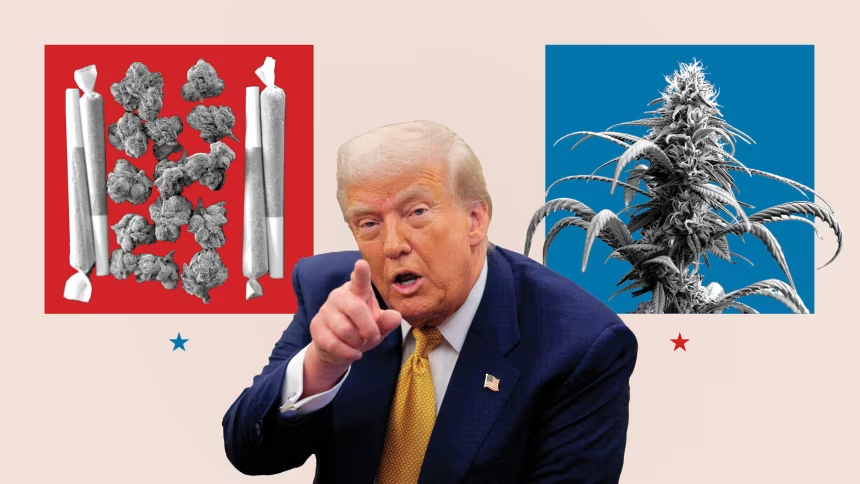
As a social scientist, I analyze that this article highlights the complex political and social dynamics surrounding potential marijuana policy reform under the Trump administration. The president's consideration of rescheduling marijuana reflects a shift in Republican attitudes towards drug policy, driven by changing public opinion and potential political benefits. However, the administration's hesitation and internal disagreements underscore the challenges of implementing such a significant policy change. This situation demonstrates the tension between campaign promises, public opinion, and established institutional practices in shaping drug policy. The involvement of various stakeholders, including industry leaders and political advisors, further complicates the decision-making process, illustrating the multifaceted nature of policy reform in a highly politicized environment.
- Read more about For Subscribers
- Log in to post comments

Trump orders surge in federal law enforcement in DC
Entities mentioned:
- Donald Trump: Control, Power, Security
- White House: Control, Security, Influence
- Federal law enforcement agencies: Duty, Security, Control
- DC Mayor Muriel Bowser: Self-preservation, Wariness, Control
- Del. Eleanor Holmes Norton: Indignation, Justice, Self-respect
Article Assessment:
Credibility Score: 75/100
Bias Rating: 55/100 (Center)
Sentiment Score: 35/100
Authoritarianism Risk: 70/100 (Authoritarian Tendencies)
Bias Analysis:
The article presents multiple viewpoints, including the administration's stance and opposing views from local officials. However, there's slightly more emphasis on the administration's actions and justifications, with less space given to critiques.
Key metric: Crime Rate in Washington, DC
As a social scientist, I analyze that this article highlights a significant federal intervention in local law enforcement, potentially impacting the balance of power between federal and local authorities. The increased federal presence, despite reported decreases in crime rates, suggests political motivations beyond public safety concerns. This action may strain federal-local relations and raise questions about the autonomy of DC's local government. The discrepancy between the administration's actions and the reported crime statistics indicates a possible disconnect between policy decisions and empirical data, which could affect public trust in both federal and local institutions.
Epstein victims are a growing political threat to Trump
Entities mentioned:
- Jeffrey Epstein: Power, Control, Greed
- Donald Trump: Self-preservation, Power, Control
- Epstein victims: Justice, Recognition, Self-respect
- Pam Bondi: Loyalty, Duty, Self-preservation
- Ghislaine Maxwell: Self-preservation, Loyalty, Control
- Virginia Giuffre: Justice, Recognition, Self-respect
- Sky Roberts: Justice, Moral outrage, Recognition
- JD Vance: Loyalty, Ambition, Self-preservation
- Kash Patel: Loyalty, Duty, Self-preservation
- Annie Farmer: Justice, Recognition, Moral outrage
- Todd Blanche: Duty, Loyalty, Self-preservation
- Jennifer Freeman: Justice, Moral outrage, Professional pride
Article Assessment:
Credibility Score: 75/100
Bias Rating: 35/100 (Lean Left)
Sentiment Score: 25/100
Authoritarianism Risk: 45/100 (Mixed/Neutral)
Bias Analysis:
The article leans left, evidenced by its critical tone towards the Trump administration and sympathetic portrayal of Epstein's victims. While it presents factual information, the framing and language choices suggest a skeptical view of the administration's handling of the situation.
Key metric: Public Trust in Government Institutions
As a social scientist, I analyze that this article highlights a significant tension between political self-preservation and the pursuit of justice for victims of sexual abuse. The handling of the Epstein case by the Trump administration appears to prioritize political damage control over transparency and justice for the victims. This approach risks further eroding public trust in government institutions, particularly the Department of Justice. The victims' increasing vocalization and media attention could potentially shift public opinion and apply pressure on the administration to take more substantive action. The article suggests a growing political threat to Trump from the Epstein victims, which could impact his support base and overall public perception. The lack of representation of survivors in high-level meetings and the administration's apparent focus on political maneuvering rather than addressing victims' concerns indicate a disconnect between government actions and public expectations for justice and accountability.