
Victims object to ‘public legitimization’ of Ghislaine Maxwell as judge weighs fate of Epstein grand jury transcripts
Entities mentioned:
- Jeffrey Epstein: Power, Control, Greed
- Ghislaine Maxwell: Self-preservation, Power, Control
- Victims of Epstein and Maxwell: Justice, Self-respect, Security
- Brad Edwards and Paul Cassell (Lawyers): Justice, Duty, Moral outrage
- Justice Department: Control, Obligation, Wariness
- Trump administration: Power, Control, Self-preservation
- Todd Blanche (Deputy Attorney General): Duty, Professional pride, Influence
- David Oscar Markus (Maxwell's attorney): Duty, Professional pride, Self-preservation
Article Assessment:
Credibility Score: 75/100
Bias Rating: 45/100 (Center)
Sentiment Score: 35/100
Authoritarianism Risk: 25/100 (Generally Democratic)
Bias Analysis:
The article presents multiple perspectives, including those of victims, lawyers, and Maxwell's defense. While it leans slightly towards emphasizing victim concerns, it also includes Maxwell's arguments, maintaining a relatively balanced approach.
Key metric: Public Trust in Government Institutions
As a social scientist, I analyze that this article highlights a significant tension between the pursuit of justice, victim protection, and institutional transparency. The potential unsealing of grand jury transcripts in the Epstein case presents a complex challenge to the justice system. On one hand, there's a push for transparency and accountability, particularly given the high-profile nature of the case and its connection to powerful figures. On the other hand, there are serious concerns about victim privacy, re-traumatization, and the potential impact on ongoing legal proceedings. The article suggests a growing distrust among victims towards government institutions, particularly in light of Maxwell's recent treatment. This situation likely negatively impacts public trust in government institutions, as it raises questions about the priorities and motivations of the justice system when dealing with high-profile cases involving influential individuals.
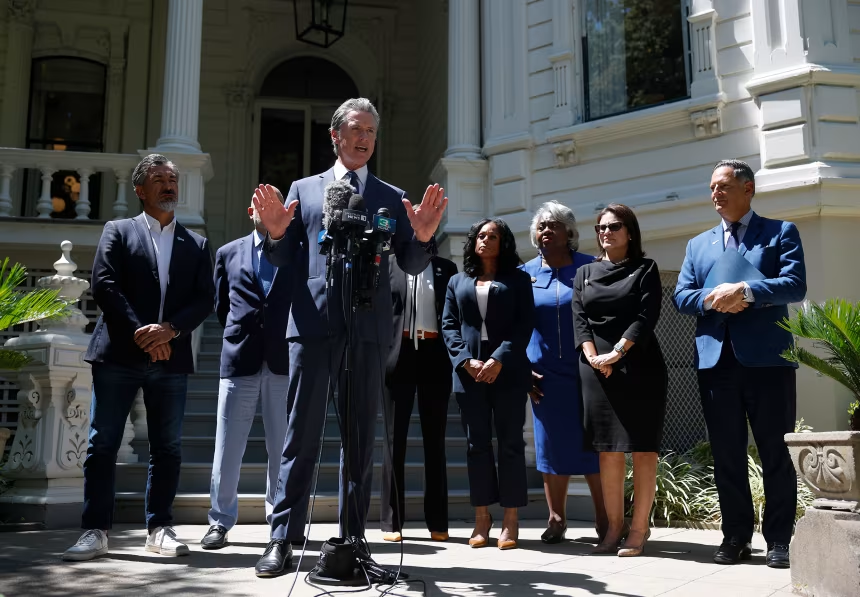
A California plan is likely the Democrats’ best option in the redistricting wars
Entities mentioned:
- Texas Republicans: Power, Control, Competitive spirit
- California Democrats: Competitive spirit, Righteousness, Power
- Gavin Newsom: Determination, Competitive spirit, Justice
- Democratic Party: Self-preservation, Power, Competitive spirit
- Republican Party: Power, Control, Competitive spirit
- Kathy Hochul: Determination, Justice, Competitive spirit
- Kevin Kiley: Righteousness, Duty, Professional pride
- Mike Johnson: Leadership, Power, Control
- JB Pritzker: Competitive spirit, Power, Influence
- David Moon: Justice, Competitive spirit, Power
Article Assessment:
Credibility Score: 75/100
Bias Rating: 45/100 (Center)
Sentiment Score: 35/100
Authoritarianism Risk: 55/100 (Mixed/Neutral)
Bias Analysis:
The article presents perspectives from both Democratic and Republican sides, attempting to provide a balanced view of the redistricting issue. However, there is slightly more focus on Democratic strategies and quotes from Democratic officials, which is balanced by critical analysis of the limitations they face.
Key metric: Congressional Seat Distribution
As a social scientist, I analyze that this article highlights the intensifying partisan battle over redistricting, with both major parties seeking to gain or maintain power through the redrawing of congressional districts. The focus on California's potential response to Texas' redistricting efforts underscores the tit-for-tat nature of this political maneuvering. This struggle significantly impacts the distribution of congressional seats, potentially altering the balance of power in the U.S. House of Representatives. The article reveals a complex landscape where some states have independent commissions to prevent gerrymandering, while others allow for more partisan control. This situation raises concerns about the fairness of representation and the integrity of the democratic process, as both parties appear willing to exploit redistricting for political gain. The potential for mid-decade redistricting in multiple states could lead to increased political instability and further erosion of public trust in electoral systems.

Top Trump officials will discuss Epstein strategy at Wednesday dinner hosted by Vance
Entities mentioned:
- Trump administration: Control, Self-preservation, Unity
- Todd Blanche: Duty, Professional pride, Justice
- Ghislaine Maxwell: Self-preservation, Fear, Loyalty
- Jeffrey Epstein: Power, Greed, Control
- Donald Trump: Self-preservation, Power, Control
- House Oversight Committee: Justice, Duty, Moral outrage
Article Assessment:
Credibility Score: 75/100
Bias Rating: 45/100 (Center)
Sentiment Score: 35/100
Authoritarianism Risk: 40/100 (Generally Democratic)
Bias Analysis:
The article presents a balanced view, including perspectives from various sides and citing multiple sources. While it focuses on Trump administration actions, it also includes opposition viewpoints and contextual information, maintaining a generally neutral stance.
Key metric: Government Transparency Index
As a social scientist, I analyze that this article highlights the complex interplay between government transparency, political strategy, and public perception in the handling of high-profile criminal cases. The Trump administration's deliberation over releasing sensitive information related to the Epstein case demonstrates a tension between transparency demands and potential political ramifications. This situation could significantly impact the Government Transparency Index, as the decision to release or withhold information will be seen as a benchmark for the administration's commitment to openness. The involvement of high-ranking officials in strategizing the response underscores the political sensitivity of the issue. The House Oversight Committee's subpoenas further emphasize the broader governmental push for transparency, potentially forcing the administration's hand. This case serves as a litmus test for how the government balances public interest, legal considerations, and political strategy in high-stakes situations.
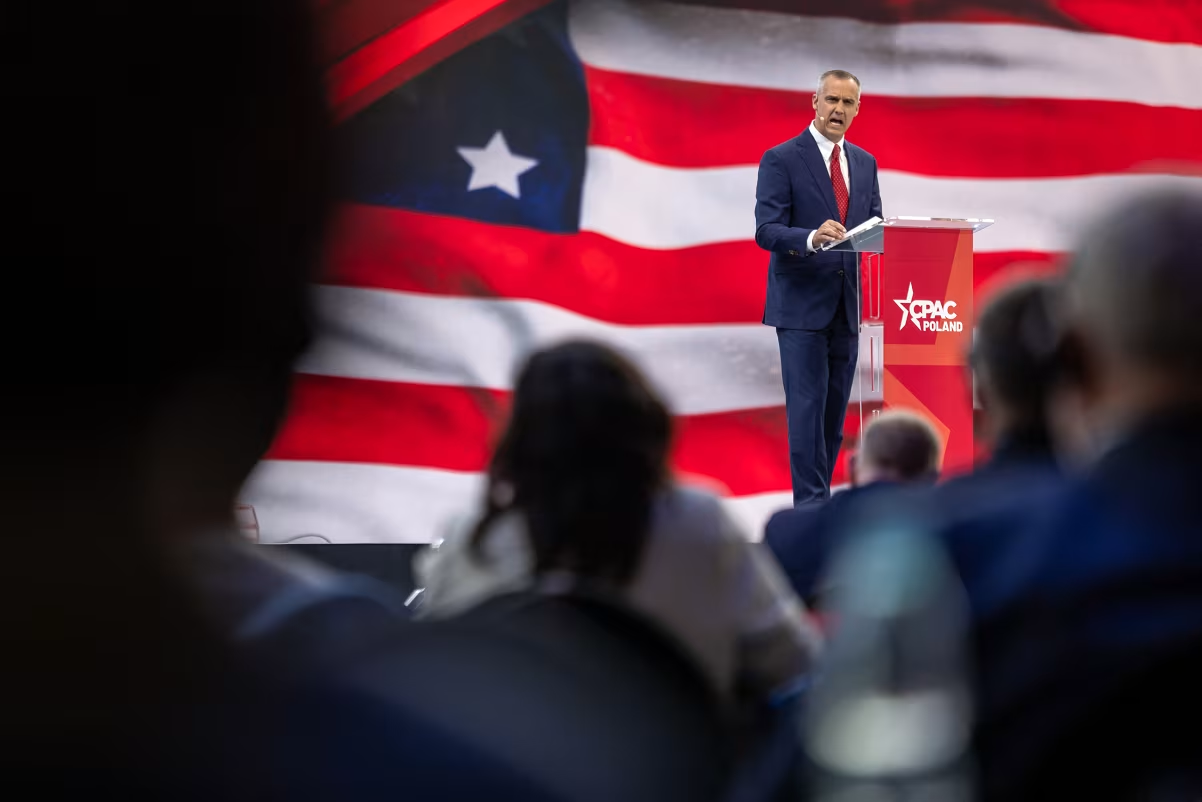
How Corey Lewandowski’s power at the Department of Homeland Security keeps growing
Entities mentioned:
- Corey Lewandowski: Power, Influence, Ambition
- Kristi Noem: Ambition, Loyalty, Control
- Donald Trump: Power, Control, Legacy
- Department of Homeland Security: Security, Control, Duty
- Cameron Hamilton: Professional pride, Duty, Self-preservation
- FEMA: Duty, Security, Self-preservation
Article Assessment:
Credibility Score: 75/100
Bias Rating: 45/100 (Center)
Sentiment Score: 35/100
Authoritarianism Risk: 65/100 (Authoritarian Tendencies)
Bias Analysis:
The article presents multiple perspectives and sources, including official statements and insider accounts. While it highlights concerns about Lewandowski's role, it also includes rebuttals from DHS officials, maintaining a relatively balanced approach.
Key metric: Government Accountability and Transparency
As a social scientist, I analyze that this article highlights a concerning trend of informal power structures within the Department of Homeland Security, potentially undermining established chains of command and democratic accountability. Lewandowski's outsized influence, despite his temporary status, raises questions about the integrity of decision-making processes and the potential for conflicts of interest. The apparent sidelining of career officials and aggressive approach to reshaping agencies like FEMA suggest a prioritization of political loyalty over expertise, which could negatively impact the department's ability to fulfill its core mission of ensuring national security and managing emergencies effectively.
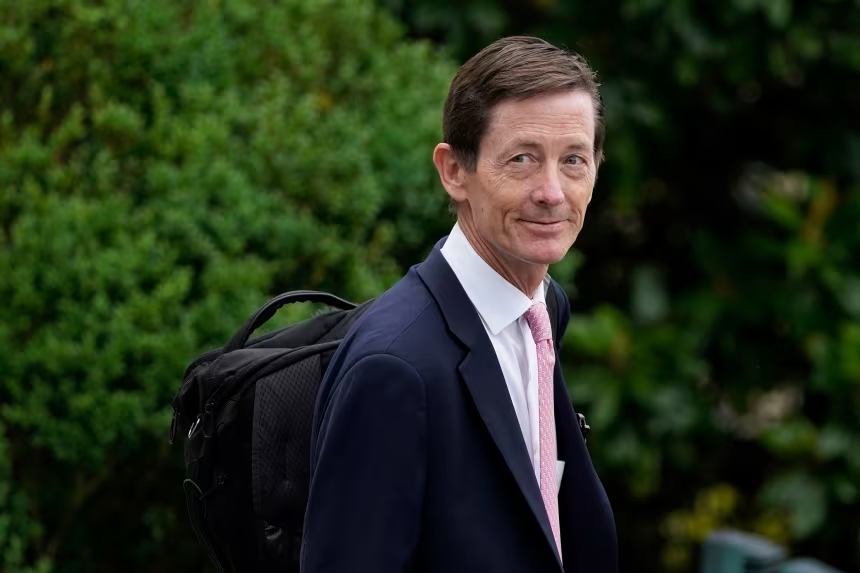
Former senior Biden aide to appear before House committee in probe of former president’s alleged mental decline
Entities mentioned:
- Joe Biden: Power, Legacy, Self-preservation
- Bruce Reed: Loyalty, Duty, Professional pride
- House Oversight Committee: Justice, Control, Righteousness
- Anita Dunn: Loyalty, Professional pride, Self-preservation
- Donald Trump: Competitive spirit, Power, Recognition
- Steve Ricchetti: Loyalty, Duty, Professional pride
- Mike Donilon: Loyalty, Professional pride, Duty
- Dr. Kevin O'Connor: Self-preservation, Professional pride, Duty
- Anthony Bernal: Self-preservation, Loyalty, Duty
- Annie Tomasini: Self-preservation, Loyalty, Duty
Article Assessment:
Credibility Score: 65/100
Bias Rating: 55/100 (Center)
Sentiment Score: 35/100
Authoritarianism Risk: 40/100 (Generally Democratic)
Bias Analysis:
The article presents a relatively balanced view, including perspectives from both Republican investigators and former Biden officials. However, there's a slight lean towards emphasizing the investigation's legitimacy and potential implications for Biden.
Key metric: Public Trust in Government
As a social scientist, I analyze that this investigation into former President Biden's cognitive abilities could significantly impact public trust in government. The probe raises questions about transparency and the fitness of elected officials, potentially eroding confidence in the political system. The involvement of high-ranking officials and their varying levels of cooperation suggest a complex interplay of loyalty, self-preservation, and institutional integrity. The use of Fifth Amendment rights by some officials may further fuel public skepticism. This investigation could have long-lasting effects on how the public perceives age and mental acuity in relation to political leadership, potentially influencing future elections and policy discussions around age limits for public office.
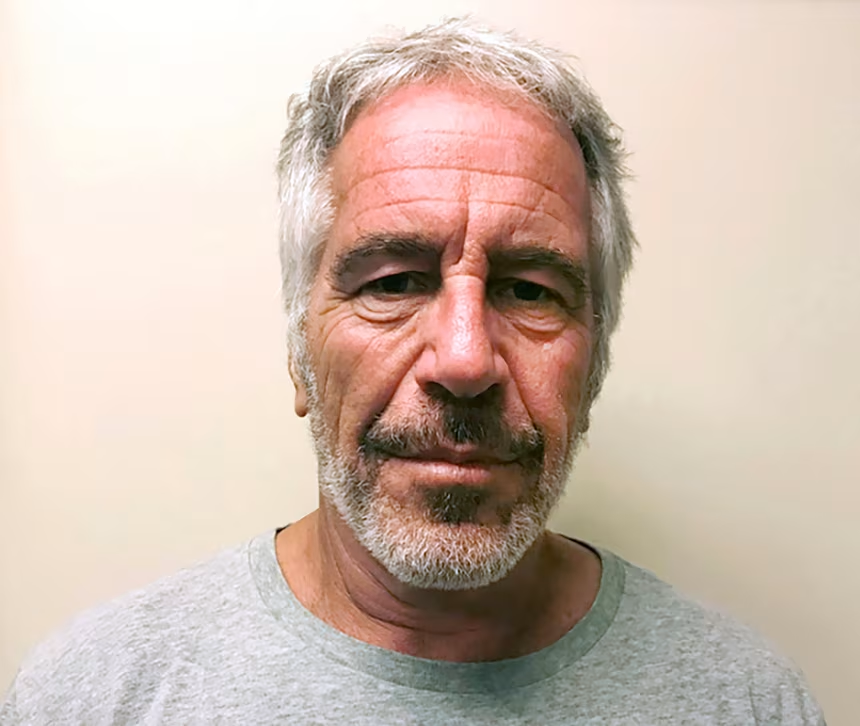
House Oversight Committee subpoenas Justice Department for Epstein files, high-profile former officials for depositions
Entities mentioned:
- House Oversight Committee: Justice, Duty, Influence
- Justice Department: Duty, Control, Self-preservation
- Jeffrey Epstein: Power, Control, Greed
- Republican Party: Influence, Righteousness, Power
- Democratic Party: Self-preservation, Influence, Justice
- Mike Johnson: Control, Self-preservation, Loyalty
- James Comer: Justice, Influence, Duty
- Ghislaine Maxwell: Self-preservation, Control, Fear
- Donald Trump: Power, Influence, Self-preservation
Article Assessment:
Credibility Score: 75/100
Bias Rating: 55/100 (Center)
Sentiment Score: 35/100
Authoritarianism Risk: 25/100 (Generally Democratic)
Bias Analysis:
The article presents a relatively balanced view, including perspectives from both Republican and Democratic sides. While it focuses more on Republican-led actions, it also mentions Democratic initiatives, maintaining a fairly neutral stance.
Key metric: Government Transparency and Accountability
As a social scientist, I analyze that this article highlights a significant push for transparency and accountability in a high-profile case involving Jeffrey Epstein. The House Oversight Committee's issuance of subpoenas to various former high-ranking officials and the Justice Department indicates a strong desire to uncover potentially hidden information. This action could significantly impact government transparency, as it challenges the boundaries between congressional oversight and executive branch authority. The bipartisan nature of the subpoenas, targeting both Republican and Democratic figures, suggests a broader concern for justice beyond party lines. However, the resistance from some quarters, including House Speaker Mike Johnson, demonstrates the complex political dynamics at play. This situation could potentially lead to increased public trust in government institutions if handled transparently, or conversely, could further erode trust if perceived as politically motivated or obstructed. The involvement of former presidents and high-ranking officials also underscores the gravity of the investigation and its potential implications for public perception of political elites.
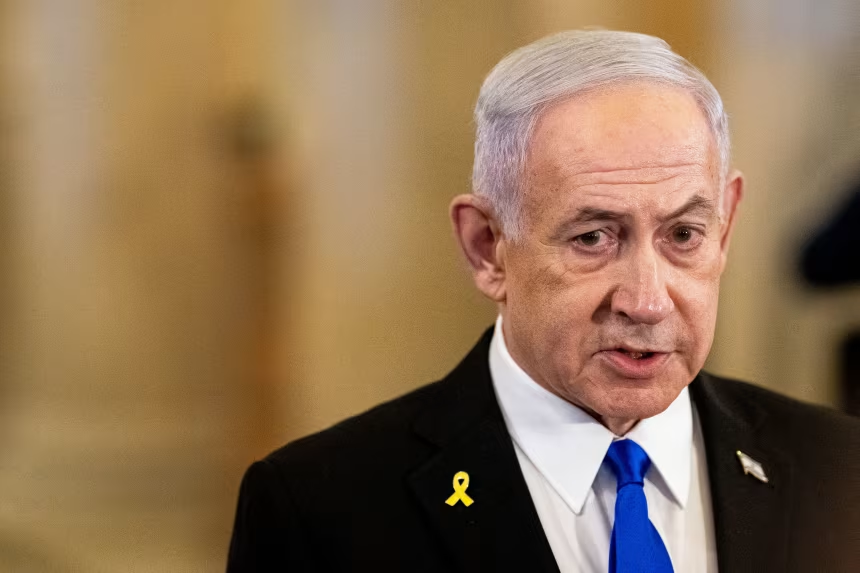
Pro-Israel Democrats try breaking with Netanyahu to stop party’s shift amid Gaza crisis
Entities mentioned:
- Benjamin Netanyahu: Power, Control, Self-preservation
- Democratic Party: Unity, Influence, Self-preservation
- AIPAC: Influence, Loyalty, Power
- Brian Schatz: Justice, Moral outrage, Professional pride
- Mikie Sherrill: Duty, Justice, Self-preservation
- Tim Walz: Ambition, Influence, Professional pride
- Cory Booker: Ambition, Loyalty, Self-preservation
- John Fetterman: Loyalty, Determination, Moral outrage
- Bernie Sanders: Justice, Moral outrage, Influence
- Rahm Emanuel: Ambition, Influence, Self-preservation
Article Assessment:
Credibility Score: 75/100
Bias Rating: 45/100 (Center)
Sentiment Score: 35/100
Bias Analysis:
The article presents multiple perspectives within the Democratic Party, including both pro-Israel and critical voices. While it leans slightly towards highlighting critical views of Netanyahu, it also includes counterpoints and context, maintaining a relatively balanced approach.
Key metric: Democratic Party Unity and Voter Support
As a social scientist, I analyze that this article highlights a significant shift in the Democratic Party's stance towards Israel, particularly in relation to Prime Minister Netanyahu's policies. This shift is driven by moral outrage over the humanitarian crisis in Gaza and a strategic calculation about future voter support, especially among younger Democrats. The party is attempting to balance its traditional pro-Israel stance with criticism of Netanyahu's government, hoping to maintain unity while adapting to changing voter sentiments. This balancing act could have significant implications for party cohesion, future elections, and U.S.-Israel relations. The article suggests that this issue may become a litmus test in upcoming elections, potentially reshaping the Democratic Party's foreign policy platform and its relationship with pro-Israel lobbying groups like AIPAC.
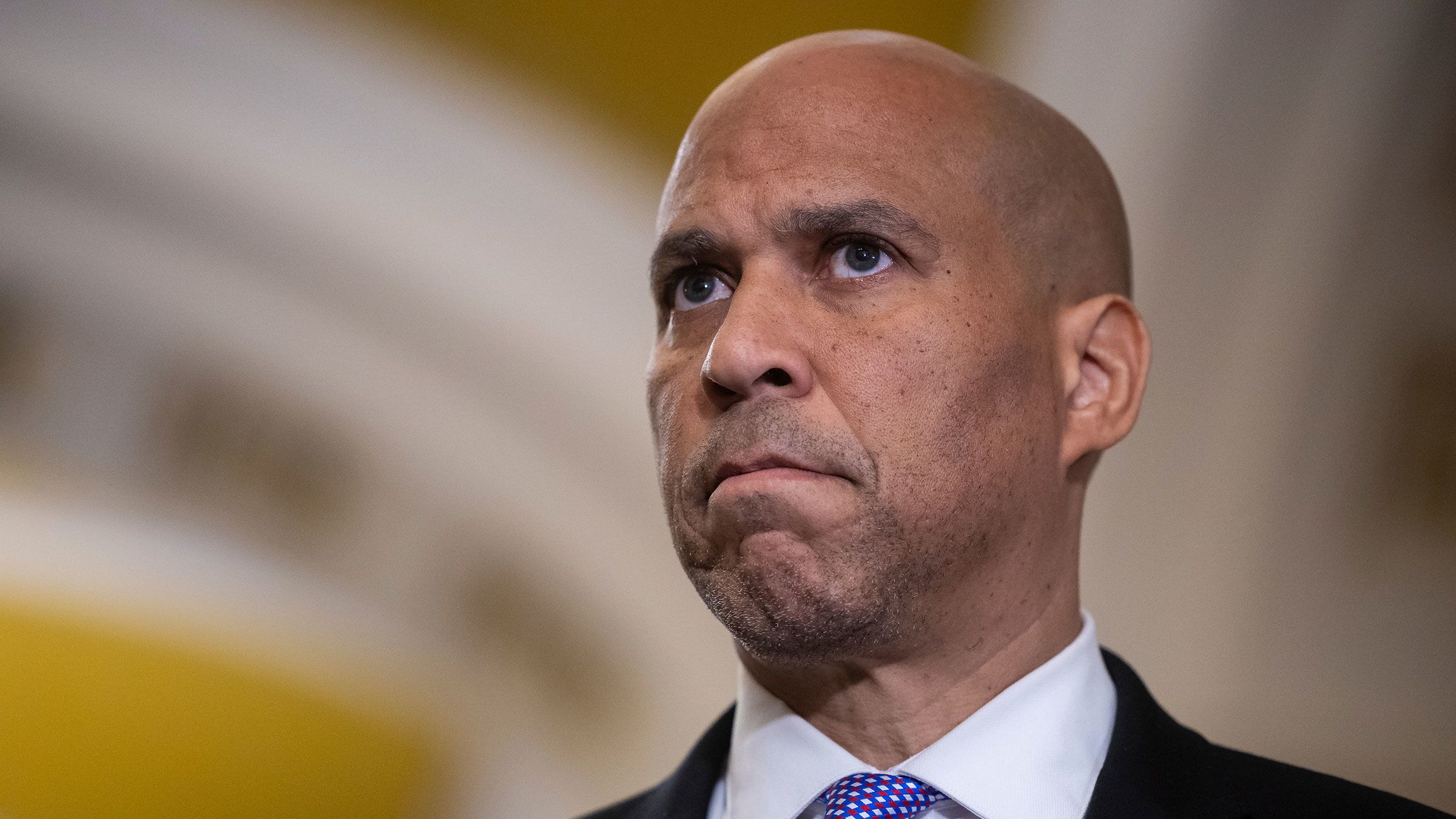
Cory Booker’s message to the Democratic Party: Don’t bend the knee to Trump
Entities mentioned:
- Cory Booker: Righteousness, Moral outrage, Determination
- Donald Trump: Power, Control, Influence
- Democratic Party: Unity, Self-preservation, Power
- Republican Party: Power, Control, Competitive spirit
Article Assessment:
Credibility Score: 75/100
Bias Rating: 40/100 (Lean Left)
Sentiment Score: 35/100
Bias Analysis:
The article leans slightly left, primarily due to its focus on a Democratic senator's perspective and criticism of Trump. While it includes some counterpoints, the overall framing favors Democratic viewpoints and concerns.
Key metric: Political Polarization Index
As a social scientist, I analyze that this article highlights the growing polarization in American politics, with Senator Booker calling for a more aggressive stance against President Trump. This approach could potentially increase political divisions and affect governance. Booker's rhetoric about 'bending the knee' and fighting against 'authoritarianism' suggests a deepening of party lines and a possible escalation of political conflict. His call for Democrats to engage in partisan redistricting, despite previous stances on nonpartisan approaches, indicates a shift towards more aggressive political tactics. This could further erode trust in democratic institutions and processes, potentially leading to increased voter cynicism and decreased faith in the political system.

State Department may require visa applicants to post bond of up to $15,000 to enter the US
Entities mentioned:
- State Department: Control, Security, Duty
- Trump administration: Control, Security, Influence
- Visa applicants: Freedom, Ambition, Self-preservation
- U.S. government: Security, Control, Self-preservation
Article Assessment:
Credibility Score: 75/100
Bias Rating: 55/100 (Center)
Sentiment Score: 35/100
Bias Analysis:
The article presents a relatively balanced view of the proposed policy, including both the government's rationale and potential concerns. While it mentions the Trump administration's role, it doesn't editorialize on the policy's merits, maintaining a largely neutral stance.
Key metric: Net International Migration
As a social scientist, I analyze that this proposed policy could significantly impact the Net International Migration metric for the United States. The implementation of visa bonds up to $15,000 for certain countries may act as a deterrent for potential visitors, especially those from lower-income nations. This could lead to a decrease in both short-term visitors and potential long-term immigrants, as the financial barrier may discourage applications. Additionally, the policy may disproportionately affect business travelers and tourists from developing countries, potentially impacting economic and cultural exchanges. The pilot program's selective application based on overstay rates and document security could also lead to diplomatic tensions with affected countries, possibly resulting in reciprocal measures against U.S. travelers.

Crisis in Gaza seems hopeless. Here’s a potential pathway for a 90-day solution
Entities mentioned:
- Brett McGurk: Professional pride, Duty, Influence
- Hamas: Power, Control, Revenge
- Israel: Security, Self-preservation, Justice
- United States: Influence, Security, Duty
- Qatar: Influence, Power, Recognition
- Egypt: Influence, Security, Stability
- France: Influence, Moral outrage, Justice
- United Kingdom: Influence, Moral outrage, Justice
- Benjamin Netanyahu: Power, Self-preservation, Security
- Joe Biden: Influence, Duty, Legacy
Article Assessment:
Credibility Score: 75/100
Bias Rating: 55/100 (Center)
Sentiment Score: 45/100
Bias Analysis:
The article presents a relatively balanced view, considering multiple perspectives and options. However, it leans slightly towards a US-centric perspective, given the author's background and focus on US involvement in the solution.
Key metric: US Global Influence and Diplomatic Effectiveness
As a social scientist, I analyze that this article presents a complex geopolitical situation with multiple stakeholders and competing interests. The proposed 'Option 6' solution seeks to balance humanitarian concerns, hostage release, and long-term stability in Gaza. This approach could potentially enhance US diplomatic effectiveness by positioning it as a problem-solver in a seemingly intractable conflict. However, the success of this strategy depends on the willingness of all parties to cooperate, particularly Hamas, which has shown resistance to previous proposals. The article highlights the challenges of international diplomacy and the need for creative solutions in conflict resolution. The impact on US global influence will depend on the outcome of this proposed strategy and how it is perceived by the international community.