
RFK Jr. Mandates All Americans Drink Mysterious Glowing Liquid
Entities mentioned:
- Robert F. Kennedy Jr.: Power, Influence, Righteousness
- Department of Health and Human Services: Control, Duty, Professional pride
- American public: Wariness, Anxiety, Self-preservation
- Medical researchers: Skepticism, Professional pride, Duty
- Government regulators: Control, Duty, Security
Article Assessment:
Credibility Score: 25/100
Bias Rating: 40/100 (Lean Left)
Sentiment Score: 30/100
Authoritarianism Risk: 75/100 (Authoritarian Tendencies)
Bias Analysis:
The article leans slightly left, mocking anti-establishment health views often associated with right-wing politics. However, its satirical nature somewhat obscures its political stance, making it less overtly partisan.
Key metric: Public Health and Safety
As a social scientist, I analyze that this satirical article highlights potential risks of unchecked authority in public health decision-making. It critiques the real Robert F. Kennedy Jr.'s controversial stance on vaccines and alternative medicines by exaggerating it to absurd levels. The fictional mandate to consume an unidentified substance plays on fears of government overreach and medical misinformation. This could impact public trust in health institutions and potentially lead to decreased adherence to legitimate public health measures.

Facts First
Entities mentioned:
- Donald Trump: Power, Influence, Legacy
- Joe Biden: Duty, Legacy, Unity
- Kamala Harris: Ambition, Recognition, Unity
- Nikki Haley: Ambition, Competitive spirit, Recognition
- Republican Party: Power, Control, Loyalty
- Democratic Party: Unity, Justice, Control
- Voters: Security, Freedom, Self-preservation
Article Assessment:
Credibility Score: 75/100
Bias Rating: 45/100 (Center)
Sentiment Score: 45/100
Authoritarianism Risk: 25/100 (Generally Democratic)
Bias Analysis:
The articles attempt to present diverse voter perspectives from various regions and demographics. While there's a slight lean towards examining Democratic challenges, the content also covers Republican voter sentiments extensively.
Key metric: Voter Engagement and Political Polarization
As a social scientist, I analyze that this collection of articles highlights the deep political divisions and shifting voter sentiments in key battleground states. The content demonstrates how various demographic groups, including blue-collar workers, Hispanic voters, and suburban residents, are responding to major political figures and policy issues. The articles reveal a complex political landscape where traditional party loyalties are being tested, and voters are grappling with concerns about age, economic impacts, and social issues. This ongoing voter engagement and the apparent polarization suggest a highly contested and potentially volatile political environment leading up to the 2024 election.
- Read more about Facts First
- Log in to post comments
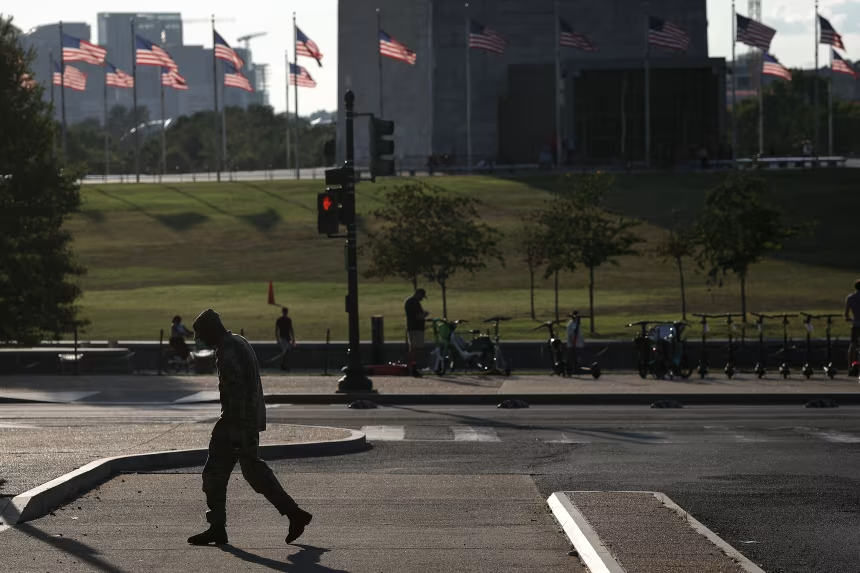
Trump has suggested a nationwide crime crackdown. Here’s what he can do outside of DC
Entities mentioned:
- Donald Trump: Power, Control, Recognition
- DC National Guard: Duty, Security, Obligation
- Washington, DC Police Department: Security, Duty, Professional pride
- US Congress: Control, Duty, Oversight
- Muriel Bowser: Self-preservation, Indignation, Wariness
- Greggory Pemberton: Security, Professional pride, Duty
- Federal law enforcement agencies: Security, Duty, Control
Article Assessment:
Credibility Score: 75/100
Bias Rating: 55/100 (Center)
Sentiment Score: 35/100
Authoritarianism Risk: 70/100 (Authoritarian Tendencies)
Bias Analysis:
The article presents multiple viewpoints and includes factual crime statistics that contradict the President's claims. However, it gives more space to concerns about federal overreach than to supporters of the action, slightly tilting it towards a centrist-to-left perspective.
Key metric: Federal-State Power Balance
As a social scientist, I analyze that this article highlights a significant shift in the federal-state power dynamic, particularly in Washington, DC. President Trump's unprecedented move to take control of the DC police department and deploy the National Guard represents a dramatic expansion of federal authority in local affairs. This action, while technically allowed under the Home Rule Act, raises concerns about the erosion of local autonomy and the potential for federal overreach. The justification for this action - addressing crime - appears to be at odds with actual crime statistics, which show a declining trend in violent crime and carjackings. This discrepancy suggests that the move may be more politically motivated than based on genuine public safety concerns. The expansion of federal power in DC could set a precedent for similar actions in other cities, potentially altering the balance of power between federal and local governments nationwide.
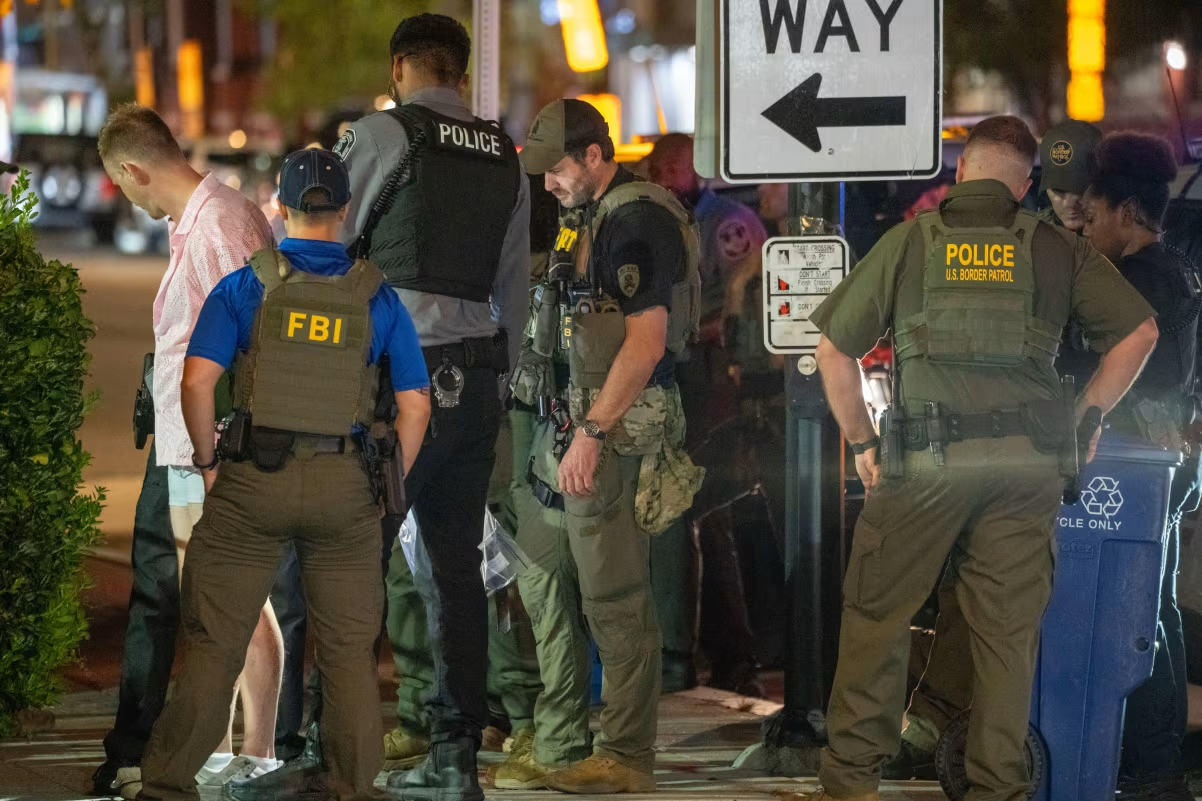
Man charged for throwing a sandwich at an officer in DC worked at DOJ and has been fired
Entities mentioned:
- Sean Charles Dunn: Moral outrage, Indignation, Righteousness
- Pam Bondi: Justice, Power, Control
- Donald Trump: Control, Power, Security
- Jeanine Pirro: Loyalty, Justice, Control
- Department of Justice: Control, Justice, Power
- US Customs and Border Protection: Duty, Security, Control
Article Assessment:
Credibility Score: 70/100
Bias Rating: 65/100 (Lean Right)
Sentiment Score: 30/100
Authoritarianism Risk: 75/100 (Authoritarian Tendencies)
Bias Analysis:
The article leans slightly right, giving more space to pro-law enforcement voices and emphasizing the administration's tough stance. However, it does include some balancing information about crime statistics contradicting the administration's claims.
Key metric: Public Trust in Government Institutions
As a social scientist, I analyze that this incident highlights growing tensions between federal law enforcement and civilians, exacerbated by the Trump administration's increased deployment of federal officers in Washington, DC. The firing and prosecution of a DOJ employee for a relatively minor offense (throwing a sandwich) suggests a hardline approach to dissent and could be seen as an attempt to intimidate government workers. This event, coupled with the takeover of local police by federal authorities, indicates a significant shift in the balance of power between local and federal law enforcement, potentially impacting public trust in government institutions. The strong rhetoric from officials like Bondi and Pirro further polarizes the situation, potentially deepening divisions between law enforcement and the public they serve.
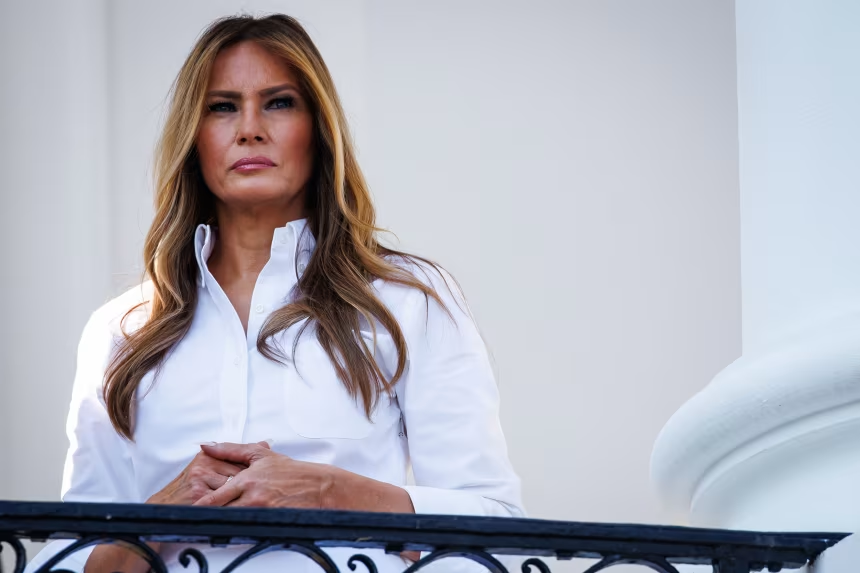
Trump told Melania to ‘go forward’ with legal action against Hunter Biden over Epstein relationship comments
Entities mentioned:
- Donald Trump: Power, Control, Self-preservation
- Melania Trump: Self-preservation, Pride, Righteousness
- Hunter Biden: Defiance, Self-preservation, Indignation
- Jeffrey Epstein: Power, Control
- Andrew Callaghan: Curiosity, Professional pride, Recognition
- Nick Clemens: Duty, Loyalty
- Michael Wolff: Recognition, Influence
Article Assessment:
Credibility Score: 65/100
Bias Rating: 55/100 (Center)
Sentiment Score: 30/100
Authoritarianism Risk: 35/100 (Generally Democratic)
Bias Analysis:
The article presents multiple viewpoints and sources, including direct quotes from both sides. However, there's slightly more focus on Hunter Biden's perspective, which may suggest a slight center-left lean.
Key metric: Political Polarization Index
As a social scientist, I analyze that this article highlights the ongoing political tensions and legal battles between the Trump family and Hunter Biden. The threat of legal action over comments about the Trumps' relationship with Jeffrey Epstein further intensifies the already polarized political climate. This situation likely increases distrust between political factions and could lead to a further deterioration of civil discourse. The involvement of high-profile figures and the sensational nature of the claims may contribute to increased cynicism among the public regarding political figures and institutions. Furthermore, the use of legal threats against political opponents may have a chilling effect on free speech and open dialogue, potentially impacting democratic processes.
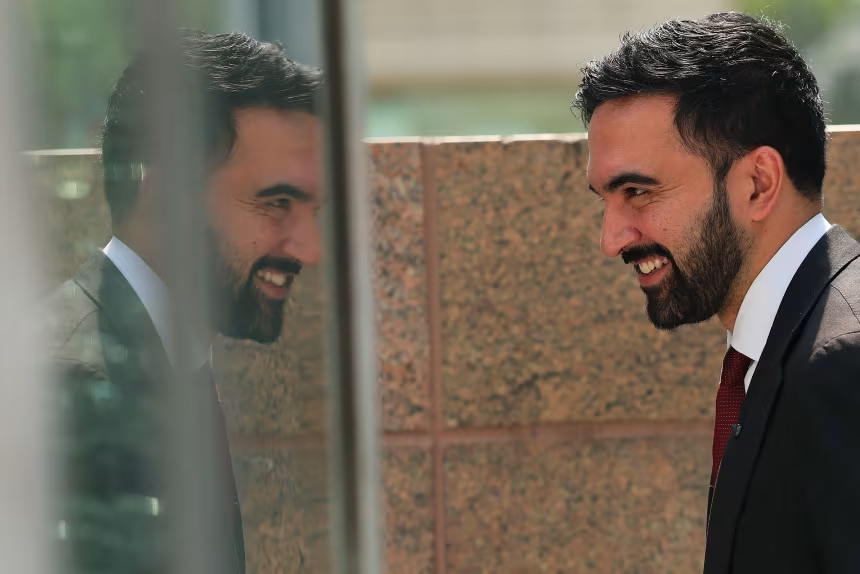
Do Democrats have a Zohran Mamdani problem?
Entities mentioned:
- Zohran Mamdani: Ambition, Recognition, Influence
- Democratic Party: Self-preservation, Power, Unity
- Republican Party: Competitive spirit, Power, Control
- Barack Obama: Influence, Legacy, Unity
Article Assessment:
Credibility Score: 75/100
Bias Rating: 45/100 (Center)
Sentiment Score: 50/100
Authoritarianism Risk: 25/100 (Generally Democratic)
Bias Analysis:
The article presents a balanced view, offering both positive and negative aspects of Mamdani's candidacy and its potential impact. It cites various polls and presents multiple perspectives, indicating an effort to maintain neutrality.
Key metric: Democratic Party Approval Rating
As a social scientist, I analyze that Zohran Mamdani's rise to prominence as the Democratic nominee for New York City mayor poses both opportunities and challenges for the Democratic Party. His socialist policies and controversial past statements on issues like policing and Israel could potentially alienate moderate voters and damage the party's image. However, polling suggests that some of his progressive ideas are popular among voters, and the evolving public opinion on issues like Israel might mitigate some potential negative impacts. The Democratic Party's response, including hesitancy from some members to endorse him, reflects concern about how Mamdani's candidacy might affect their broader electoral prospects. The Republicans' eagerness to use Mamdani as a campaign tool against Democrats nationally indicates they see his candidacy as a vulnerability for their opponents. The article suggests that while Mamdani's socialist label and some past statements could be problematic, the impact on the Democratic Party will largely depend on how he campaigns and potentially governs, as well as how effectively he moderates his image and message.
- Read more about Do Democrats have a Zohran Mamdani problem?
- Log in to post comments

‘Chaos, fear and confusion’: Trump-backed crackdown hits DC’s homeless population
Entities mentioned:
- Donald Trump: Power, Control, Influence
- Amber Harding: Justice, Duty, Moral outrage
- Heather Bernard: Self-preservation, Freedom, Self-respect
- Muriel Bowser: Duty, Self-preservation, Wariness
- Charles Allen: Concern, Duty, Wariness
- Karoline Leavitt: Loyalty, Duty, Control
- Edward Wycoff: Justice, Concern, Professional pride
- Isis Burnette: Self-preservation, Freedom, Self-respect
Article Assessment:
Credibility Score: 75/100
Bias Rating: 40/100 (Lean Left)
Sentiment Score: 30/100
Authoritarianism Risk: 65/100 (Authoritarian Tendencies)
Bias Analysis:
The article leans slightly left, giving more voice to homeless advocates and individuals than to supporters of the crackdown. However, it does include perspectives from both sides and provides factual context.
Key metric: Homelessness Rate
As a social scientist, I analyze that this article highlights the complex interplay between federal and local governance in addressing homelessness in Washington, D.C. The Trump administration's aggressive approach to clearing homeless encampments is creating tension with local officials and advocacy groups. This policy shift risks disrupting existing support systems and potentially criminalizing homelessness, which could lead to increased homelessness rates and reduced access to services. The article illustrates the challenges of balancing public safety concerns with the rights and needs of homeless individuals, and the potential consequences of a top-down, enforcement-heavy approach to a complex social issue.
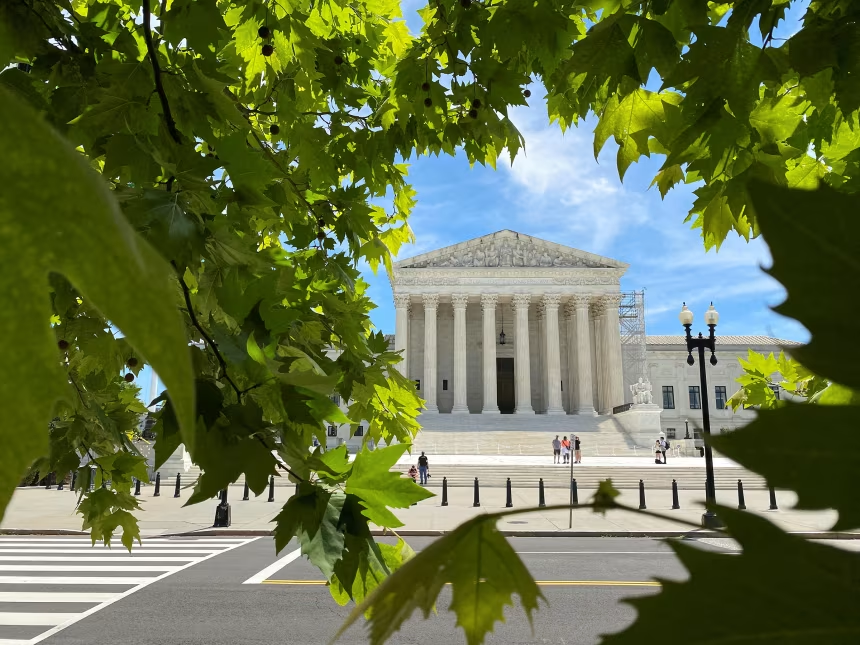
Mississippi may require age verification, parental consent for social media, Supreme Court says
Entities mentioned:
- Supreme Court: Justice, Duty, Influence
- Mississippi: Protection, Control, Moral outrage
- Social Media Companies: Self-preservation, Freedom, Influence
- Justice Brett Kavanaugh: Duty, Wariness, Professional pride
- Electronic Frontier Foundation: Freedom, Justice, Protection
- LGBTQ advocacy groups: Protection, Freedom, Justice
Article Assessment:
Credibility Score: 75/100
Bias Rating: 45/100 (Center)
Sentiment Score: 40/100
Authoritarianism Risk: 55/100 (Mixed/Neutral)
Bias Analysis:
The article presents multiple viewpoints, including those of the state, tech companies, and advocacy groups. It provides context and background, showing a relatively balanced approach to reporting the issue.
Key metric: Online Privacy and Child Safety
As a social scientist, I analyze that this case represents a significant clash between state efforts to protect minors online and concerns over First Amendment rights and internet freedom. The Supreme Court's decision to allow Mississippi to enforce its age verification law for social media platforms marks a potential shift in how online spaces are regulated, particularly concerning minors. This could have far-reaching implications for internet usage, privacy, and the autonomy of young people online. The case highlights the ongoing struggle to balance child safety with free speech and access to information, especially for vulnerable groups like LGBTQ youth. The court's decision, while temporary, may encourage other states to pursue similar legislation, potentially leading to a patchwork of regulations across the country and challenges for both users and tech companies in compliance.
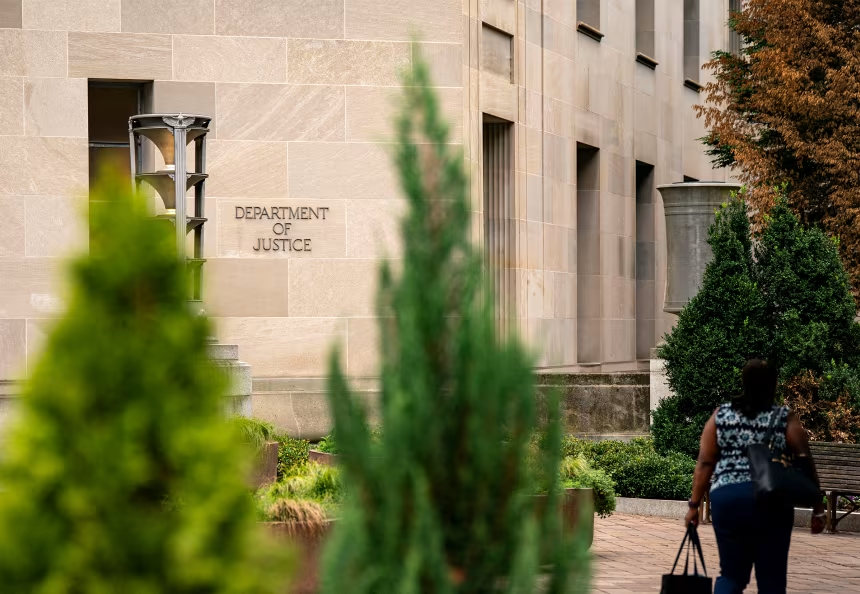
A car accident in small-town Tennessee leads to US charges against a major Mexican drug operation
Entities mentioned:
- United Cartels: Power, Control, Greed
- Jalisco New Generation Cartel: Competitive spirit, Power, Control
- Juan José Farías Álvarez (El Abuelo): Power, Control, Self-preservation
- Matthew Galeotti: Justice, Duty, Professional pride
- Eladio Mendoza: Greed, Power, Self-preservation
- US Justice Department: Justice, Security, Duty
- Trump administration: Security, Control, Legacy
- Mexican government: Cooperation, Security, Obligation
Article Assessment:
Credibility Score: 75/100
Bias Rating: 55/100 (Center)
Sentiment Score: 40/100
Authoritarianism Risk: 35/100 (Generally Democratic)
Bias Analysis:
The article presents a balanced view of the drug investigation and international cooperation. While it highlights the Trump administration's actions, it does not overly praise or criticize any political stance, maintaining a relatively neutral tone.
Key metric: Drug-related Crime Rate
As a social scientist, I analyze that this article highlights the complex international efforts to combat drug trafficking and its impact on US communities. The investigation's progression from a local car accident to international cartel indictments demonstrates the interconnectedness of global drug trade and local crime. The cooperation between US and Mexican authorities in targeting cartel leaders suggests a potential reduction in drug supply chains, which could impact the drug-related crime rate in the US. However, the adaptability of cartels and the ongoing demand for drugs may limit the long-term effectiveness of these actions. The article also underscores the violence associated with drug trafficking, both within cartels and in confrontations with law enforcement, which contributes to the overall crime rate and public safety concerns.
Tracking Trump’s criminal cases
Entities mentioned:
- Donald Trump: Self-preservation, Power, Control
- Judge Juan Merchan: Justice, Duty, Professional pride
- Jack Smith: Duty, Professional pride, Justice
- Manhattan District Attorney's Office: Justice, Duty, Righteousness
Article Assessment:
Credibility Score: 75/100
Bias Rating: 45/100 (Center)
Sentiment Score: 35/100
Authoritarianism Risk: 40/100 (Generally Democratic)
Bias Analysis:
The article presents a factual timeline of events without overtly favoring any political stance. It includes details from various cases and perspectives, maintaining a relatively neutral tone in its reporting.
Key metric: Rule of Law Index
As a social scientist, I analyze that this article significantly impacts the Rule of Law Index for the United States. The conviction and subsequent unconditional discharge of a president-elect in a criminal case, coupled with the dropping of federal cases against him, presents a complex scenario for the rule of law. On one hand, it shows that even high-ranking officials can be held accountable through the legal system. On the other hand, the inability to impose penalties and the dismissal of other cases may suggest that political power can influence legal outcomes. This situation could potentially weaken public perception of equal application of the law and the independence of the judiciary, key components of the Rule of Law Index.
- Read more about Tracking Trump’s criminal cases
- Log in to post comments