
White House lands on Trump-Putin summit location as officials race to prepare for historic Alaska meeting
Entities mentioned:
- President Donald Trump: Ambition, Power, Legacy
- Vladimir Putin: Power, Influence, Control
- White House officials: Duty, Professional pride, Security
- Secretary of State Marco Rubio: Duty, Influence, Professional pride
- John Bolton: Wariness, Criticism, Influence
- President Joe Biden: Duty, Security, Influence
- Steve Witkoff: Loyalty, Influence, Duty
- Volodymyr Zelensky: Security, Influence, Self-preservation
Article Assessment:
Credibility Score: 70/100
Bias Rating: 55/100 (Center)
Sentiment Score: 45/100
Authoritarianism Risk: 35/100 (Generally Democratic)
Bias Analysis:
The article presents multiple perspectives, including critics of the summit. However, it leans slightly towards emphasizing concerns and potential risks, while still maintaining a relatively balanced approach.
Key metric: International Relations and Diplomacy
As a social scientist, I analyze that this summit between Trump and Putin represents a significant shift in US-Russia relations, potentially impacting global geopolitics. The rushed nature of the preparations and the choice of location in Alaska suggest an unconventional approach to diplomacy. The one-on-one format raises concerns about transparency and accountability. The exclusion of Ukraine's President Zelensky from direct participation could affect the balance of power discussions regarding the ongoing conflict. This meeting may influence international perceptions of US foreign policy and its stance towards Russia, potentially altering alliances and diplomatic strategies globally.
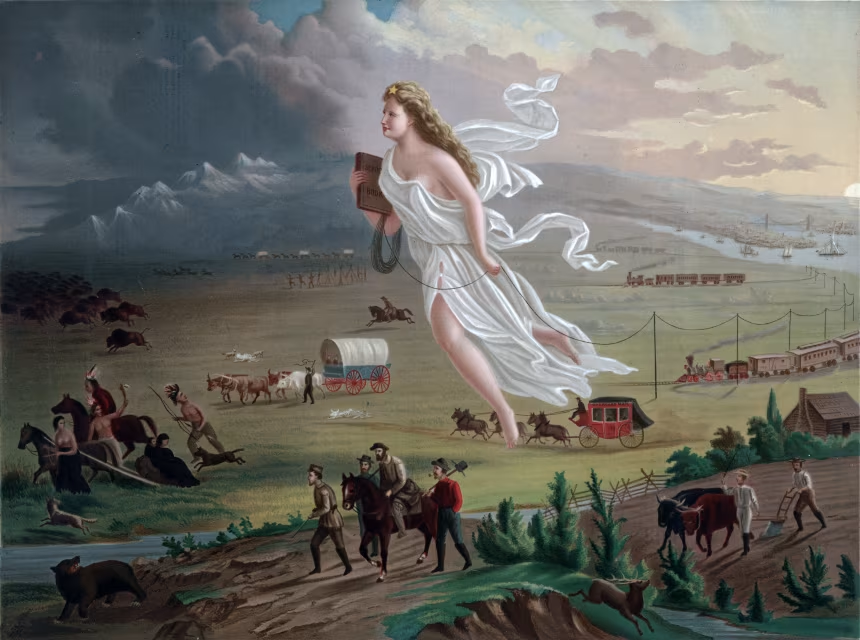
On social media, the Department of Homeland Security appeals to nostalgia — with motifs of White identity
Entities mentioned:
- Department of Homeland Security: Security, Control, Influence
- Immigration and Customs Enforcement: Control, Duty, Security
- President Donald Trump: Power, Control, Influence
- Nicholas J. Cull: Professional pride, Curiosity, Duty
- Tricia McLaughlin: Loyalty, Duty, Self-preservation
- Anat Shenker-Osorio: Righteousness, Professional pride, Moral outrage
- Ian Haney López: Professional pride, Moral outrage, Justice
- Patrick Fontes: Professional pride, Moral outrage, Duty
- Kristy Dalton: Professional pride, Curiosity, Duty
- Morgan Weistling: Self-preservation, Indignation, Justice
- Thomas Kinkade Foundation: Legacy, Justice, Moral outrage
- Black Rebel Motorcycle Club: Self-preservation, Indignation, Justice
Article Assessment:
Credibility Score: 75/100
Bias Rating: 35/100 (Lean Left)
Sentiment Score: 25/100
Authoritarianism Risk: 65/100 (Authoritarian Tendencies)
Bias Analysis:
The article leans left, presenting a critical view of DHS's social media strategy with quotes primarily from experts who express concern. While it includes DHS statements, the overall framing emphasizes potential negative implications of the agency's approach.
Key metric: Social Cohesion
As a social scientist, I analyze that this article highlights a concerning shift in government communication strategy that could significantly impact social cohesion in the United States. The Department of Homeland Security's use of nostalgic, nationalist, and potentially xenophobic imagery in its social media recruitment efforts appears to be tapping into divisive cultural narratives. This approach, while potentially effective for recruitment, risks further polarizing an already divided populace. The use of historical imagery and religious symbolism, coupled with language that echoes white nationalist rhetoric, could exacerbate existing tensions around immigration and national identity. This strategy may attract certain demographics to DHS roles but could alienate others and undermine trust in government institutions among minority communities. The controversy surrounding the unauthorized use of artworks also raises questions about the agency's respect for intellectual property and its overall ethical standards in public communication.

White House orders review of Smithsonian museums and exhibits to ensure alignment with Trump directive
Entities mentioned:
- White House: Control, Power, Influence
- Smithsonian Institution: Professional pride, Duty, Self-preservation
- Donald Trump: Control, Power, Legacy
- Lonnie Bunch III: Professional pride, Duty, Self-preservation
- JD Vance: Loyalty, Power, Control
- Lindsey Halligan: Loyalty, Duty, Influence
- Vince Haley: Loyalty, Duty, Influence
- Russell Vought: Loyalty, Duty, Influence
Article Assessment:
Credibility Score: 75/100
Bias Rating: 45/100 (Center)
Sentiment Score: 35/100
Authoritarianism Risk: 70/100 (Authoritarian Tendencies)
Bias Analysis:
The article presents a balanced view of the situation, including perspectives from both the White House and the Smithsonian. While it highlights concerns about the review, it also includes the administration's justifications, maintaining a relatively neutral stance.
Key metric: Cultural Institution Independence
As a social scientist, I analyze that this article reveals a significant attempt by the executive branch to exert control over cultural institutions, potentially compromising their independence and scholarly integrity. The White House's review of Smithsonian exhibits indicates a push towards aligning historical narratives with the administration's ideological preferences, which could lead to a politicization of public education and cultural presentation. This action may have far-reaching consequences for the autonomy of cultural institutions and the objective presentation of history, potentially impacting public trust in these institutions and the broader understanding of American history and values.
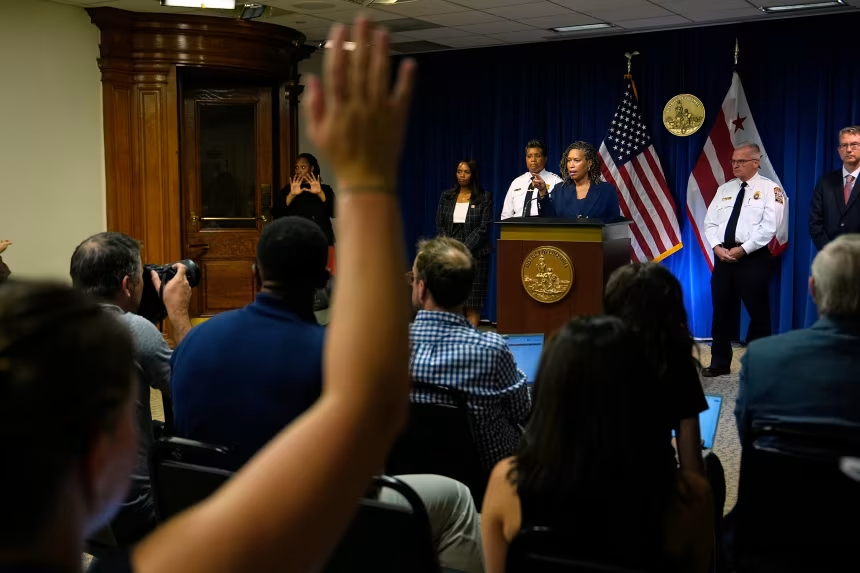
DC Mayor Bowser changes her tone on Trump as crackdown ramps up
Entities mentioned:
- Mayor Muriel Bowser: Self-preservation, Duty, Control
- Donald Trump: Power, Control, Influence
- DC Council: Duty, Self-preservation, Unity
- House Minority Leader Hakeem Jeffries: Moral outrage, Opposition, Justice
- Mayor Karen Bass: Criticism, Justice, Duty
- Christina Henderson: Empathy, Duty, Unity
- Free DC project: Justice, Freedom, Moral outrage
Article Assessment:
Credibility Score: 75/100
Bias Rating: 45/100 (Center)
Sentiment Score: 35/100
Authoritarianism Risk: 55/100 (Mixed/Neutral)
Bias Analysis:
The article presents multiple perspectives, including those of Mayor Bowser, other Democrats, and local activists. While it leans slightly critical of Trump's actions, it also highlights Bowser's pragmatic approach, maintaining a relatively balanced view.
Key metric: Political Polarization
As a social scientist, I analyze that this article highlights the complex dynamics between local and federal governance in Washington, DC, particularly in the context of law enforcement. The tension between Mayor Bowser's measured responses and the more outspoken criticism from other Democrats and activist groups illustrates the delicate balance required in navigating federal intervention in local affairs. This situation exacerbates political polarization by pitting local autonomy against federal authority, potentially deepening divides between different levels of government and political ideologies. The article also underscores the unique challenges faced by DC due to its lack of statehood, which limits its ability to resist federal overreach and may further fuel debates about DC's status and representation.
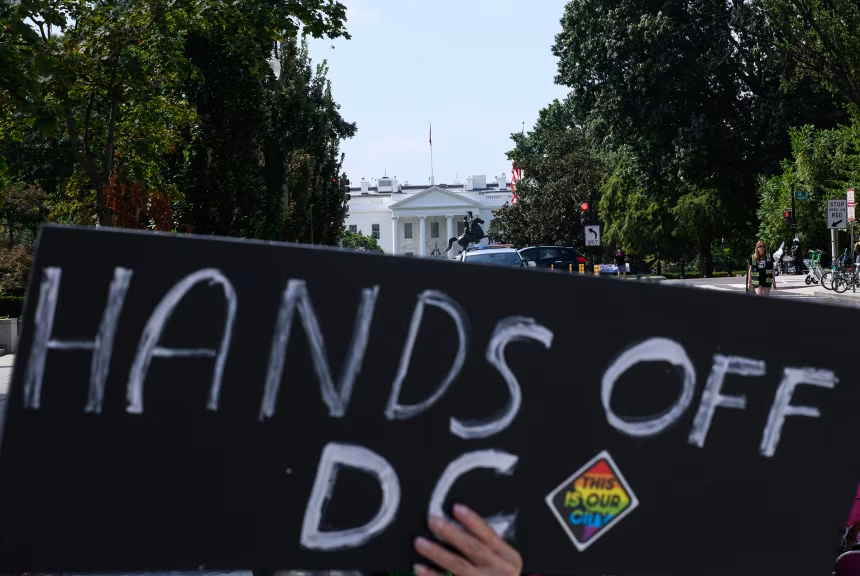
Trump’s DC police takeover was fueled by attack on former DOGE staffer and his own observations of homelessness, allies say
Entities mentioned:
- Donald Trump: Control, Power, Legacy
- Muriel Bowser: Self-preservation, Duty, Unity
- Metropolitan Police Department: Duty, Professional pride, Security
- National Guard: Duty, Security, Obligation
- Pam Bondi: Loyalty, Control, Professional pride
- Brian Schwalb: Justice, Indignation, Duty
- Pamela Smith: Professional pride, Duty, Security
- Jeanine Pirro: Loyalty, Control, Justice
- Chuck Schumer: Political opposition, Moral outrage, Justice
- Gavin Newsom: Political opposition, Moral outrage, Freedom
Article Assessment:
Credibility Score: 65/100
Bias Rating: 55/100 (Center)
Sentiment Score: 30/100
Authoritarianism Risk: 75/100 (Authoritarian Tendencies)
Bias Analysis:
The article presents multiple viewpoints, including those of the Trump administration and local DC officials. While it leans slightly towards skepticism of the federal takeover, it provides context and attempts to balance the narrative.
Key metric: Rule of Law Index
As a social scientist, I analyze that this unprecedented federal takeover of a local police force significantly impacts the Rule of Law Index for the United States. The action raises serious questions about the separation of powers, local autonomy, and the appropriate use of federal authority. While the stated goal is to address crime and homelessness, the unilateral nature of the decision and the apparent lack of a clear emergency situation suggest potential overreach. This move could lead to a deterioration in the perception of checks and balances within the US government system, potentially lowering the country's score on measures of government powers and fundamental rights within the Rule of Law Index. The conflicting narratives between federal and local officials regarding crime statistics and the necessity of the intervention further complicate the situation, potentially eroding public trust in both levels of government.
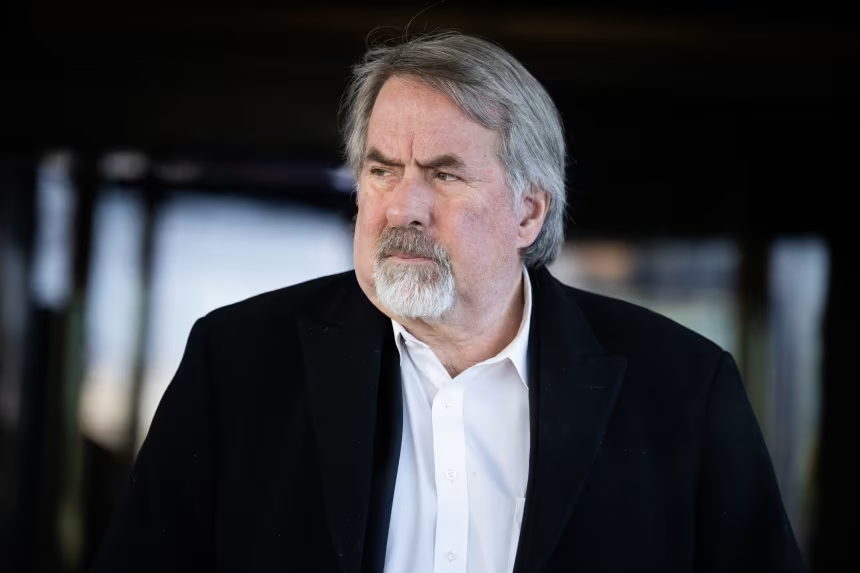
California GOP lawmaker faces taunts and jeers over Trump’s ‘big, beautiful bill’ at town halls
Entities mentioned:
- Doug LaMalfa: Loyalty, Duty, Self-preservation
- Donald Trump: Power, Control, Legacy
- Mike Flood: Duty, Loyalty, Self-preservation
- NRCC: Power, Control, Influence
- Gavin Newsom: Power, Influence, Competitive spirit
Article Assessment:
Credibility Score: 75/100
Bias Rating: 55/100 (Center)
Sentiment Score: 35/100
Authoritarianism Risk: 40/100 (Generally Democratic)
Bias Analysis:
The article presents multiple viewpoints and includes direct quotes from both the congressman and constituents. While it highlights criticisms of LaMalfa and Trump's policies, it also allows for LaMalfa's responses and explanations, maintaining a relatively balanced perspective.
Key metric: Political Polarization Index
As a social scientist, I analyze that this article highlights the growing political polarization in the United States, particularly in rural areas. The hostile reception of Rep. LaMalfa at town hall meetings indicates a deepening divide between Republican representatives and their constituents over Trump's policies. The focus on controversial issues such as climate change, tariffs, and redistricting further emphasizes the ideological gaps. This polarization is likely to impact voter trust, political engagement, and the ability of elected officials to effectively represent their constituents. The article also touches on the broader implications of redistricting efforts, which could significantly alter the political landscape and potentially exacerbate partisan tensions.
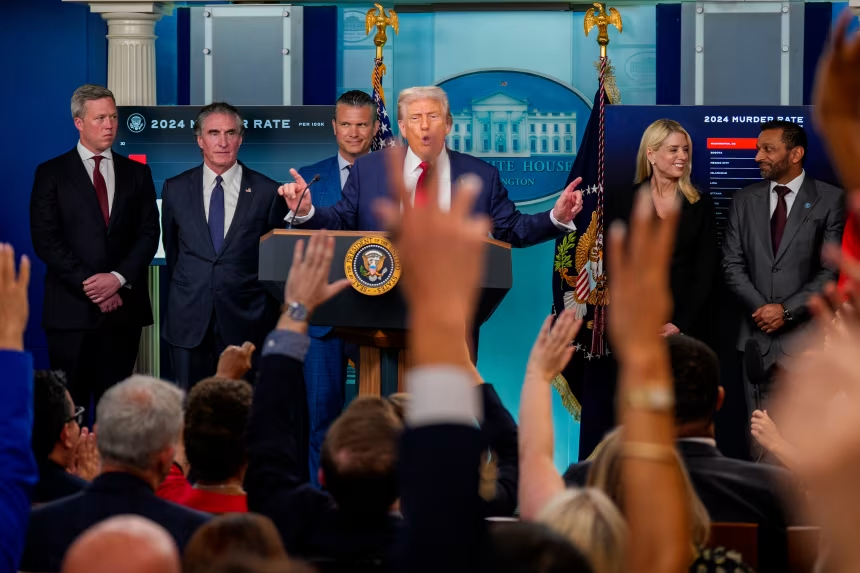
Trump declared federal control of DC police and is deploying the National Guard. Here’s how he is able to do it
Entities mentioned:
- Donald Trump: Power, Control, Influence
- DC National Guard: Duty, Security, Obligation
- Washington DC Police Department: Security, Duty, Professional pride
- US Congress: Control, Obligation, Oversight
- Muriel Bowser: Self-preservation, Wariness, Indignation
- Greggory Pemberton: Security, Professional pride, Duty
- Federal Bureau of Investigation (FBI): Security, Duty, Control
Article Assessment:
Credibility Score: 75/100
Bias Rating: 55/100 (Center)
Sentiment Score: 35/100
Authoritarianism Risk: 70/100 (Authoritarian Tendencies)
Bias Analysis:
The article presents multiple viewpoints and includes factual crime statistics that contradict the president's claims. However, it gives more space to concerns about the president's actions than to supporters, slightly leaning towards a skeptical stance.
Key metric: Federal-Local Government Relations
As a social scientist, I analyze that this unprecedented move by President Trump to assume direct federal control over Washington DC's police department significantly impacts federal-local government relations. This action tests the limits of presidential power and challenges the autonomy of local governance in the nation's capital. The use of emergency powers granted by the Home Rule Act raises questions about the balance between federal oversight and local self-governance. This move could set a precedent for increased federal intervention in local affairs, potentially altering the dynamics of federalism in the United States. The deployment of the National Guard and involvement of federal agencies in local law enforcement further blurs the lines between federal and local authority, which may have long-term implications for governance structures and civil liberties.
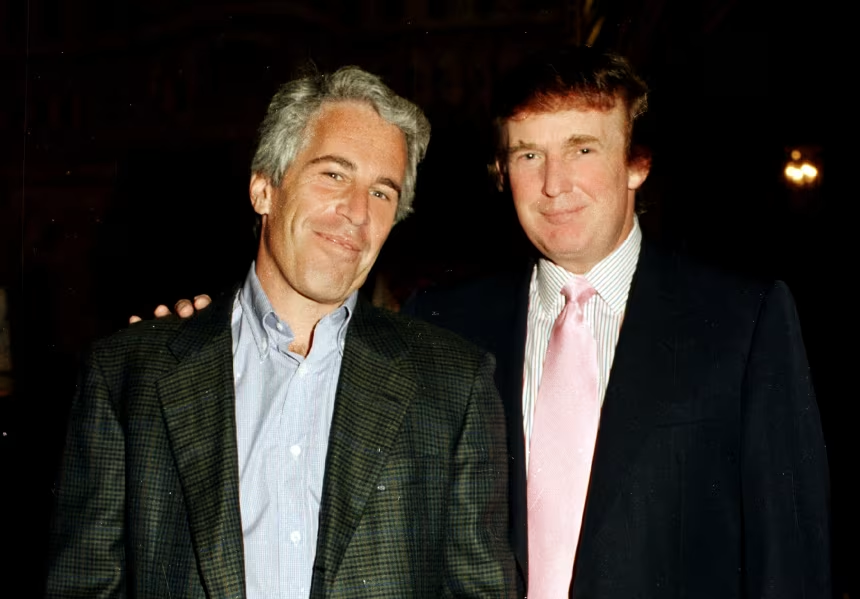
A judge’s brutal rebuke of Trump’s Epstein gambit
Entities mentioned:
- Trump administration: Control, Self-preservation, Influence
- Judge Paul Engelmayer: Justice, Duty, Righteousness
- Jeffrey Epstein: Power, Control, Self-preservation
- Ghislaine Maxwell: Self-preservation, Loyalty, Fear
- Donald Trump: Power, Self-preservation, Control
- Department of Justice: Control, Duty, Self-preservation
- Epstein's victims: Justice, Moral outrage, Indignation
Article Assessment:
Credibility Score: 75/100
Bias Rating: 40/100 (Lean Left)
Sentiment Score: 30/100
Authoritarianism Risk: 65/100 (Authoritarian Tendencies)
Bias Analysis:
The article leans slightly left, evidenced by its critical tone towards the Trump administration. While it presents factual information, the framing and language choices suggest skepticism of the administration's motives.
Key metric: Government Transparency and Accountability
As a social scientist, I analyze that this article highlights a significant issue in government transparency and accountability. The Trump administration's actions regarding the Epstein files appear to be a calculated attempt to create an illusion of transparency while actually withholding meaningful information. This behavior undermines public trust in government institutions and the justice system. The judge's rebuke exposes the administration's strategy as potentially deceptive, which could further erode confidence in the government's handling of high-profile cases. This situation also demonstrates the crucial role of the judiciary in maintaining checks and balances, as Judge Engelmayer's ruling serves as a counterweight to executive branch actions. The administration's reluctance to provide substantive information about the Epstein case, despite public interest and pressure, suggests a conflict between political self-interest and the public's right to information. This case may have long-lasting implications for how government transparency is perceived and demanded by the public, potentially leading to calls for stricter disclosure requirements and oversight mechanisms.
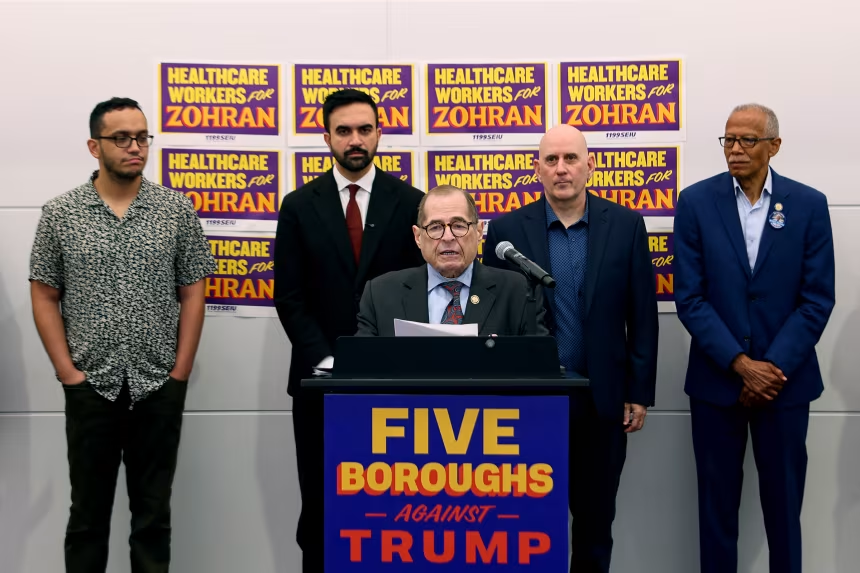
Mamdani launches tour of New York City with a message linking Cuomo to Trump
Entities mentioned:
- Zohran Mamdani: Ambition, Justice, Recognition
- Andrew Cuomo: Power, Revenge, Self-preservation
- Donald Trump: Influence, Power, Control
- Jerry Nadler: Righteousness, Loyalty, Duty
- Eric Adams: Self-preservation, Ambition, Independence
- Brad Lander: Loyalty, Justice, Righteousness
- Rich Azzopardi: Loyalty, Duty, Professional pride
Article Assessment:
Credibility Score: 75/100
Bias Rating: 45/100 (Center)
Sentiment Score: 35/100
Authoritarianism Risk: 25/100 (Generally Democratic)
Bias Analysis:
The article presents multiple viewpoints and includes direct quotes from various political figures. While it gives slightly more space to Mamdani's perspective, it also presents Cuomo's counterarguments, maintaining a relatively balanced approach.
Key metric: Political Polarization Index
As a social scientist, I analyze that this article highlights increasing political polarization in New York City's mayoral race. The linkage of Cuomo to Trump by Mamdani's campaign is a strategic move to galvanize progressive voters and paint Cuomo as part of the establishment. The focus on Mamdani's housing situation by Cuomo's campaign attempts to portray him as hypocritical, potentially alienating working-class voters. This escalating tension and the presence of multiple independent candidates, including the incumbent mayor, suggest a fragmented political landscape. The rhetoric and tactics employed by both sides are likely to exacerbate existing divisions, potentially increasing voter cynicism and distrust in political institutions. This could lead to lower voter turnout and further entrenchment of ideological positions, ultimately impacting the city's governance and policy implementation post-election.
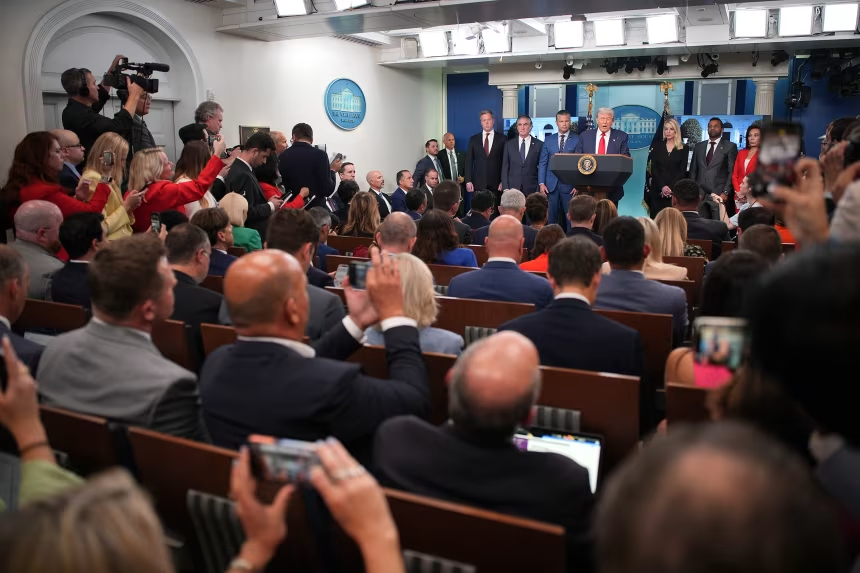
2 reasons Trump calling in troops in DC is so extraordinary
Entities mentioned:
- Donald Trump: Power, Control, Legacy
- Washington, DC Metropolitan Police Department: Duty, Security, Professional pride
- National Guard: Duty, Security, Obligation
- Former Trump administration officials: Wariness, Duty, Self-preservation
- American public: Security, Freedom, Wariness
Article Assessment:
Credibility Score: 75/100
Bias Rating: 40/100 (Lean Left)
Sentiment Score: 30/100
Authoritarianism Risk: 65/100 (Authoritarian Tendencies)
Bias Analysis:
The article leans slightly left, presenting a critical view of Trump's actions. While it includes factual information and some balanced reporting, the framing and language choices suggest a skeptical stance towards the administration's decisions.
Key metric: Civil Liberties and Rule of Law Index
As a social scientist, I analyze that this article highlights a significant shift in the use of military forces for domestic purposes under President Trump's administration. The deployment of the National Guard and the federalization of DC's police force for crime control, rather than in response to large-scale civil unrest, represents an unprecedented expansion of federal power in local law enforcement. This action could potentially impact the Civil Liberties and Rule of Law Index by blurring the lines between military and civilian law enforcement, potentially undermining local autonomy and raising concerns about the militarization of domestic policing. The article suggests that this move is not supported by crime statistics or public opinion, which could lead to increased tension between federal and local authorities, as well as between the government and citizens. This development may be seen as a test of institutional checks and balances and could have long-term implications for the balance of power between federal and local governments in the United States.