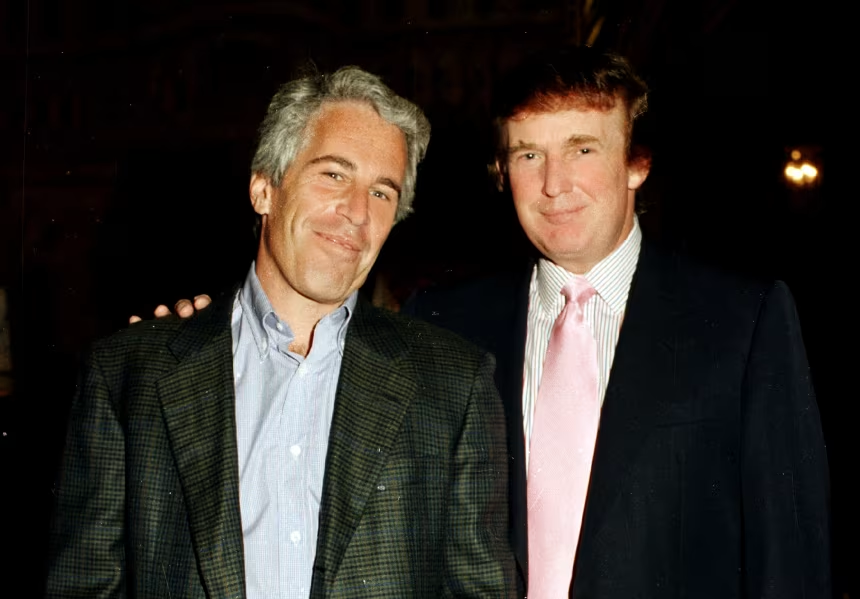
A judge’s brutal rebuke of Trump’s Epstein gambit
Entities mentioned:
- Trump administration: Control, Self-preservation, Influence
- Judge Paul Engelmayer: Justice, Duty, Righteousness
- Jeffrey Epstein: Power, Control, Self-preservation
- Ghislaine Maxwell: Self-preservation, Loyalty, Fear
- Donald Trump: Power, Self-preservation, Control
- Department of Justice: Control, Duty, Self-preservation
- Epstein's victims: Justice, Moral outrage, Indignation
Article Assessment:
Credibility Score: 75/100
Bias Rating: 40/100 (Lean Left)
Sentiment Score: 30/100
Authoritarianism Risk: 65/100 (Authoritarian Tendencies)
Bias Analysis:
The article leans slightly left, evidenced by its critical tone towards the Trump administration. While it presents factual information, the framing and language choices suggest skepticism of the administration's motives.
Key metric: Government Transparency and Accountability
As a social scientist, I analyze that this article highlights a significant issue in government transparency and accountability. The Trump administration's actions regarding the Epstein files appear to be a calculated attempt to create an illusion of transparency while actually withholding meaningful information. This behavior undermines public trust in government institutions and the justice system. The judge's rebuke exposes the administration's strategy as potentially deceptive, which could further erode confidence in the government's handling of high-profile cases. This situation also demonstrates the crucial role of the judiciary in maintaining checks and balances, as Judge Engelmayer's ruling serves as a counterweight to executive branch actions. The administration's reluctance to provide substantive information about the Epstein case, despite public interest and pressure, suggests a conflict between political self-interest and the public's right to information. This case may have long-lasting implications for how government transparency is perceived and demanded by the public, potentially leading to calls for stricter disclosure requirements and oversight mechanisms.

Federal judge rejects Trump DOJ’s bid to unseal grand jury materials in Ghislaine Maxwell case
Entities mentioned:
- Judge Paul Engelmayer: Justice, Duty, Professional pride
- Trump administration: Control, Influence, Self-preservation
- Department of Justice: Transparency, Duty, Influence
- Ghislaine Maxwell: Self-preservation, Control, Greed
- Jeffrey Epstein: Power, Control, Greed
- Victims: Justice, Self-respect, Security
- Attorney General Pam Bondi: Duty, Loyalty, Influence
- Judge Richard Berman: Justice, Duty, Professional pride
Article Assessment:
Credibility Score: 75/100
Bias Rating: 45/100 (Center)
Sentiment Score: 35/100
Authoritarianism Risk: 25/100 (Generally Democratic)
Bias Analysis:
The article presents a balanced view of the situation, quoting extensively from the judge's ruling. While it mentions the Trump administration's involvement, it doesn't appear to take a partisan stance.
Key metric: Public Trust in Government Institutions
As a social scientist, I analyze that this article highlights a significant tension between the judiciary and the executive branch, specifically the Department of Justice under the Trump administration. The judge's scathing rejection of the DOJ's request to unseal grand jury materials in the Maxwell case reveals a deep skepticism of the government's motives. This conflict could potentially erode public trust in government institutions, particularly the DOJ. The judge's emphasis on the lack of new information in the requested materials and the suggestion that the government's motion might be aimed at 'diversion' rather than transparency raises questions about the administration's true intentions. Furthermore, the mention of victims being used for 'political warfare' underscores the complex interplay between justice, politics, and media attention in high-profile cases. This incident may contribute to a growing perception of government institutions being used for political purposes rather than serving justice, potentially leading to decreased public confidence in the justice system and federal agencies.

Trump administration seeking $1 billion settlement from UCLA
Entities mentioned:
- Trump administration: Control, Power, Influence
- University of California, Los Angeles (UCLA): Self-preservation, Professional pride, Freedom
- Julio Frenk: Duty, Concern, Professional pride
- James B. Milliken: Duty, Self-preservation, Righteousness
- Department of Justice: Control, Power, Justice
- Donald Trump: Power, Control, Influence
- Scott Wiener: Moral outrage, Righteousness, Unity
Article Assessment:
Credibility Score: 75/100
Bias Rating: 45/100 (Center)
Sentiment Score: 30/100
Authoritarianism Risk: 65/100 (Authoritarian Tendencies)
Bias Analysis:
The article presents multiple viewpoints, including those of the Trump administration, UCLA officials, and state representatives. While it leans slightly critical of the administration's actions, it provides context and balanced reporting on the situation.
Key metric: Higher Education Funding and Policy
As a social scientist, I analyze that this article highlights a significant conflict between the Trump administration and UCLA, representing a broader clash over higher education policies and funding. The administration's aggressive approach, including funding freezes and demands for substantial settlements, appears to be part of a larger strategy to reshape higher education policies, particularly around issues of diversity, protests, and gender-related matters. This conflict has potential far-reaching implications for academic freedom, research funding, and the autonomy of public universities. The scale of the proposed settlement and the specific policy changes demanded suggest an attempt to exert federal control over university operations and policies, which could set a precedent for other institutions. The resistance from UCLA and California state officials indicates a strong pushback against what they perceive as federal overreach, highlighting tensions between state and federal governance in education.

What Matters
Entities mentioned:
- Donald Trump: Power, Control, Influence
- Department of Justice: Control, Righteousness, Duty
- Federal Communications Commission: Control, Influence, Duty
- Paramount: Self-preservation, Obligation, Professional pride
- CBS News: Professional pride, Obligation, Self-preservation
- Stephen Colbert: Moral outrage, Justice, Freedom
- Columbia University: Self-preservation, Obligation, Professional pride
- Harvard University: Self-preservation, Professional pride, Obligation
- Harmeet Dhillon: Righteousness, Duty, Justice
- Jim Ryan: Professional pride, Obligation, Self-preservation
- Ryan Walters: Righteousness, Control, Influence
Article Assessment:
Credibility Score: 65/100
Bias Rating: 35/100 (Lean Left)
Sentiment Score: 30/100
Authoritarianism Risk: 70/100 (Authoritarian Tendencies)
Bias Analysis:
The article leans left in its framing, presenting the Trump administration's actions critically. While it includes multiple sources and examples, the language used often implies disapproval of the administration's policies.
Key metric: Social Cohesion Index
As a social scientist, I analyze that this article highlights a significant shift in the U.S. government's approach to diversity and inclusion policies, particularly in education, media, and private enterprise. The Trump administration's actions, as described, appear to be systematically dismantling diversity initiatives through financial pressure, regulatory threats, and policy changes. This approach is likely to have a substantial impact on the Social Cohesion Index, potentially decreasing social integration and increasing polarization. The government's use of financial leverage and regulatory power to influence institutional policies may lead to decreased trust in public institutions and heightened social tensions. Furthermore, the emphasis on religious expression in the workplace, coupled with the suppression of certain forms of diversity, could exacerbate existing social divisions and potentially lead to increased discrimination and inequality. The long-term effects of these policies could significantly alter the social fabric of the United States, potentially reversing decades of progress in civil rights and equal opportunity.
- Read more about What Matters
- Log in to post comments