
NASA wants US to be the first nation to put nuclear reactor on the moon
Entities mentioned:
- NASA: Ambition, Competitive spirit, Professional pride
- Sean Duffy: Ambition, Competitive spirit, Legacy
- United States: Competitive spirit, Power, Influence
- China: Competitive spirit, Power, Influence
- Russia: Competitive spirit, Power, Influence
- Department of Energy: Professional pride, Duty, Curiosity
Article Assessment:
Credibility Score: 75/100
Bias Rating: 45/100 (Center)
Sentiment Score: 55/100
Authoritarianism Risk: 35/100 (Generally Democratic)
Bias Analysis:
The article presents a balanced view of the situation, including multiple perspectives and factual information. While it focuses on US efforts, it also mentions competing nations' plans, maintaining a relatively neutral stance.
Key metric: Space Technology Leadership
As a social scientist, I analyze that this article highlights the escalating space race between the United States and its competitors, particularly China and Russia. The push for placing a nuclear reactor on the moon represents a critical technological advancement that could determine future lunar exploration capabilities and geopolitical influence in space. NASA's urgency in this matter reflects concerns about falling behind in space technology and potentially losing access to strategic lunar locations. This development could significantly impact the US's position in space exploration, scientific advancement, and global technological leadership. The initiative also underscores the increasing militarization and commercialization of space, raising questions about international space law and cooperation in the future.

House Oversight Committee subpoenas Justice Department for Epstein files, high-profile former officials for depositions
Entities mentioned:
- House Oversight Committee: Justice, Duty, Influence
- Justice Department: Duty, Control, Self-preservation
- Jeffrey Epstein: Power, Control, Greed
- Republican Party: Influence, Righteousness, Power
- Democratic Party: Self-preservation, Influence, Justice
- Mike Johnson: Control, Self-preservation, Loyalty
- James Comer: Justice, Influence, Duty
- Ghislaine Maxwell: Self-preservation, Control, Fear
- Donald Trump: Power, Influence, Self-preservation
Article Assessment:
Credibility Score: 75/100
Bias Rating: 55/100 (Center)
Sentiment Score: 35/100
Authoritarianism Risk: 25/100 (Generally Democratic)
Bias Analysis:
The article presents a relatively balanced view, including perspectives from both Republican and Democratic sides. While it focuses more on Republican-led actions, it also mentions Democratic initiatives, maintaining a fairly neutral stance.
Key metric: Government Transparency and Accountability
As a social scientist, I analyze that this article highlights a significant push for transparency and accountability in a high-profile case involving Jeffrey Epstein. The House Oversight Committee's issuance of subpoenas to various former high-ranking officials and the Justice Department indicates a strong desire to uncover potentially hidden information. This action could significantly impact government transparency, as it challenges the boundaries between congressional oversight and executive branch authority. The bipartisan nature of the subpoenas, targeting both Republican and Democratic figures, suggests a broader concern for justice beyond party lines. However, the resistance from some quarters, including House Speaker Mike Johnson, demonstrates the complex political dynamics at play. This situation could potentially lead to increased public trust in government institutions if handled transparently, or conversely, could further erode trust if perceived as politically motivated or obstructed. The involvement of former presidents and high-ranking officials also underscores the gravity of the investigation and its potential implications for public perception of political elites.

Justice Department to seek federal hate crime charges and death penalty in killing of Israeli Embassy staffers
Entities mentioned:
- Justice Department: Justice, Duty, Righteousness
- Elias Rodriguez: Moral outrage, Revenge, Righteousness
- Trump Justice Department: Determination, Justice, Power
- Yaron Lischinsky: Duty, Professional pride
- Sarah Milgrim: Duty, Professional pride
- Jeanine Pirro: Justice, Ambition, Professional pride
Article Assessment:
Credibility Score: 75/100
Bias Rating: 55/100 (Center)
Sentiment Score: 30/100
Authoritarianism Risk: 35/100 (Generally Democratic)
Bias Analysis:
The article presents a balanced view of the case, including both the prosecution's perspective and potential challenges. While it mentions the Trump Justice Department's approach, it does not overtly favor or criticize any political stance.
Key metric: Domestic Terrorism Incidents
As a social scientist, I analyze that this case represents a significant escalation in the US government's approach to hate crimes and terrorism, particularly those targeting the Jewish community. The decision to pursue federal hate crime charges and potentially seek the death penalty indicates a strong stance against antisemitism and violence towards foreign officials. This case may set a precedent for how similar incidents are handled in the future, potentially impacting the frequency and nature of such attacks. The difficulty in proving hate crime motivations, especially when political motivations are intertwined, highlights the complexities in prosecuting these cases. The swift action and high-profile nature of the case may serve as a deterrent, but could also inflame tensions in already polarized communities.
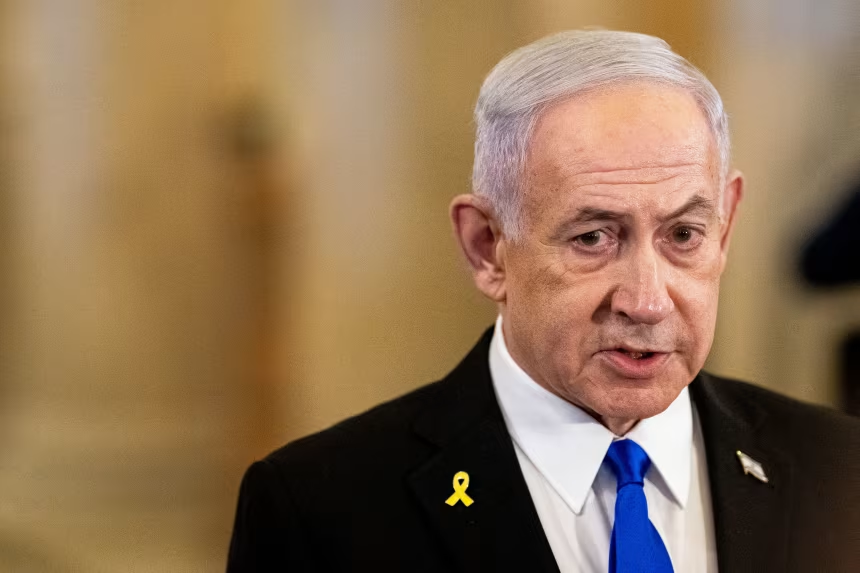
Pro-Israel Democrats try breaking with Netanyahu to stop party’s shift amid Gaza crisis
Entities mentioned:
- Benjamin Netanyahu: Power, Control, Self-preservation
- Democratic Party: Unity, Influence, Self-preservation
- AIPAC: Influence, Loyalty, Power
- Brian Schatz: Justice, Moral outrage, Professional pride
- Mikie Sherrill: Duty, Justice, Self-preservation
- Tim Walz: Ambition, Influence, Professional pride
- Cory Booker: Ambition, Loyalty, Self-preservation
- John Fetterman: Loyalty, Determination, Moral outrage
- Bernie Sanders: Justice, Moral outrage, Influence
- Rahm Emanuel: Ambition, Influence, Self-preservation
Article Assessment:
Credibility Score: 75/100
Bias Rating: 45/100 (Center)
Sentiment Score: 35/100
Bias Analysis:
The article presents multiple perspectives within the Democratic Party, including both pro-Israel and critical voices. While it leans slightly towards highlighting critical views of Netanyahu, it also includes counterpoints and context, maintaining a relatively balanced approach.
Key metric: Democratic Party Unity and Voter Support
As a social scientist, I analyze that this article highlights a significant shift in the Democratic Party's stance towards Israel, particularly in relation to Prime Minister Netanyahu's policies. This shift is driven by moral outrage over the humanitarian crisis in Gaza and a strategic calculation about future voter support, especially among younger Democrats. The party is attempting to balance its traditional pro-Israel stance with criticism of Netanyahu's government, hoping to maintain unity while adapting to changing voter sentiments. This balancing act could have significant implications for party cohesion, future elections, and U.S.-Israel relations. The article suggests that this issue may become a litmus test in upcoming elections, potentially reshaping the Democratic Party's foreign policy platform and its relationship with pro-Israel lobbying groups like AIPAC.

State Department may require visa applicants to post bond of up to $15,000 to enter the US
Entities mentioned:
- State Department: Control, Security, Duty
- Trump administration: Control, Security, Influence
- Visa applicants: Freedom, Ambition, Self-preservation
- U.S. government: Security, Control, Self-preservation
Article Assessment:
Credibility Score: 75/100
Bias Rating: 55/100 (Center)
Sentiment Score: 35/100
Bias Analysis:
The article presents a relatively balanced view of the proposed policy, including both the government's rationale and potential concerns. While it mentions the Trump administration's role, it doesn't editorialize on the policy's merits, maintaining a largely neutral stance.
Key metric: Net International Migration
As a social scientist, I analyze that this proposed policy could significantly impact the Net International Migration metric for the United States. The implementation of visa bonds up to $15,000 for certain countries may act as a deterrent for potential visitors, especially those from lower-income nations. This could lead to a decrease in both short-term visitors and potential long-term immigrants, as the financial barrier may discourage applications. Additionally, the policy may disproportionately affect business travelers and tourists from developing countries, potentially impacting economic and cultural exchanges. The pilot program's selective application based on overstay rates and document security could also lead to diplomatic tensions with affected countries, possibly resulting in reciprocal measures against U.S. travelers.

Crisis in Gaza seems hopeless. Here’s a potential pathway for a 90-day solution
Entities mentioned:
- Brett McGurk: Professional pride, Duty, Influence
- Hamas: Power, Control, Revenge
- Israel: Security, Self-preservation, Justice
- United States: Influence, Security, Duty
- Qatar: Influence, Power, Recognition
- Egypt: Influence, Security, Stability
- France: Influence, Moral outrage, Justice
- United Kingdom: Influence, Moral outrage, Justice
- Benjamin Netanyahu: Power, Self-preservation, Security
- Joe Biden: Influence, Duty, Legacy
Article Assessment:
Credibility Score: 75/100
Bias Rating: 55/100 (Center)
Sentiment Score: 45/100
Bias Analysis:
The article presents a relatively balanced view, considering multiple perspectives and options. However, it leans slightly towards a US-centric perspective, given the author's background and focus on US involvement in the solution.
Key metric: US Global Influence and Diplomatic Effectiveness
As a social scientist, I analyze that this article presents a complex geopolitical situation with multiple stakeholders and competing interests. The proposed 'Option 6' solution seeks to balance humanitarian concerns, hostage release, and long-term stability in Gaza. This approach could potentially enhance US diplomatic effectiveness by positioning it as a problem-solver in a seemingly intractable conflict. However, the success of this strategy depends on the willingness of all parties to cooperate, particularly Hamas, which has shown resistance to previous proposals. The article highlights the challenges of international diplomacy and the need for creative solutions in conflict resolution. The impact on US global influence will depend on the outcome of this proposed strategy and how it is perceived by the international community.

What happens next in Texas redistricting and for Democrats facing civil arrest warrants
Entities mentioned:
- Texas Republicans: Power, Control, Determination
- Texas Democrats: Righteousness, Moral outrage, Justice
- Greg Abbott: Power, Control, Ambition
- Dustin Burrows: Duty, Control, Determination
- Ken Paxton: Power, Control, Moral outrage
- Sarah Chen: Justice, Professional pride, Duty
- Jolanda Jones: Righteousness, Defiance, Justice
- Andrew Cates: Professional pride, Curiosity, Duty
- James Talarico: Duty, Righteousness, Moral outrage
Article Assessment:
Credibility Score: 75/100
Bias Rating: 55/100 (Center)
Sentiment Score: 35/100
Bias Analysis:
The article presents views from both Republican and Democratic sides, including quotes from various officials and legal experts. While it gives slightly more space to explaining the Democrats' position, it maintains a generally balanced tone in reporting the facts of the situation.
Key metric: Political Polarization Index
As a social scientist, I analyze that this article highlights the increasing polarization in American politics, particularly at the state level. The extreme measures taken by both parties - Republicans issuing civil arrest warrants and Democrats fleeing the state - demonstrate a breakdown in normal legislative processes. This escalation of tactics could further erode public trust in democratic institutions and increase partisan animosity. The redistricting effort at the center of this conflict has potential long-term implications for political representation and power balance, both in Texas and at the national level. The use of law enforcement in a political dispute also raises questions about the separation of powers and the limits of executive authority in compelling legislative action.
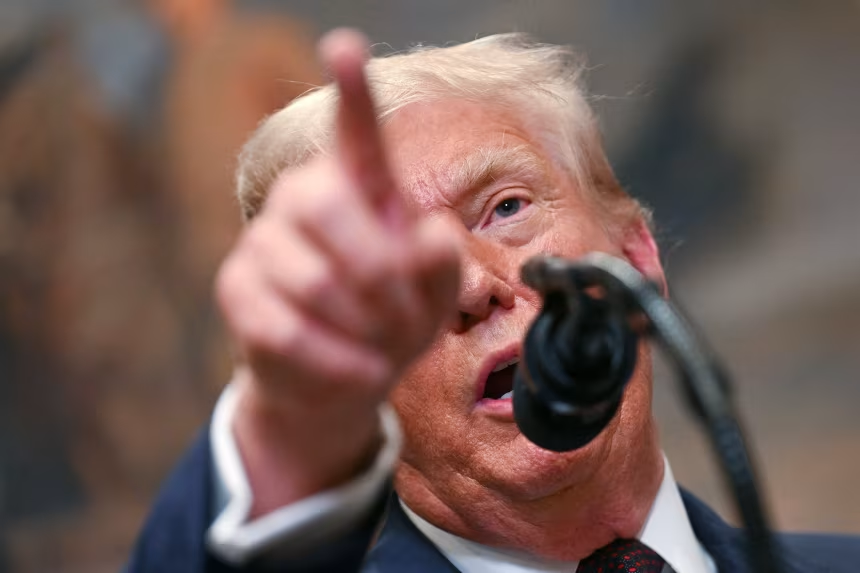
The Trump administration takes a very Orwellian turn
Entities mentioned:
- Donald Trump: Power, Control, Legacy
- Smithsonian Institution: Professional pride, Duty, Wariness
- Bureau of Labor Statistics: Professional pride, Duty, Independence
- Erika McEntarfer: Professional pride, Duty, Self-preservation
- Republican Senators: Duty, Wariness, Self-preservation
Article Assessment:
Credibility Score: 75/100
Bias Rating: 35/100 (Lean Left)
Sentiment Score: 25/100
Bias Analysis:
The article leans left in its framing, presenting Trump's actions in a negative light and emphasizing criticism. However, it includes multiple perspectives, including Republican senators' concerns, which adds balance.
Key metric: Government Institutional Integrity
As a social scientist, I analyze that this article highlights a concerning trend of political interference in historically independent government institutions. The removal of information about Trump's impeachments from the Smithsonian and the firing of the Bureau of Labor Statistics commissioner following unfavorable job reports suggest attempts to control historical narratives and economic data presentation. This behavior threatens the integrity and independence of key government institutions, potentially eroding public trust in official information and democratic processes. The pushback from some Republican senators indicates growing concern even within Trump's party about the long-term implications of such actions on governmental credibility and functionality.

EPA administrator defends administration’s move to revoke 2009 finding pollution endangers human health
Entities mentioned:
- Lee Zeldin: Duty, Professional pride, Loyalty
- Environmental Protection Agency (EPA): Obligation, Control, Justice
- Trump administration: Power, Control, Influence
- Zeke Hausfather: Professional pride, Righteousness, Duty
- Supreme Court: Justice, Duty, Control
- Congress: Power, Control, Responsibility
Article Assessment:
Credibility Score: 75/100
Bias Rating: 55/100 (Center)
Sentiment Score: 35/100
Bias Analysis:
The article presents both the administration's stance and opposing scientific views, attempting to maintain balance. However, there's a slight tilt towards emphasizing scientific consensus on climate change, which could be perceived as a minor center-left lean.
Key metric: Environmental Regulation Effectiveness
As a social scientist, I analyze that this article highlights a significant shift in environmental policy under the Trump administration. The proposed repeal of the 2009 endangerment finding could have far-reaching implications for climate change mitigation efforts in the United States. The EPA's move to question established scientific consensus on climate change impacts suggests a prioritization of economic interests over environmental concerns. This policy shift may lead to reduced federal action on climate change, potentially impacting the country's ability to meet international climate commitments and address long-term environmental challenges. The controversy surrounding this decision reflects broader political divisions on climate policy and the role of government in environmental protection.
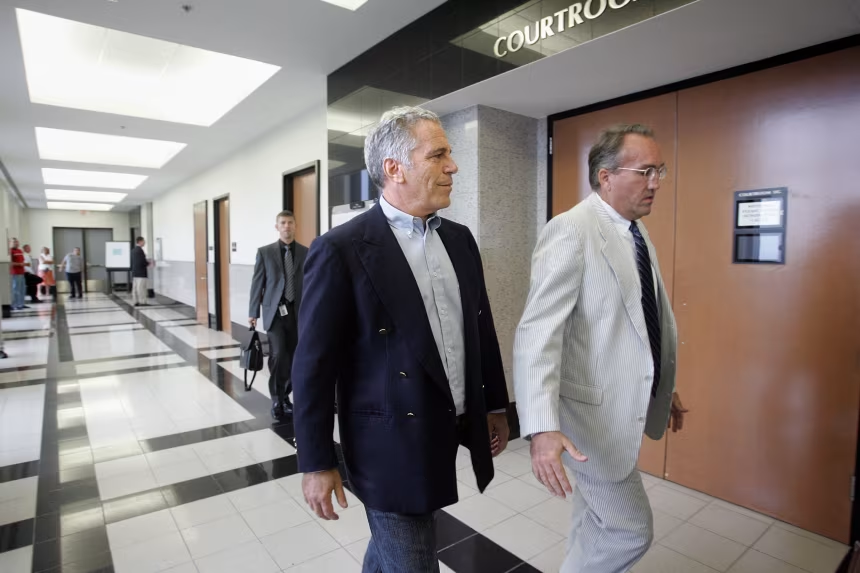
Victim in Epstein case decries ‘political warfare’ in effort to release grand jury transcripts
Entities mentioned:
- Jeffrey Epstein victims: Justice, Self-preservation, Security
- Justice Department: Control, Duty, Obligation
- President Donald Trump: Self-preservation, Power, Control
- Judge Richard Berman: Justice, Duty, Obligation
- Attorney General Pam Bondi: Duty, Loyalty, Influence
- FBI: Duty, Control, Obligation
Article Assessment:
Credibility Score: 75/100
Bias Rating: 45/100 (Center)
Sentiment Score: 30/100
Bias Analysis:
The article presents multiple perspectives, including those of victims and various government entities, suggesting a relatively balanced approach. However, there is a slight lean towards criticism of the Trump administration's handling of the case, which is balanced by factual reporting of events and actions taken by different parties.
Key metric: Public Trust in Government Institutions
As a social scientist, I analyze that this article highlights a significant tension between victims' rights, government transparency, and political maneuvering in the high-profile Epstein case. The victims' frustration with the handling of sensitive information reflects a broader issue of trust in government institutions. The Justice Department's actions, including selective information sharing and subsequent withholding, suggest potential political motivations that could further erode public confidence. This case exemplifies the challenges in balancing victim protection, public interest, and political considerations in high-stakes legal matters. The apparent disconnect between victim concerns and government actions may contribute to a decline in public trust, particularly regarding the handling of cases involving powerful individuals.