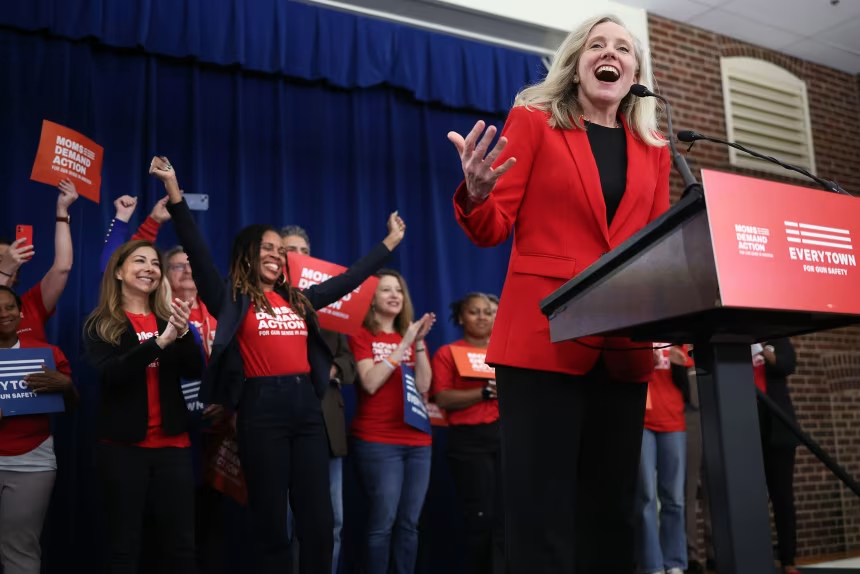
Progressive veterans group seeks to boost Spanberger in Virginia governor’s race with $500,000 ad campaign
Entities mentioned:
- VoteVets: Influence, Unity, Professional pride
- Abigail Spanberger: Ambition, Duty, Influence
- Winsome Earle-Sears: Ambition, Loyalty, Competitive spirit
- Donald Trump: Power, Influence, Legacy
- Democratic Party: Power, Control, Influence
- Republican Party: Power, Control, Competitive spirit
Article Assessment:
Credibility Score: 75/100
Bias Rating: 45/100 (Center)
Sentiment Score: 55/100
Authoritarianism Risk: 20/100 (Strongly Democratic)
Bias Analysis:
The article presents information from both Democratic and Republican perspectives, though slightly more space is given to Democratic strategies and viewpoints. The language used is generally neutral, with factual reporting of campaign activities and financial data.
Key metric: Political Party Power Balance
As a social scientist, I analyze that this article highlights the significance of the Virginia gubernatorial race as a bellwether for national political sentiment. The involvement of VoteVets, a progressive veterans' organization, demonstrates the increasing importance of candidates with military backgrounds in shaping party image and voter appeal. The focus on cost-of-living issues and the criticism of GOP policies indicate that economic concerns are likely to be central to the campaign. The article also reveals the strategies employed by both parties, with Democrats emphasizing affordability and Republicans focusing on cultural issues and alignment with national party figures. The financial disparity between the candidates and the advertising investments suggest that Democrats are currently in a stronger position, but the race remains competitive given recent Republican successes in the state.
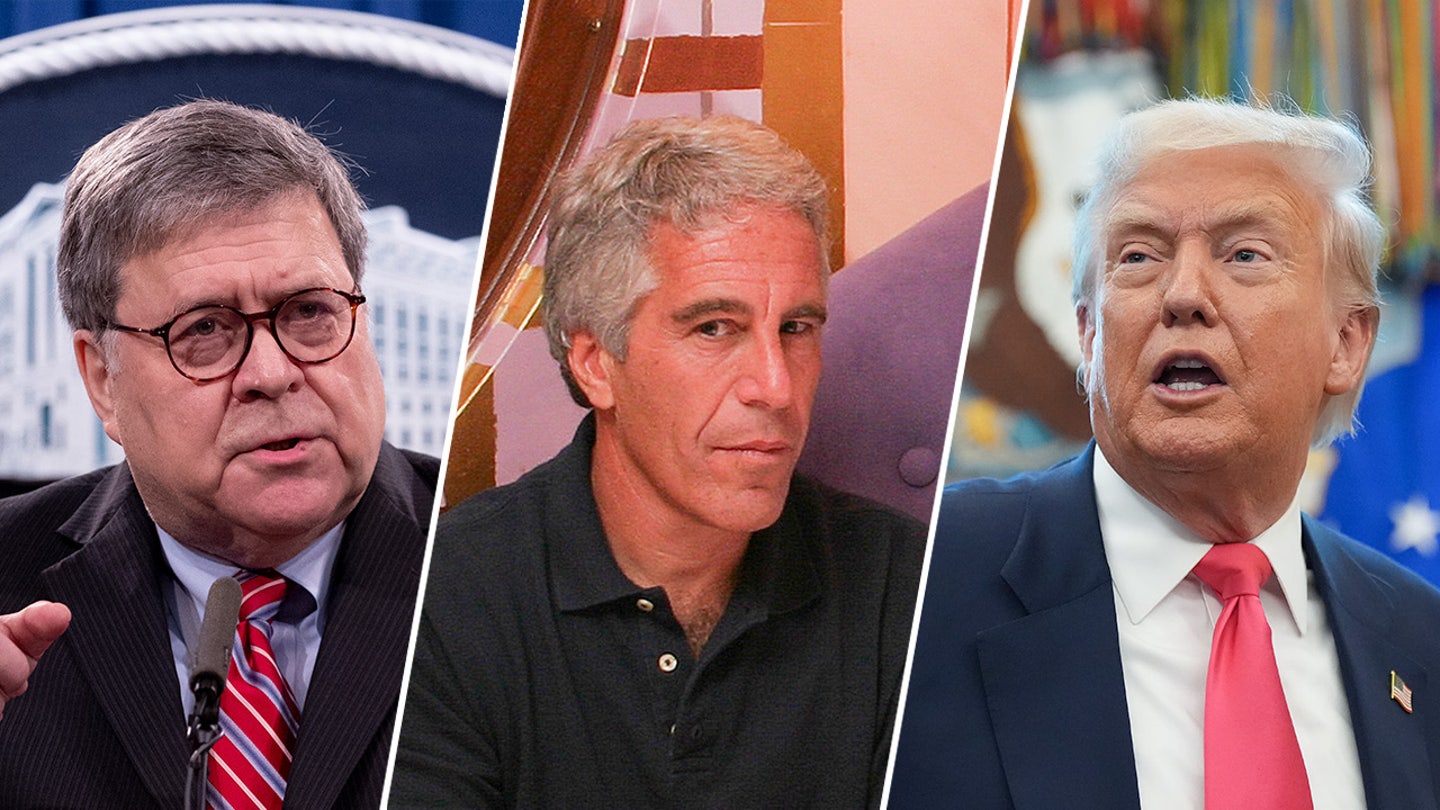
Bill Barr testifies he didn't see info that would 'implicate' Trump in Epstein case, Comer says
Entities mentioned:
- Bill Barr: Duty, Professional pride, Loyalty
- Donald Trump: Self-preservation, Power, Influence
- James Comer: Ambition, Justice, Control
- Jeffrey Epstein: Power, Greed, Self-preservation
- Biden administration: Power, Control, Influence
- House Oversight Committee: Justice, Control, Duty
- Democrats: Competitive spirit, Justice, Control
- Republicans: Loyalty, Power, Control
- Suhas Subramanyam: Justice, Ambition, Duty
Article Assessment:
Credibility Score: 65/100
Bias Rating: 55/100 (Center)
Sentiment Score: 45/100
Authoritarianism Risk: 35/100 (Generally Democratic)
Bias Analysis:
The article presents multiple perspectives, including both Republican and Democratic viewpoints. However, it gives more detailed coverage to Republican statements, particularly from Chairman Comer, which slightly tilts the balance.
Key metric: Government Accountability and Transparency
As a social scientist, I analyze that this article highlights the ongoing investigation into the handling of Jeffrey Epstein's case, focusing on former Attorney General Bill Barr's testimony. The investigation appears to be part of a broader effort to assess government accountability in high-profile cases. Barr's testimony, suggesting no implication of former President Trump in the Epstein case, raises questions about the thoroughness of the investigation and potential political motivations. The partisan divide in the committee's approach to questioning Barr indicates a politicization of the process, which may impact public trust in government institutions and their ability to handle sensitive cases impartially. This investigation could influence public perception of government transparency and the justice system's effectiveness in dealing with powerful individuals.

Five GOP-led states to send hundreds of National Guard troops to DC as White House escalates police takeover
Entities mentioned:
- Donald Trump: Power, Control, Security
- Patrick Morrisey: Duty, Loyalty, Security
- Henry McMaster: Loyalty, Duty, Security
- Mike DeWine: Duty, Security, Obligation
- Muriel Bowser: Self-preservation, Justice, Freedom
- Sean Curran: Duty, Security, Professional pride
- Robert White: Moral outrage, Justice, Freedom
- Alan Dent: Moral outrage, Justice, Freedom
- Pam Bondi: Power, Control, Loyalty
- Terry Cole: Duty, Power, Control
- Pamela Smith: Professional pride, Duty, Security
Article Assessment:
Credibility Score: 75/100
Bias Rating: 45/100 (Center)
Sentiment Score: 35/100
Authoritarianism Risk: 65/100 (Authoritarian Tendencies)
Bias Analysis:
The article presents multiple viewpoints, including those of the federal government, state governors, and local officials. While it includes criticism of the federal actions, it also provides the administration's justifications, maintaining a relatively balanced perspective.
Key metric: Political Stability Index
As a social scientist, I analyze that this article highlights a significant escalation in federal intervention in local law enforcement, particularly in Washington, DC. The deployment of National Guard troops from multiple states, coupled with the attempted federal takeover of the DC police force, suggests a dramatic shift in the balance of power between federal and local authorities. This move raises concerns about the erosion of local autonomy and the potential for increased authoritarianism. The justification of addressing crime rates, despite evidence of lower overall crime numbers, indicates a possible disconnect between the stated reasons and actual motivations for these actions. This situation could lead to increased tensions between federal and local governments, potentially impacting the overall political stability of the nation. The resistance from local officials and citizens, as well as legal challenges, demonstrates the complex interplay of federal power, states' rights, and local governance in the American system.

Russian drone strikes kill 7 in Kharkiv during Zelenskyy's White House meeting with Trump
Entities mentioned:
- Volodymyr Zelenskyy: Unity, Self-preservation, Determination
- Donald Trump: Power, Influence, Recognition
- Vladimir Putin: Power, Control, Influence
- Andriy Yermak: Moral outrage, Loyalty, Justice
- Ihor Terekhov: Duty, Moral outrage, Justice
Article Assessment:
Credibility Score: 75/100
Bias Rating: 45/100 (Center)
Sentiment Score: 25/100
Authoritarianism Risk: 30/100 (Generally Democratic)
Bias Analysis:
The article presents a relatively balanced view, incorporating perspectives from Ukrainian officials and mentioning Trump's meetings with both Zelenskyy and Putin. However, there is slightly more emphasis on Ukrainian suffering, which could be seen as leaning slightly left.
Key metric: International Conflict Resolution Index
As a social scientist, I analyze that this article highlights the ongoing conflict between Russia and Ukraine, and its impact on international diplomacy. The drone strikes in Kharkiv during Zelenskyy's visit to Washington demonstrate Putin's aggressive stance and unwillingness to de-escalate the conflict. This event underscores the challenges in achieving peace and the importance of international support for Ukraine. The timing of the attacks appears strategic, possibly aimed at undermining peace talks and maintaining Russia's position of power. The involvement of the US, particularly Trump's meetings with both Zelenskyy and Putin, indicates the complex geopolitical dynamics at play. The civilian casualties, especially children, emphasize the humanitarian cost of the conflict and may influence public opinion and international response. This situation likely negatively impacts the International Conflict Resolution Index by demonstrating the difficulties in achieving a ceasefire and the ongoing threat to civilian lives.

Democratic Texas lawmaker spent night on state House floor after refusing GOP demand for law enforcement escort
Entities mentioned:
- Nicole Collier: Righteousness, Determination, Self-respect
- Dustin Burrows: Control, Power, Duty
- Texas House Democrats: Resistance, Justice, Unity
- Texas Republicans: Power, Control, Ambition
- Beto O'Rourke: Moral outrage, Righteousness, Loyalty
- Greg Abbott: Power, Ambition, Loyalty
- Donald Trump: Influence, Power, Control
- Gavin Newsom: Competitive spirit, Justice, Power
Article Assessment:
Credibility Score: 75/100
Bias Rating: 55/100 (Center)
Sentiment Score: 35/100
Authoritarianism Risk: 65/100 (Authoritarian Tendencies)
Bias Analysis:
The article presents both Republican and Democratic perspectives, but gives slightly more space to Democratic viewpoints and actions. The framing of Republicans' actions as 'demands' and Democrats as 'protesting' suggests a slight lean towards sympathizing with the Democrats.
Key metric: Electoral Integrity
As a social scientist, I analyze that this article highlights a significant conflict over redistricting in Texas, which has broader implications for national electoral integrity. The Republican-led effort to redraw congressional maps mid-decade is an unusual move that could significantly alter the balance of power in the U.S. House of Representatives. This situation demonstrates the intensifying partisan struggle over electoral maps, with both parties engaging in tactical maneuvers to gain advantage. The Democrats' initial flight from the state and subsequent return under restrictive conditions illustrates the lengths to which political actors will go to influence the redistricting process. Rep. Collier's protest against the imposed restrictions symbolizes broader resistance to what Democrats perceive as an abuse of power. This conflict over redistricting could erode public trust in the electoral system and potentially lead to more extreme gerrymandering practices across the country, ultimately impacting the fairness and representativeness of elections.
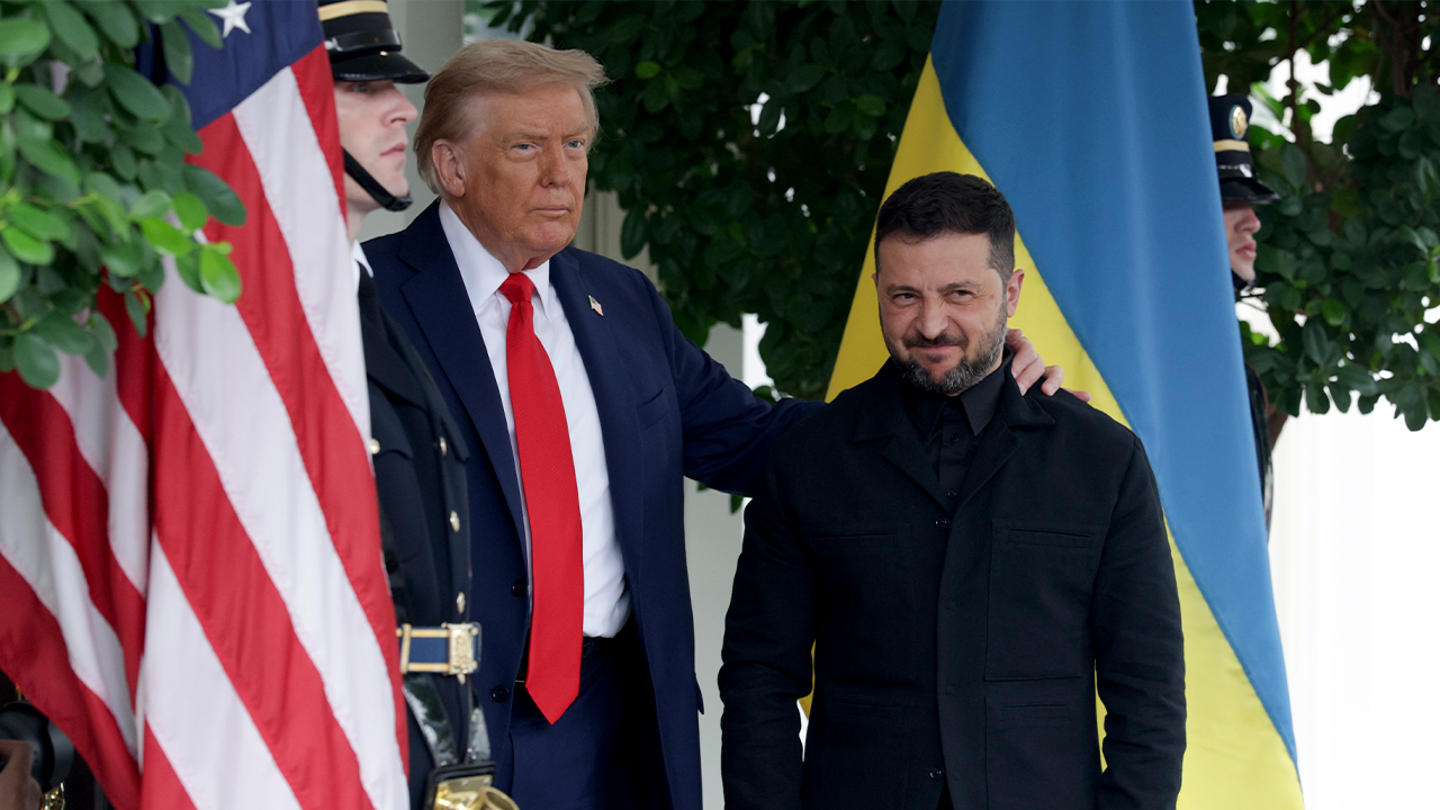
Senate signals readiness to hit Russia with hard sanctions if peace deal fails
Entities mentioned:
- President Donald Trump: Power, Influence, Legacy
- Ukrainian President Volodymyr Zelenskyy: Self-preservation, Duty, Unity
- Russian President Vladimir Putin: Power, Control, Influence
- Senate Republicans: Loyalty, Determination, Security
- Senate Democrats: Moral outrage, Justice, Wariness
- Congress: Control, Influence, Duty
Article Assessment:
Credibility Score: 70/100
Bias Rating: 55/100 (Center)
Sentiment Score: 45/100
Authoritarianism Risk: 35/100 (Generally Democratic)
Bias Analysis:
The article presents views from both Republican and Democratic senators, providing a relatively balanced perspective. However, there's a slight emphasis on Republican viewpoints, with more detailed quotes and positive framing of Trump's actions.
Key metric: International Relations and Diplomacy
As a social scientist, I analyze that this article highlights the complex interplay between domestic politics and international diplomacy in the context of the Russia-Ukraine conflict. The Senate's readiness to impose sanctions on Russia reflects a bipartisan consensus on the need for a strong U.S. response, should diplomatic efforts fail. This stance potentially strengthens the U.S. negotiating position but also risks escalating tensions. The divergent views between Republicans and Democrats on Trump's approach underscore the polarized nature of U.S. politics, even in foreign policy matters. This internal division could potentially weaken the U.S.'s ability to present a unified front in international negotiations. The article also reveals the delicate balance between pursuing diplomatic solutions and maintaining a credible threat of economic penalties, showcasing the multifaceted nature of modern international relations.
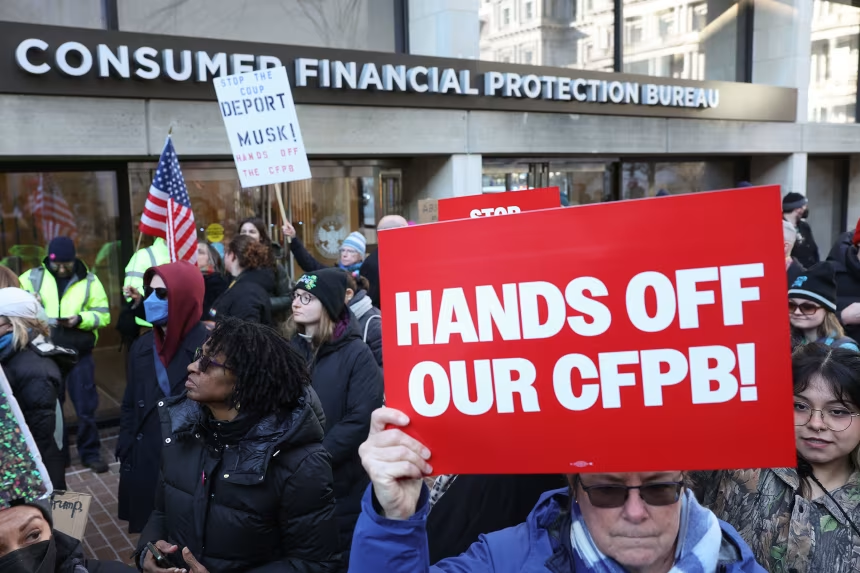
CFPB cuts can resume, divided appeals court rules
Entities mentioned:
- President Donald Trump: Power, Control, Influence
- Consumer Financial Protection Bureau (CFPB): Duty, Justice, Professional pride
- Judge Amy Berman Jackson: Justice, Duty, Righteousness
- Judge Greg Katsas: Duty, Loyalty, Professional pride
- Judge Neomi Rao: Duty, Loyalty, Professional pride
- Judge Nina Pillard: Justice, Righteousness, Moral outrage
Article Assessment:
Credibility Score: 75/100
Bias Rating: 45/100 (Center)
Sentiment Score: 35/100
Authoritarianism Risk: 65/100 (Authoritarian Tendencies)
Bias Analysis:
The article presents multiple viewpoints, including those of the administration and dissenting judges. While it leans slightly towards emphasizing the potential negative impacts of the ruling, it maintains a relatively balanced approach in presenting the facts and arguments from both sides.
Key metric: Consumer Financial Protection
As a social scientist, I analyze that this ruling significantly impacts consumer financial protection in the United States. The decision to allow the downsizing of the CFPB could potentially weaken oversight of financial institutions and reduce protections for consumers against predatory practices. This ruling represents a shift in the balance of power between the executive branch and independent regulatory agencies, potentially setting a precedent for future administrations to reshape or diminish the role of such agencies. The dissenting opinion highlights concerns about the long-term consequences of this decision on the CFPB's ability to fulfill its mandate, even if future legal challenges are successful. This case underscores the ongoing tension between different political ideologies regarding the role of government in regulating financial markets and protecting consumers.
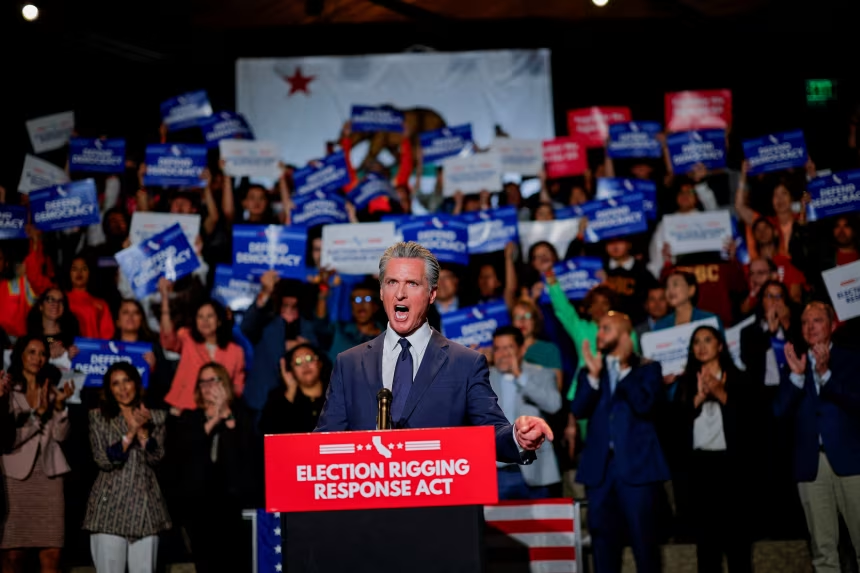
California Democrats release map ahead of redistricting in response to Texas
Entities mentioned:
- California Democrats: Power, Justice, Revenge
- Texas Republicans: Power, Control, Loyalty
- Donald Trump: Power, Influence, Control
- Gov. Gavin Newsom: Power, Ambition, Justice
- Robert Rivas: Righteousness, Justice, Influence
- Rep. Ken Calvert: Self-preservation, Loyalty, Indignation
Article Assessment:
Credibility Score: 75/100
Bias Rating: 55/100 (Center)
Sentiment Score: 35/100
Authoritarianism Risk: 45/100 (Mixed/Neutral)
Bias Analysis:
The article presents both Democratic and Republican perspectives, though it gives more space to Democratic viewpoints. While it includes quotes from both sides, the framing slightly favors the Democratic narrative of 'fighting back' against Republican actions.
Key metric: Electoral Competitiveness
As a social scientist, I analyze that this article highlights the intensifying partisan struggle over redistricting, with potential significant impacts on Electoral Competitiveness. The proposed California redistricting plan, portrayed as a direct response to similar actions in Texas, could dramatically shift the balance of power in the U.S. House of Representatives. This tit-for-tat approach to redistricting between two major states underscores the growing politicization of the electoral map-drawing process. The potential flip of up to five seats from Republican to Democratic control in California could have far-reaching consequences for national politics and policy-making. This development also reflects the increasing use of state-level political power to influence federal representation, potentially undermining the principle of fair representation and exacerbating political polarization. The involvement of voters through a referendum adds a layer of democratic legitimacy to the process in California, but also highlights the complex interplay between direct democracy and representative governance in shaping electoral landscapes.
Three GOP-led states to send hundreds of National Guard troops to DC as White House escalates police takeover
Entities mentioned:
- Donald Trump: Power, Control, Security
- Patrick Morrisey: Loyalty, Duty, Security
- Henry McMaster: Loyalty, Duty, Security
- Mike DeWine: Duty, Security, Obligation
- Muriel Bowser: Self-preservation, Justice, Freedom
- Sean Curran: Duty, Security, Professional pride
- Robert White: Moral outrage, Justice, Freedom
- Pam Bondi: Power, Control, Loyalty
- Terry Cole: Duty, Professional pride, Security
- Pamela Smith: Professional pride, Duty, Self-preservation
Article Assessment:
Credibility Score: 75/100
Bias Rating: 45/100 (Center)
Sentiment Score: 35/100
Authoritarianism Risk: 70/100 (Authoritarian Tendencies)
Bias Analysis:
The article presents multiple viewpoints, including those of the Trump administration and its critics. While it gives more space to concerns about federal overreach, it also includes the administration's justifications for its actions.
Key metric: Domestic Political Stability
As a social scientist, I analyze that this article highlights a significant escalation in federal intervention in local law enforcement, particularly in Washington, DC. The deployment of National Guard troops from multiple states to the nation's capital, at the request of the Trump administration, represents a marked shift in the balance of power between federal and local authorities. This move, coupled with the attempted federalization of DC's police force, raises concerns about the erosion of local autonomy and the potential for increased authoritarianism. The article suggests a growing tension between the Trump administration's stated goals of reducing crime and 'beautifying' the city, and the Democratic local government's resistance to what they perceive as federal overreach. This situation could have far-reaching implications for domestic political stability, potentially setting precedents for federal intervention in other cities and exacerbating existing political divisions.
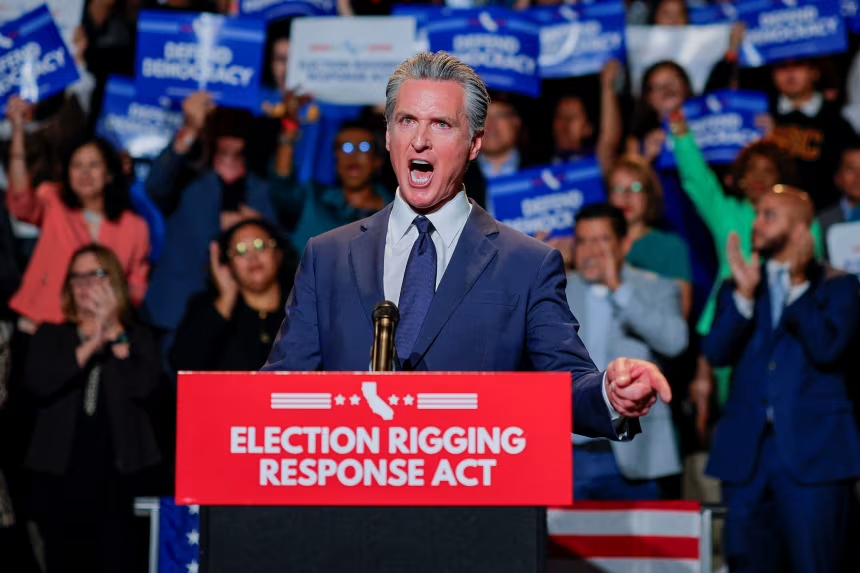
Gavin Newsom thanks you for your attention to redistricting
Entities mentioned:
- Gavin Newsom: Ambition, Power, Recognition
- Donald Trump: Power, Control, Self-preservation
- Arnold Schwarzenegger: Justice, Legacy, Influence
- Nancy Pelosi: Loyalty, Power, Influence
- Lorena Gonzalez: Justice, Moral outrage, Influence
- Alex Padilla: Loyalty, Unity, Recognition
- Maxine Waters: Loyalty, Justice, Recognition
Article Assessment:
Credibility Score: 70/100
Bias Rating: 35/100 (Lean Left)
Sentiment Score: 45/100
Authoritarianism Risk: 55/100 (Mixed/Neutral)
Bias Analysis:
The article leans left, focusing primarily on Democratic perspectives and Newsom's justifications. While it includes some criticism of Newsom, it generally frames his actions in a positive light and provides limited space for opposing viewpoints.
Key metric: Electoral Integrity
As a social scientist, I analyze that this article highlights a significant shift in California's approach to redistricting, led by Governor Gavin Newsom. This move represents a departure from the state's previous commitment to an independent redistricting commission, potentially impacting electoral integrity. The initiative, framed as a response to Republican actions in other states, particularly Texas, signals an escalation in partisan redistricting battles. This could have far-reaching consequences for national political representation and the balance of power in the U.S. House of Representatives. The article also underscores Newsom's potential presidential ambitions and his efforts to position himself as a strong opposition leader against the Trump administration. The redistricting fight is presented as a key battleground for Democratic resistance and a test of Newsom's leadership on the national stage. However, this approach risks further polarization and could potentially undermine public faith in democratic processes, depending on how it is perceived and implemented.