
4 possible outcomes of a gerrymandering battle royale
Entities mentioned:
- Texas Republicans: Power, Control, Competitive spirit
- Democrats: Justice, Competitive spirit, Power
- Donald Trump: Power, Control, Ambition
- Supreme Court: Justice, Duty, Influence
- Texas Democrats: Justice, Determination, Righteousness
- John Cornyn: Power, Loyalty, Competitive spirit
- Kevin Kiley: Justice, Duty, Self-preservation
- Mike Lawler: Justice, Duty, Self-preservation
Article Assessment:
Credibility Score: 75/100
Bias Rating: 45/100 (Center)
Sentiment Score: 30/100
Authoritarianism Risk: 65/100 (Authoritarian Tendencies)
Bias Analysis:
The article presents multiple perspectives and potential outcomes, indicating an attempt at balanced reporting. However, there's a slight lean towards criticizing Republican actions, which is balanced by acknowledging potential Democratic responses.
Key metric: Democratic Index
As a social scientist, I analyze that this article highlights a significant threat to the democratic process in the United States through the escalation of partisan gerrymandering. The potential for a 'gerrymandering arms race' could lead to instability in representative democracy, as districts may be redrawn more frequently for political gain rather than to reflect population changes. This practice undermines the principle of fair representation and could further polarize the political landscape. The article suggests that this trend could result in a continuous cycle of retaliatory redistricting, potentially eroding public trust in the electoral system and weakening the connection between representatives and their constituents. The proposed solutions, such as legislative action or political standoffs, seem unlikely to succeed in the current partisan climate, indicating a potential long-term negative impact on the Democratic Index of the United States.
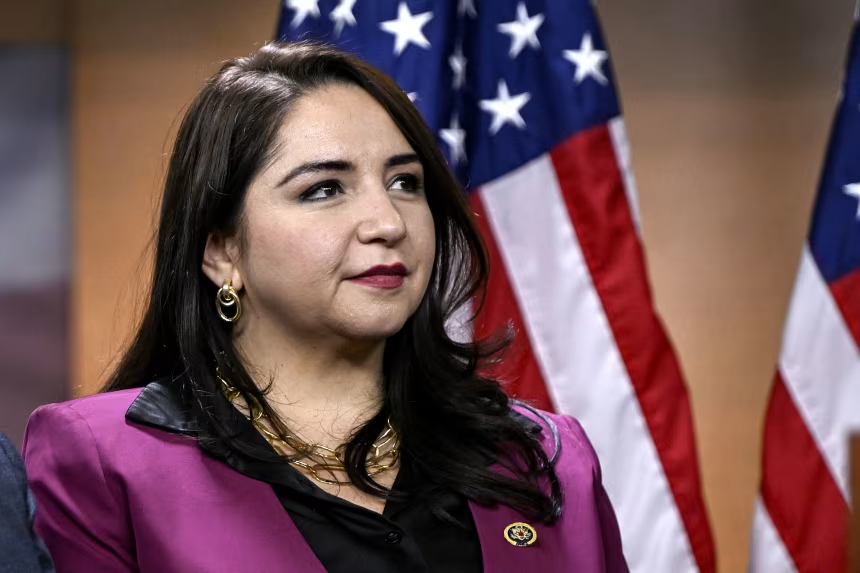
GOP lawmaker pushes to strip Democrat of committee assignment after saying she’s ‘a proud Guatemalan before I am an American’
Entities mentioned:
- Carlos Gimenez: Righteousness, Patriotism, Duty
- Delia Ramirez: Pride, Self-respect, Justice
- Republican Party: Control, Power, Loyalty
- Democratic Party: Unity, Justice, Influence
- House Homeland Security Committee: Security, Control, Duty
- Clay Higgins: Righteousness, Control, Duty
- LaMonica McIver: Justice, Moral outrage, Duty
Article Assessment:
Credibility Score: 75/100
Bias Rating: 55/100 (Center)
Sentiment Score: 30/100
Authoritarianism Risk: 55/100 (Mixed/Neutral)
Bias Analysis:
The article presents multiple viewpoints and includes direct quotes from both sides. However, there's slightly more space given to the Republican perspective, which may suggest a subtle lean towards center-right.
Key metric: Political Polarization Index
As a social scientist, I analyze that this article highlights increasing political polarization in the United States, particularly around issues of immigration and national identity. The attempt to remove Rep. Ramirez from her committee assignment based on her comments about her heritage demonstrates a growing tension between multicultural identities and perceived loyalty to the nation. This incident may exacerbate existing divisions and potentially impact legislative effectiveness on homeland security issues. The parallel situation with Rep. McIver further illustrates the intensifying partisan conflicts within government institutions. These actions could lead to decreased cooperation between parties and potentially undermine the functioning of important committees. The debate also reflects broader societal discussions about what it means to be American in a diverse nation, and how cultural heritage intersects with national identity and loyalty.

Trump administration seeking $1 billion settlement from UCLA
Entities mentioned:
- Trump administration: Control, Power, Influence
- University of California, Los Angeles (UCLA): Self-preservation, Professional pride, Freedom
- Julio Frenk: Duty, Concern, Professional pride
- James B. Milliken: Duty, Self-preservation, Righteousness
- Department of Justice: Control, Power, Justice
- Donald Trump: Power, Control, Influence
- Scott Wiener: Moral outrage, Righteousness, Unity
Article Assessment:
Credibility Score: 75/100
Bias Rating: 45/100 (Center)
Sentiment Score: 30/100
Authoritarianism Risk: 65/100 (Authoritarian Tendencies)
Bias Analysis:
The article presents multiple viewpoints, including those of the Trump administration, UCLA officials, and state representatives. While it leans slightly critical of the administration's actions, it provides context and balanced reporting on the situation.
Key metric: Higher Education Funding and Policy
As a social scientist, I analyze that this article highlights a significant conflict between the Trump administration and UCLA, representing a broader clash over higher education policies and funding. The administration's aggressive approach, including funding freezes and demands for substantial settlements, appears to be part of a larger strategy to reshape higher education policies, particularly around issues of diversity, protests, and gender-related matters. This conflict has potential far-reaching implications for academic freedom, research funding, and the autonomy of public universities. The scale of the proposed settlement and the specific policy changes demanded suggest an attempt to exert federal control over university operations and policies, which could set a precedent for other institutions. The resistance from UCLA and California state officials indicates a strong pushback against what they perceive as federal overreach, highlighting tensions between state and federal governance in education.
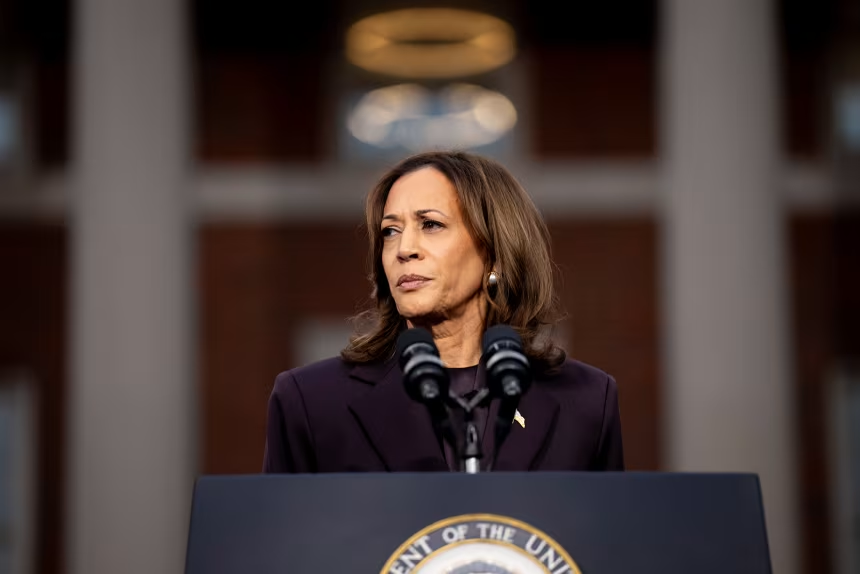
Republicans reprise anti-transgender ‘Kamala is for they/them’ ads for the midterms
Entities mentioned:
- Republicans: Power, Control, Fear
- Roy Cooper: Ambition, Righteousness, Justice
- Senate Leadership Fund: Power, Influence, Control
- Kamala Harris: Justice, Righteousness, Duty
- Donald Trump: Power, Control, Influence
- Jon Ossoff: Justice, Duty, Righteousness
- Chris LaCivita: Competitive spirit, Power, Influence
- Democrats: Justice, Righteousness, Unity
- Viet Shelton: Duty, Righteousness, Justice
- Buddy Carter: Power, Competitive spirit, Loyalty
- Winsome Earle-Sears: Power, Control, Competitive spirit
- Abigail Spanberger: Justice, Duty, Righteousness
- Gavin Newsom: Ambition, Power, Influence
- Pete Buttigieg: Ambition, Influence, Righteousness
- Human Rights Campaign: Justice, Righteousness, Unity
- Tim Walz: Righteousness, Justice, Unity
- Stephen Cloobeck: Ambition, Competitive spirit, Power
Article Assessment:
Credibility Score: 75/100
Bias Rating: 55/100 (Center)
Sentiment Score: 35/100
Authoritarianism Risk: 45/100 (Mixed/Neutral)
Bias Analysis:
The article presents views from both Republican and Democratic sides, quoting various sources. However, it gives slightly more space to critiquing Republican strategies, suggesting a slight center-left lean.
Key metric: Political Polarization Index
As a social scientist, I analyze that this article highlights the increasing political polarization in the United States, particularly around transgender issues. The Republicans' strategy of using anti-transgender messaging in political ads demonstrates an attempt to create wedge issues and mobilize their base. This approach may deepen existing societal divisions and further alienate the LGBTQ+ community. The Democrats' response, while attempting to focus on economic issues, shows some internal disagreement on how to address these attacks. This polarization could lead to increased social tension, policy gridlock, and a decline in civil discourse, potentially impacting the overall functioning of democratic institutions.

Paxton and Cornyn, facing off for Senate, use their official powers in Texas redistricting fight
Entities mentioned:
- Ken Paxton: Power, Ambition, Control
- John Cornyn: Power, Competitive spirit, Self-preservation
- Texas House Democrats: Justice, Righteousness, Determination
- Greg Abbott: Control, Power, Determination
- Beto O'Rourke: Justice, Influence, Recognition
- Dustin Burrows: Control, Duty, Determination
Article Assessment:
Credibility Score: 75/100
Bias Rating: 55/100 (Center)
Sentiment Score: 30/100
Authoritarianism Risk: 65/100 (Authoritarian Tendencies)
Bias Analysis:
The article presents perspectives from both Republican and Democratic sides, quoting various officials. While it gives slightly more space to Republican actions, it also includes Democratic responses, maintaining a relatively balanced approach.
Key metric: Political Polarization Index
As a social scientist, I analyze that this article highlights the intensifying political polarization in Texas, particularly surrounding the redistricting issue. The use of official powers by both Republican and Democratic figures to pressure or support the absent Democrats demonstrates an escalation of partisan tactics. This situation likely increases the Political Polarization Index by showcasing the widening gap between parties and the willingness to use extraordinary measures to achieve political goals. The involvement of federal agencies (FBI) in a state matter further emphasizes the nationalization of local political disputes, potentially exacerbating divisions. The article also illustrates how this conflict is shaping future political races, suggesting long-term impacts on partisan dynamics in Texas and potentially nationally.
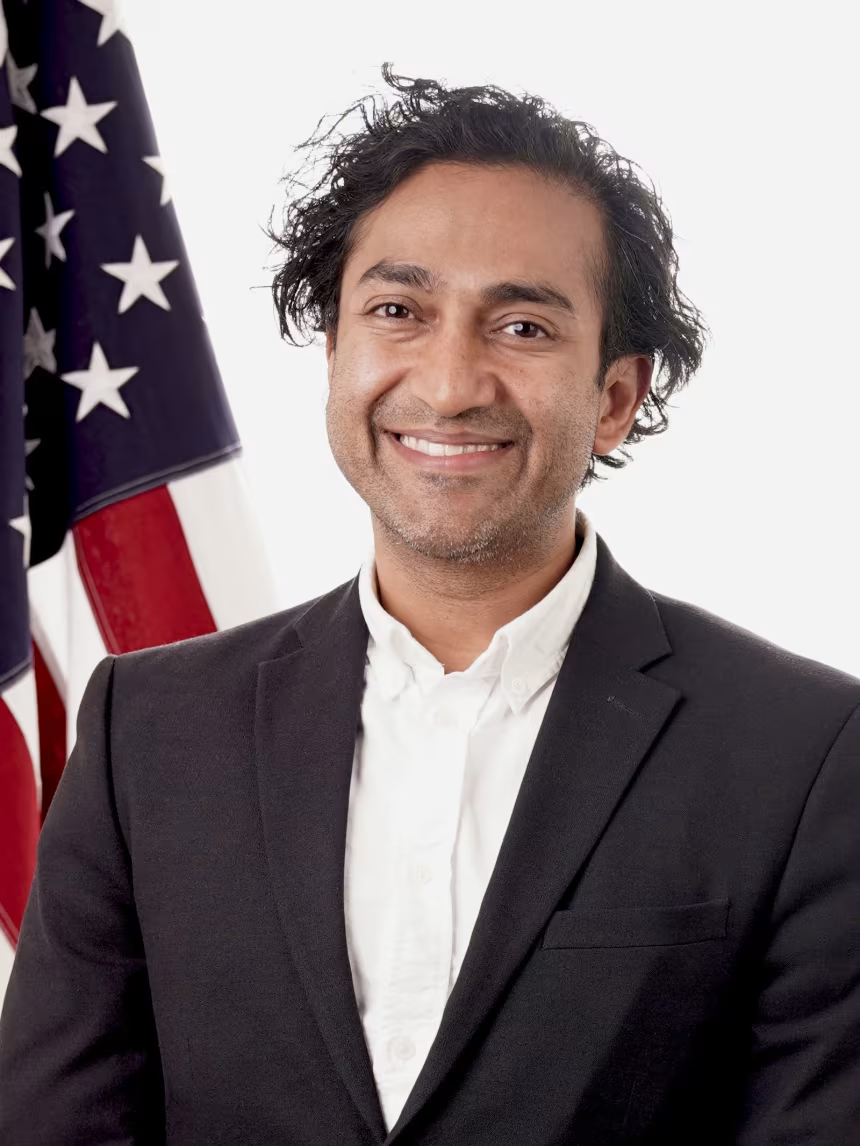
FDA official returns to agency after Loomer-led ouster
Entities mentioned:
- Dr. Vinay Prasad: Professional pride, Duty, Recognition
- US Food and Drug Administration (FDA): Duty, Public safety, Credibility
- Laura Loomer: Moral outrage, Influence, Righteousness
- White House: Control, Power, Influence
- President Donald Trump: Power, Legacy, Control
Article Assessment:
Credibility Score: 75/100
Bias Rating: 45/100 (Center)
Sentiment Score: 35/100
Authoritarianism Risk: 65/100 (Authoritarian Tendencies)
Bias Analysis:
The article presents multiple perspectives and cites various sources, including official statements and anonymous insiders. While it gives voice to critics of Dr. Prasad, it also provides context for his previous work and controversies, maintaining a relatively balanced approach.
Key metric: Public Trust in Government Institutions
As a social scientist, I analyze that this article highlights the complex interplay between politics, public health, and institutional integrity. Dr. Prasad's return to the FDA after a politically-motivated ouster demonstrates the tension between scientific expertise and political pressure. This situation potentially undermines public trust in the FDA's decision-making process and independence. The involvement of activist Laura Loomer and the White House in personnel decisions at a scientific agency raises concerns about the politicization of public health institutions. This event may have long-lasting effects on how the public perceives the FDA's ability to make unbiased, science-based decisions, particularly in critical areas such as vaccine approvals and drug regulations.

Here’s what Trump has promised to do in a second term
Entities mentioned:
- Donald Trump: Power, Control, Ambition
- Joe Biden: Legacy, Influence, Duty
- Elon Musk: Influence, Ambition, Curiosity
- Vivek Ramaswamy: Ambition, Influence, Recognition
- Robert F. Kennedy Jr.: Influence, Recognition, Righteousness
- Gary Gensler: Duty, Control, Professional pride
- Paul Atkins: Influence, Professional pride, Ambition
Article Assessment:
Credibility Score: 75/100
Bias Rating: 55/100 (Center)
Sentiment Score: 45/100
Authoritarianism Risk: 65/100 (Authoritarian Tendencies)
Bias Analysis:
The article presents a comprehensive overview of Trump's proposed policies without overtly endorsing or criticizing them. It relies on direct quotes and campaign statements, maintaining a relatively neutral tone. However, the selection of policies and their framing may slightly lean towards emphasizing controversial aspects.
Key metric: Political Polarization Index
As a social scientist, I analyze that this article outlines Donald Trump's proposed policies for a potential second term, which could significantly impact political polarization in the United States. The policies described, such as mass deportations, tariffs, and rollbacks of environmental regulations, are likely to exacerbate existing divisions between conservative and liberal factions. Trump's promises to use executive power extensively and to target political opponents through the Justice Department suggest a potential increase in authoritarian tendencies, which could further strain democratic institutions and increase polarization. The proposed economic policies, particularly on trade and taxes, may resonate with his base but could alienate moderates and the opposition, potentially widening the political divide. The article's comprehensive coverage of Trump's proposals across various sectors indicates that polarization would likely intensify across multiple fronts, including immigration, healthcare, education, and foreign policy.

Capital Jewish Museum shooting suspect indicted on murder and hate crime charges and could face death penalty
Entities mentioned:
- Elias Rodriguez: Moral outrage, Revenge, Justice
- Justice Department: Justice, Duty, Righteousness
- Yaron Lischinsky: Duty, Professional pride
- Sarah Milgrim: Duty, Professional pride
- Israeli Embassy: Duty, Security, Unity
- Capital Jewish Museum: Unity, Legacy, Recognition
Article Assessment:
Credibility Score: 75/100
Bias Rating: 50/100 (Center)
Sentiment Score: 25/100
Authoritarianism Risk: 30/100 (Generally Democratic)
Bias Analysis:
The article presents a balanced account of the indictment, including details from both the prosecution and potential challenges they may face. It avoids sensationalism and provides context for the legal proceedings without apparent partisan leanings.
Key metric: Domestic Terrorism Incidents
As a social scientist, I analyze that this case represents a significant escalation in hate-motivated violence against Jewish and Israeli targets in the United States. The indictment on hate crime charges suggests a growing concern over antisemitism and its potential to fuel violent extremism. The possibility of pursuing the death penalty indicates the severity with which federal authorities are treating this incident. This case may have far-reaching implications for U.S. domestic counterterrorism efforts, potentially leading to increased security measures for Jewish institutions and a reevaluation of how law enforcement addresses ideologically motivated violence.

Trump reignites threat to take over DC after former DOGE worker assaulted in attempted carjacking
Entities mentioned:
- Donald Trump: Power, Control, Influence
- Edward Coristine: Self-preservation, Security, Fear
- DC Police Department: Duty, Security, Professional pride
- Elon Musk: Influence, Recognition, Ambition
- Muriel Bowser: Self-preservation, Duty, Security
- Jeanine Pirro: Loyalty, Influence, Justice
- Christina Henderson: Duty, Justice, Righteousness
Article Assessment:
Credibility Score: 70/100
Bias Rating: 55/100 (Center)
Sentiment Score: 30/100
Authoritarianism Risk: 65/100 (Authoritarian Tendencies)
Bias Analysis:
The article presents multiple viewpoints, including Trump's statements, local officials' responses, and conflicting crime statistics. However, there's slightly more emphasis on Trump's perspective and actions, potentially skewing the overall narrative.
Key metric: Crime Rate
As a social scientist, I analyze that this article highlights the complex interplay between federal and local governance in Washington, DC. Trump's threats to federalize the city's administration in response to a high-profile crime incident demonstrate a potential shift in federal-local relations. This could significantly impact the crime rate metric, as increased federal intervention might lead to stricter law enforcement but could also create tensions with local authorities and communities. The conflicting crime statistics presented (Trump's claims vs. official DC Police data) underscore the importance of data interpretation in shaping public policy and perception. The situation also reveals the delicate balance local leaders like Mayor Bowser must maintain between addressing crime concerns and preserving local autonomy, especially under pressure from federal authorities.

Social Security is making it harder for seniors to do routine tasks by phone in latest anti-fraud effort
Entities mentioned:
- Social Security Administration: Security, Control, Professional pride
- AARP: Righteousness, Duty, Influence
- Nancy LeaMond: Righteousness, Duty, Indignation
- Frank Bisignano: Security, Control, Professional pride
- Kathleen Romig: Righteousness, Duty, Skepticism
- Trump administration: Security, Control, Power
Article Assessment:
Credibility Score: 75/100
Bias Rating: 45/100 (Center)
Sentiment Score: 35/100
Authoritarianism Risk: 55/100 (Mixed/Neutral)
Bias Analysis:
The article presents multiple perspectives, including those of the SSA and advocacy groups, indicating an attempt at balanced reporting. However, there's a slight emphasis on the concerns and potential negative impacts, which could be seen as leaning slightly left.
Key metric: Elderly Wellbeing and Access to Services
As a social scientist, I analyze that this policy change by the Social Security Administration will likely have a significant negative impact on elderly wellbeing and access to services. The new authentication requirements, while intended to enhance security, may create substantial barriers for seniors who are less comfortable with technology or have limited access to it. This could lead to increased stress, longer wait times for essential services, and potentially even missed benefits for those unable to navigate the new system. The policy appears to prioritize fraud prevention over ease of access, which may disproportionately affect vulnerable populations such as the elderly and disabled. The projected increase in field office visits could strain an already burdened system, potentially leading to further delays and frustrations for beneficiaries. This shift may also exacerbate existing inequalities, particularly for rural seniors who may face greater difficulties in reaching field offices.